Building trust in high-performing teams starts with a single decision
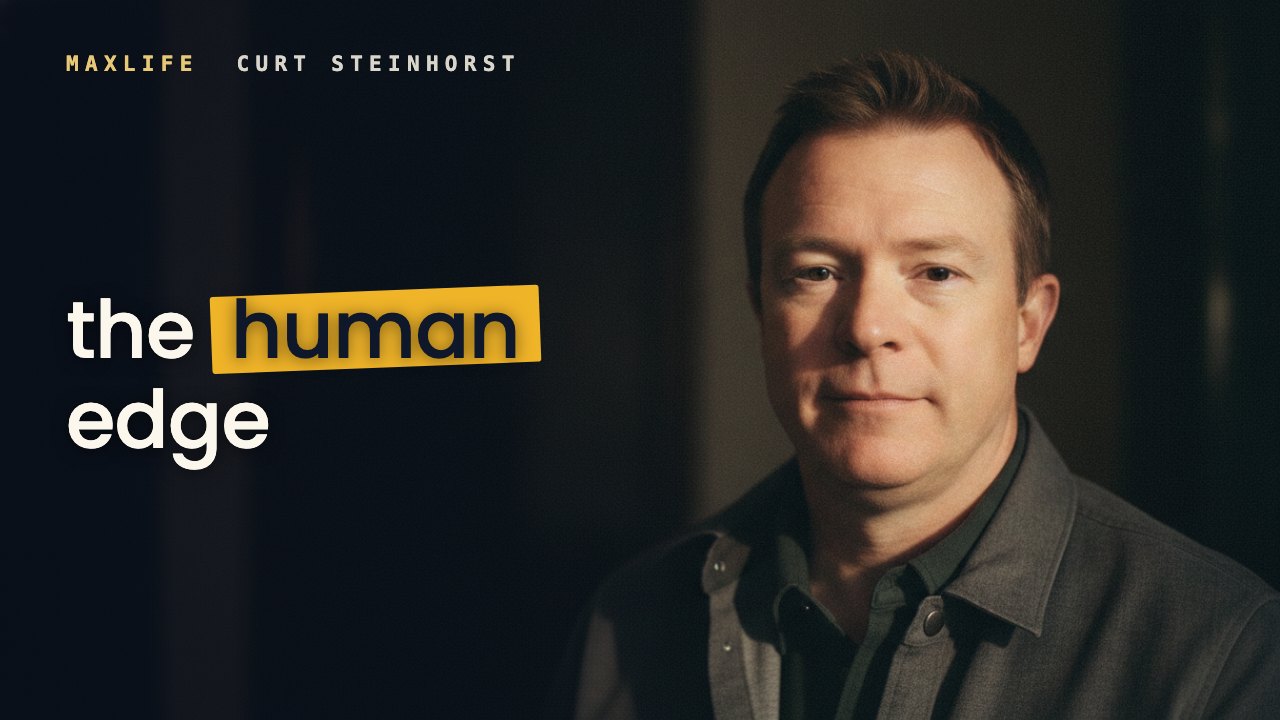
Most leaders trying to build team culture start with the wrong variable. They audit the org chart, redesign the onboarding, or roll out a new set of values. Curt Steinhorst walked into Venus Aerospace and found something more fundamental: a room full of brilliant people who had no shared language for disagreement, no protection for their attention, and no reason to believe the group was worth betting on. "You can't build trust if you don't protect attention," he says early in the conversation, and that single line is the load-bearing wall of everything that followed.
What building trust in teams actually looks like inside a rocket startup
Venus Aerospace was trying to do something no aerospace company had done in 60 years: sustain a rotating detonation rocket engine. The team was change-resistant, underpaid relative to SpaceX and Blue Origin, and operating through two years of near-constant financial uncertainty. Curt's answer wasn't a wellness program. It was language. The Venus Flight Plan replaced generic values with behavioral phrases: chart a new course, move at Mach 9, eliminate the drag, enjoy the flight together, get home safely. When someone was dominating a meeting, a teammate could say, "You're drag right now." When an executive started getting defensive, someone threw a physical yellow card. "Creating the language that makes conflict expected and challenges to be escalated easily" was, in Curt's words, the single most important thing they did. Dad jokes contests and coffee hours weren't morale tactics. They were the connective tissue that kept people in the room when the money was tight and the stress was high.
How to build team culture when you can't compete on compensation
Curt is direct about the constraint: Venus couldn't match SpaceX salaries, couldn't offer the same career ladder, and couldn't promise stability. What it could offer was the chance to do genuinely hard work without being interrupted. "It turns out you don't have to give happy hour to rocket scientists. You need to just stop making them do things that aren't their job." The cultural shift was reframing who gets invited to meetings. Instead of presence in a meeting signaling value, absence became the signal of trust. You're too important to be in this meeting, not not important enough. That inversion changed how people experienced their days and, over time, how much they trusted the organization to see them clearly.
Building trust in virtual and distributed teams through attention economics
Attention, Curt explains, is the brain's filtering mechanism for what matters. It has always been the measure of value: "If I pay attention to you, I'm saying I value you." The problem in modern work is that every group a person belongs to has an incentive to take their attention and no incentive to protect it. The people who want your opinion on a trade in your fantasy football league don't lose anything when you're focused on your actual work. They only lose when you don't respond to them. That asymmetry is why distraction is structural, not personal. For distributed and virtual teams, this means the trust-building work has to be explicit: name the norm, protect the deep work windows, and stop treating responsiveness as the evidence of commitment.
Human connection in the workplace is the only coordination AI can't automate
An MIT study Curt references found that AI narrows the performance gap between lower and higher performers quickly. What it doesn't solve is coordination. "It doesn't eliminate the coordination. It doesn't solve for how we trust each other to be able to each run fast rather than having a hundred alignment meetings." That's the opening. The teams that will move fastest in an AI-driven world aren't the ones with the best individual talent. They're the ones where people trust each other enough to not need a meeting to confirm every decision. Human connection in the workplace isn't a soft benefit. It's the infrastructure that makes speed possible. Curt's next book, Group Wager, frames this as a bet: in an age of easy exits, the people who choose to stay and go deep with a specific group will compound returns that no individual optimization strategy can match.