MaxLife Podcast · Episode

Are You Ignoring Your #1 Asset? With Michael Isom

Michael Isom lost $4.8 million, put a gun in his mouth, and rebuilt it all, not by chasing better investments, but by finally treating himself as his most valuable asset. This conversation will change how you read your own balance sheet.

With Michael Isom1h 34mWealth · Self-Worth · Entrepreneurship
The short version

Most entrepreneurs track their property value balance sheet obsessively and completely ignore their human life value balance sheet, the one that actually creates all the other numbers. Michael Isom, co-author of What We're Worth, learned this the hard way after losing $4.8 million in a Ponzi scheme, watching his family leave, and pressing a loaded gun to the roof of his mouth. He rebuilt everything by cataloguing the real assets: knowledge, relationships, experiences, and the stories he was telling himself. The formula is straightforward: increase your mental capital and your human life value, and property value follows. You are the source of every dollar you will ever create, which makes you the most valuable asset on any balance sheet.

Key moments
What you'll take away

9 ideas from this conversation

01

You are the number one asset

Every dollar you will ever create flows from your human life value. Things have no value until a person gives them value.

02

Two balance sheets, not one

Most entrepreneurs track property value obsessively and never look at their human life value balance sheet, the one that actually drives the other.

03

Net worth and self-worth are not the same

Michael tied his identity to a financial number, and when it went negative he felt worthless. The two balance sheets must be read separately.

04

Question the story before you believe it

Byron Katie's three questions, Is it true? Can I absolutely know it's true? Is there any evidence it isn't?, dissolve 99.9% of the noise we carry.

05

Ownership ends victimhood

"I didn't see myself as the problem, so I couldn't see myself as the solution." The moment Michael took ownership, a whole new world opened.

06

Your kids always know

Children absorb the energy of what's happening around them even when parents think they're hiding it. Vulnerability with them rebuilds trust faster than silence.

07

Five and three rebuilds trust

Five minutes of uninterrupted sharing, three minutes of restating what you heard, this simple listening structure rebuilt Michael and Wendy's marriage from the ground up.

08

Be real, raw, and relevant

These three R's are Michael's framework for communication that actually lands, with a spouse, a child, or a client sitting across the desk.

09

Increase human life value first

Lifelong learning, gratitude practice, and doing the inner work aren't soft skills, they're the direct inputs that grow every other number on your balance sheet.

Full show notes

Are You Ignoring Your #1 Asset? With Michael Isom

Why you are your most valuable asset

Michael Isom opens with a question most financial conversations never ask: what actually belongs on your balance sheet? The standard answer is property, cash, real estate, business equity. But Michael argues that answer is incomplete and, for entrepreneurs, quietly dangerous. "People are the true assets, things are not," he tells Ben. "Human life value is the source and creator of all property value." If you want more property value, you have to increase your mental capital first. That reordering of priorities is the core of his book What We're Worth and the lens through which this entire conversation runs.

Losing $4.8 million and what it actually cost

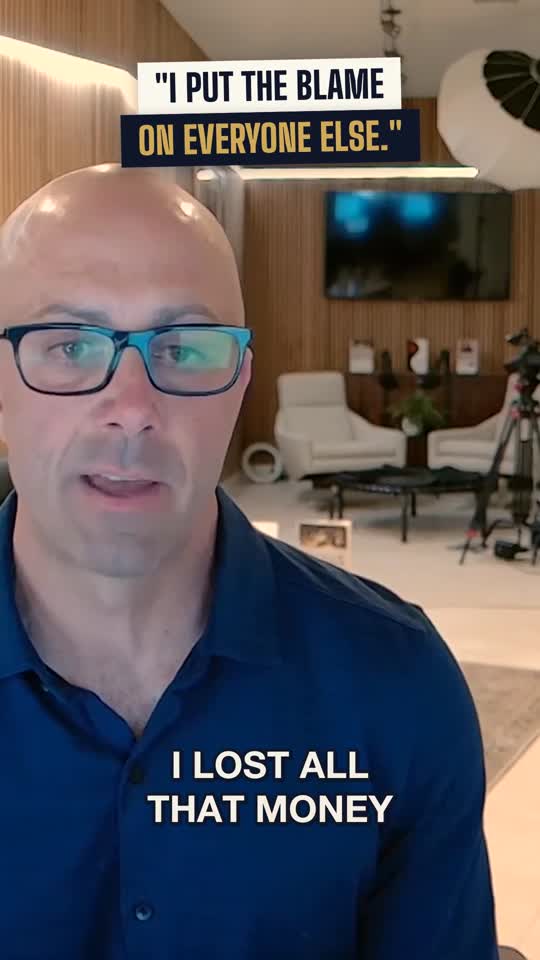
In 2007, Michael was a successful financial services professional with millions under management, including over $10 million placed with an investment partner who turned out to be running a Ponzi scheme. When the FBI called, the money was already gone. Michael spent the next three years drinking, shutting his business down, and watching his sense of self collapse alongside his net worth. "When my net worth went from millions and millions of dollars to negative, I felt worthless." That equation, net worth equals self-worth, is the trap he now spends his career helping others avoid. The night his wife and kids left with her family, he loaded a Ruger P89 and pressed it to the roof of his mouth. A physical rush stopped him. He set the gun down and made a commitment: extract every lesson, apply them, and share them with as many people as possible.

The human life value balance sheet explained

The property value balance sheet most entrepreneurs know looks like this: assets minus liabilities equals equity. Michael's human life value balance sheet works the same way, but the line items are different. Assets include knowledge, experiences, education, and relationships. Liabilities include limiting beliefs, scarcity thinking, fear, doubt, and the stories we tell ourselves and choose to believe. "I wasn't even thinking about my human life value balance sheet," Michael says of his darkest period. "I had forgotten all of that." Rebuilding started when he began listing what was actually on that second balance sheet, starting with the most basic asset of all: being alive.

What is your most valuable asset to an organization or a family?

The question sounds like a corporate HR talking point, but Michael grounds it in something more personal. When he rebuilt his life, he did it by recognizing that his knowledge, his relationships, and his capacity to create value were still intact even when his bank account read negative. His business partner Garrett Gunderson put it plainly: "Michael, you can choose to leverage your past to create moving forward." That leverage, turning a catastrophic failure into a body of work, a book, and a practice that serves clients, is only possible when a person sees themselves as the primary asset. For a family, that means the parent who does the inner work has more to pour out. For an organization, it means the leader who invests in their own human life value creates more property value for everyone around them.

Three questions that cut through the noise

Michael draws heavily on Byron Katie's work from Loving What Is and thework.com. The three questions he returns to most often: Is it true? Can I absolutely know that it's true? Is there any evidence from my past where that wasn't true? "99.9% of the time it's not true," he says. "But we tell ourselves that story and then we believe it, and all of our actions and results in our life are affected as a result." He pairs this with morning journaling, thinking time before the house wakes up, and the Wake Up Warrior app from Garrett White, all practices designed to slow the noise down enough to hear what's actually signal.

The five and three listening practice

After his wife Wendy left with her family for 45 days, Michael and Wendy rebuilt their marriage using a structure a trusted friend shared with them: five minutes of uninterrupted sharing, followed by three minutes of restating exactly what you heard, no fixing, no responding, just reflecting. "That started building trust between us," Michael says. They did it nightly in 2010. They still do it weekly. The depth it created in their relationship, he says, is the direct result of him first making a commitment to himself. "I had to take care of myself. I had to do this work on myself before I could then bring it into our relationship."

Real, raw, and relevant: what your kids already know

One of the most striking moments in this conversation comes when Michael describes standing in a lake in Southern California at a Wake Up Warrior event, his then-18-year-old son Kaden wading in to face him with tears running down his face, asking: "Why did you leave us?" Michael had assumed his kids were too young to understand what happened in 2010. They weren't. "Our kids are always watching. They know." The framework he now teaches his own family, and pours into his son-in-law as a new parent, is three words: real, raw, and relevant. Tell the truth. Share the emotion. Make it matter to the person in front of you. The body keeps the score, and so do children.
Quotable

Lines worth sitting with

People are the true assets, things are not. Human life value is the source and creator of all property value.
Michael Isom
When my net worth went from millions and millions of dollars to negative, I felt worthless.
Michael Isom
I didn't see myself as the problem. Therefore, I couldn't see myself as the solution.
Michael Isom
Our kids are always watching. They know. We think we can hide it from them, but they know.
Michael Isom
Free · No. 36 of the series

I know my net worth
Reflection Worksheet

The episode is 1h 34m. This worksheet is fifteen minutes. The fifteen minutes is the part that changes anything: five questions from this exact conversation, pointed at your business and your life. Answer them on paper while the ideas are still fresh, and they become yours for good.

  • Your Real Scoreboard
  • The Sheet You Can't Sell
  • Is That Even True
  • Betting Where You're Blind
  • Put It Back On You
You get this worksheet plus the full 75-worksheet binder, free.
5 prompts, 1 pagePrintable, binder-readyFree, no spam
Open the full worksheet →
Clips · grab & share

Short highlights from the episode

Short clips from this episode are on the way. Watch the full episode while we cut them.
The guest

Meet Michael Isom

Michael Isom on the MaxLife Podcast

Michael Isom

Financial educator and co-author of What We're Worth and What Would the Rockefellers Do?

Michael Isom spent decades in financial services before losing over $4.8 million of his family's savings in a Ponzi scheme. That collapse, and the rock bottom that followed, became the foundation for his AIS Triangle framework and his book What We're Worth, co-authored with Garrett Gunderson. He now works with entrepreneurs and families to build both a property value balance sheet and a human life value balance sheet, and to treat themselves as the number one asset in both.

Questions, answered

Questions & answers

What is your most valuable asset?
According to Michael Isom, your most valuable asset is yourself, specifically your human life value, which includes your knowledge, relationships, experiences, and mental capital. Every dollar of property value you will ever create flows from that source first. Things have no value until a person gives them value.
What is your most valuable asset to an organization?
The people inside it, starting with the leader. Michael's framework argues that human life value is the input that generates all property value output. An organization whose leaders invest in their own mental capital, relationships, and self-awareness will consistently outperform one that only tracks financial metrics.
What is a human life value balance sheet?
It's a concept Michael Isom details in his book What We're Worth. Like a standard balance sheet, it has assets and liabilities. Assets include knowledge, experiences, education, and relationships. Liabilities include limiting beliefs, scarcity thinking, and the self-defeating stories we tell ourselves and choose to believe.
How do you rebuild self-worth after financial loss?
Michael rebuilt his by separating net worth from self-worth and starting a daily gratitude journal focused on the assets on his human life value balance sheet. He also used Byron Katie's questioning framework to challenge the stories he was telling himself, and worked with coaches including Garrett Gunderson and Garrett White.
What is the five and three listening technique?
It's a communication practice Michael and his wife Wendy used to rebuild trust after a 45-day separation. One partner speaks for five minutes without interruption. The other then has three minutes to restate, not respond to, just restate, what they heard. They did it nightly at first and still do it weekly.
How does net worth affect self-worth?
For many entrepreneurs, the two are dangerously linked. Michael Isom's story is a direct case study: when his net worth went negative after a Ponzi scheme wiped out $4.8 million, he felt completely worthless as a person. The work of separating those two numbers, and building a human life value balance sheet alongside the financial one, is what allowed him to rebuild both.
Share kit

Help spread this episode

Ready-to-post copy for guests and fans. Grab a caption, pick a clip above, and link this page.

Copy any of these word-for-word, or make them your own. They tag the show so it shows up when you post.

Social caption — long
Michael Isom lost $4.8 million in a Ponzi scheme, watched his family walk out the door, and hit a rock bottom most people never talk about publicly. What brought him back wasn't a better investment strategy. It was finally treating himself as his most valuable asset. In this episode of MaxLife with Ben Laws, Michael breaks down the human life value balance sheet, the three questions that cut through self-defeating noise, and the five-and-three listening practice that rebuilt his marriage from scratch. If you've ever tied your self-worth to your net worth, this one is worth your full hour and a half. Listen here: https://maxlifecoach.com/episodes/are-you-ignoring-your-1-asset-with-michael-isom @MaxLifeBenLaws
Social caption — short / quote
Your net worth is not your self-worth. Michael Isom lost everything and rebuilt it all by finally treating himself as his #1 asset. Full episode on MaxLife with Ben Laws: https://maxlifecoach.com/episodes/are-you-ignoring-your-1-asset-with-michael-isom @MaxLifeBenLaws
Email — share with your audience
Subject: This episode hit differently

Hey,

I just listened to Ben Laws' conversation with Michael Isom on MaxLife and thought of you immediately.

Michael lost $4.8 million in a Ponzi scheme, hit rock bottom, and rebuilt everything, not by finding a better investment, but by building what he calls a human life value balance sheet alongside his financial one. The idea is simple: you are the source of every dollar you will ever create, which makes you the most valuable asset on any balance sheet.

He also shares a listening practice called five and three that he and his wife used to rebuild their marriage, and three questions from Byron Katie that he still uses every morning to cut through self-defeating noise.

Worth the full listen: https://maxlifecoach.com/episodes/are-you-ignoring-your-1-asset-with-michael-isom
Copied