Why intentional breathwork is the fastest path to calm leadership
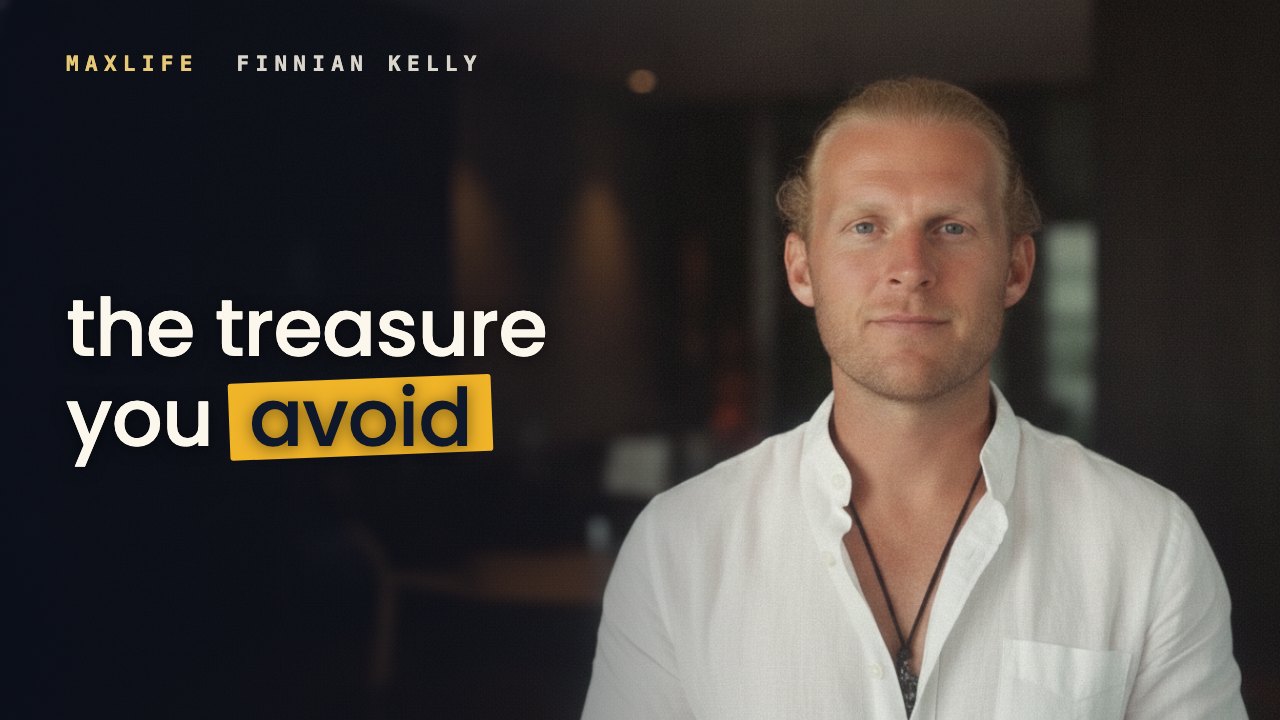
Most leaders are looking for the edge in a new strategy, a better hire, or a longer workday. Finnian Kelly has spent years coaching Fortune 500 CEOs and elite founders, and his answer is consistently the same: the edge is in the breath. "The breath is your friend," he tells Ben. "You'll notice that when something gets really scary or we're confronted, we stop breathing and it clams up." Intentional breathwork interrupts that freeze response and pulls you back into the present moment, the only place where clear decisions, real creativity, and genuine leadership are actually available.
Finnian calls this the circuit breaker. It is not a meditation retreat or a two-hour morning routine. It is a conscious pause, a few connected breaths, that flicks the switch on the fear circuit and returns you to what is actually true right now. "Wherever you are, when you do that, you recognize: you are alive, you are safe, you are taken care of, and there's not a single problem right here in this present moment."
How subconscious fear loops quietly run your company
Finnian is direct about something most leadership coaches avoid: the problems showing up in your P&L, your team retention, and your strategy meetings are almost never strategy problems. They are internal problems wearing a business costume. "The subconscious runs 95% of their daily decisions," he explains. "Feelings are running everything in their life, they're just not aware of it."
Those feelings trace back to moments, often from childhood, where it was not safe to fully feel an emotion. The subconscious created a survival loop to protect you then. That loop is still running now, and it is making hiring decisions, pricing decisions, and relationship decisions on your behalf. "All our negative belief loops, our subconscious coding, comes from that moment where we didn't feel safe or were not expressed to feel it." The work is not to analyze the loop. It is to feel what was never felt, so the loop loses its charge.
The breathwork practice high-performance coaches use with CEOs
When a multi-billion-dollar CEO sits down with Finnian for the first time, the conversation does not start with OKRs. It starts with presence. Finnian walks them through a simple sequence: stop all tasks, come still, bring awareness to the breath, invite the suppressed feelings forward rather than waiting for them to ambush you at the worst possible moment. "I am becoming present. I'm leaning into the breath. I'm inviting them forward. And then you have to hand it over to something else, lean into faith, connect with your higher self."
The results he describes are not soft. Leaders who do this work report sleeping through the night for the first time in years, reconnecting with their partners and children, making decisions faster with less deliberation, and watching sales results climb while working fewer hours. "At the start it feels like you're not making any progress, and then suddenly one day, just like click, and you've stepped into a different state of consciousness and you never have to go back."
Presence, love, and the universal mind in leadership
Finnian draws a direct line between presence and love, treating them as two words for the same state. "When we drop into presence and we're just really there, connecting with this breath, dropping down deeper into our belly, you'll start noticing a warmth starting to come over you." He also connects this to what he calls the universal mind: the field of intelligence that every great athlete, artist, and entrepreneur has tapped when they describe their best work as something that "came through" them rather than from them.
For leaders, this has a practical implication. Thinking, going over what you already know, cannot produce new innovation. Insight requires getting out of the thinking mind. That is why Finnian's first structural intervention with any CEO is to protect empty space in the calendar. "If you have every minute of your day allocated to meetings and stuff, you're just dealing with the familiar. No innovation is going to come through."
Shame, relationships, and why time does not heal
Ben and Finnian spend significant time on shame, the emotion that masquerades as self-awareness but actually keeps people frozen. Finnian defines it plainly: shame is when you apply to yourself the standard you would never apply to someone you love. It stops the very action, the admission, the apology, the honest conversation, that would end the loop. "If they just admitted it, the children would just forgive them straight away. But they can't."
He is equally blunt about the popular idea that time heals wounds. "Time heals things is one of the most stupidest sayings out there. If time heals things, why are we all dealing with mommy and daddy issues?" Time without energy just pushes the unprocessed emotion deeper into the subconscious, where it keeps running the program. The only thing that actually heals is moving energy through the body, feeling what needs to be felt, with breath, presence, and enough self-compassion to stay in the room with it.