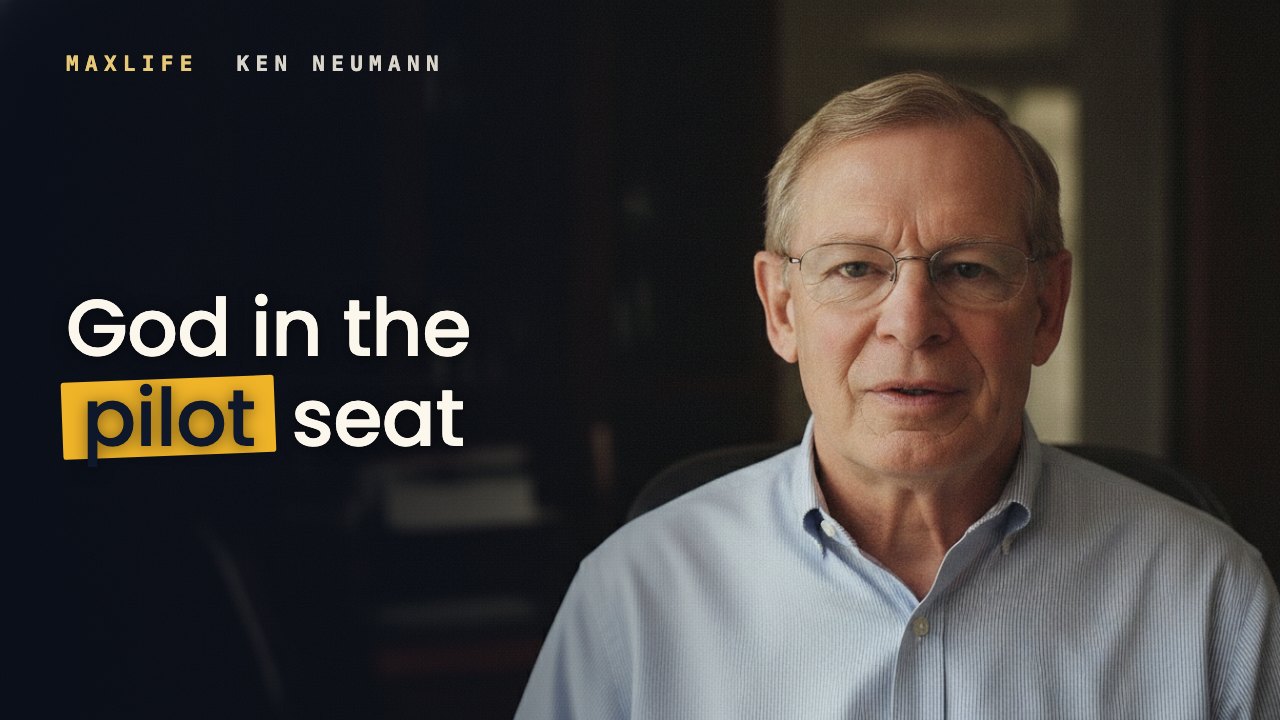
Faith-driven entrepreneurship starts with one question: who is flying the plane?
Ken Neumann has built companies from scratch, scaled a homebuilder to $530 million in annual revenue, earned a spot on magazine covers, and flown private. He will also tell you, without hesitation, that most of those years were a disaster. Not because the results were bad. Because he was in the wrong seat.
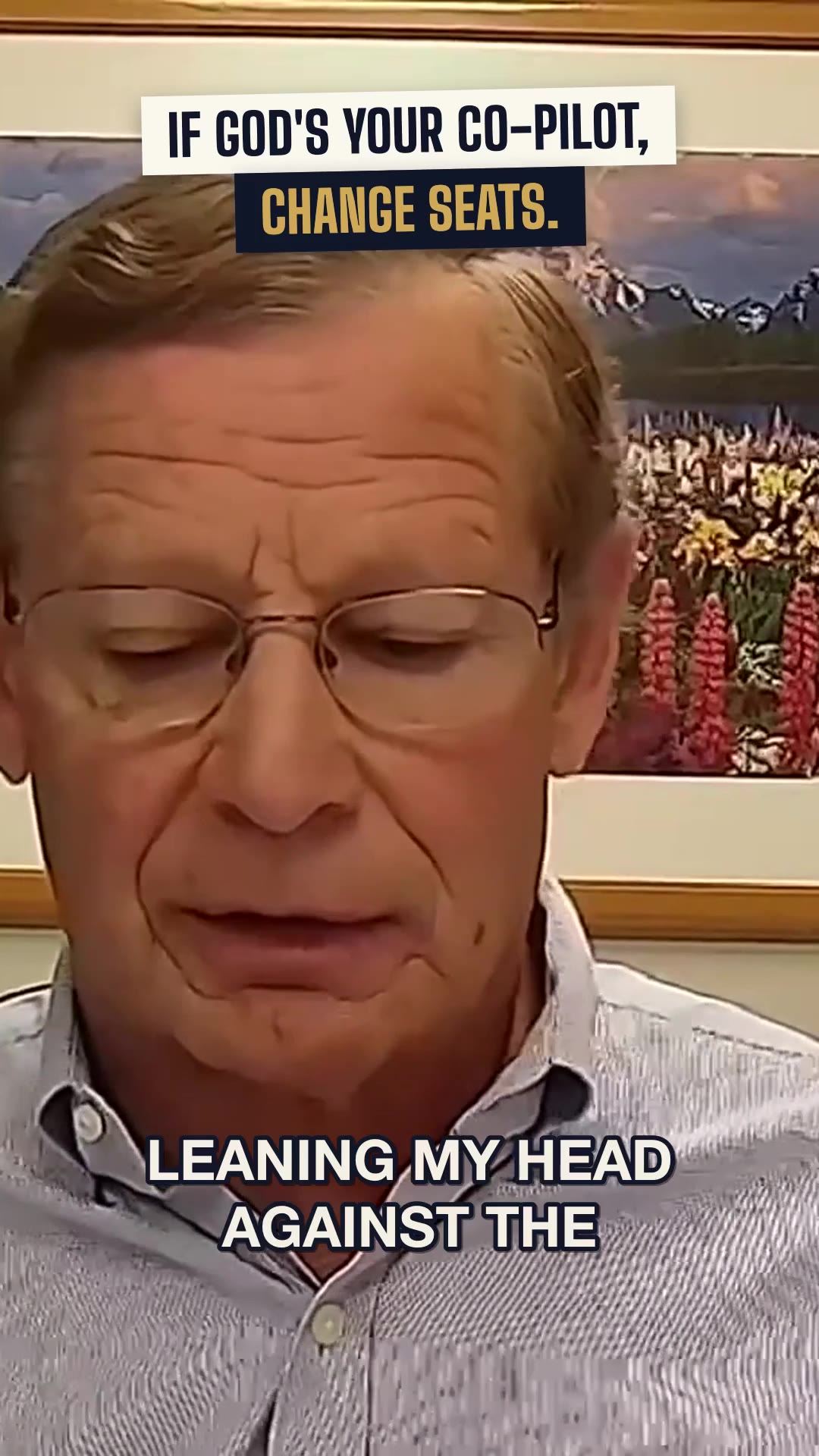
The turning point came during a morning sauna session that doubled as his prayer room. He read a single line: "If God's your co-pilot, change seats." He almost scrolled past it. Hours later, standing in a hallway during a brutal legal deposition, tears running down his face, he made a decision he has not walked back from since. "From that moment, I will never, for one decision, be in the pilot seat."
What letting go of control actually looks like in business
This is not a conversation about putting a Bible verse on your office wall. Ken is an engineer and MBA who ran a corporate university inside his homebuilding company. He trained under Dan Sullivan at Strategic Coach. He thinks in systems. And he will tell you that the most dangerous system he ever built was the one centered on his own self-sufficiency.
"Jesus's answer for what he wants you to be self-sufficient is zero," Ken says. "And you're like, wait, no. All the best schools, the best coaches, the best people everywhere. What do you mean zero?" The answer, as he has lived it, is that self-sufficiency is not a virtue. It is a declaration that you do not need the hand that is always extended.
He describes God's posture as radically different from the enemy's. The devil chases. God stands with his hand out. "Imagine walking up to the most exciting person you could think of and they want to shake your hand, and you look at them and go, 'No, I'm better than you.'" That, Ken says, is what most of us do every morning before we even get to the office.
The 2008 crash that Ken calls his greatest gift
In 2008, Newman Homes collapsed. Ken lost $171 million in cash. Five thousand five hundred employees became thirty. He describes it plainly: "Jesus said, 'Ken Neumann, I love you so much. I'm kicking you out of the pilot seat. I'm taking over.'"
What is striking is what he did not feel. "There was not one moment in that whole journey I was ever mad at God." His only worry was for the people he loved, not for himself. That peace, he says, is not a personality trait. It is what happens when you have already surrendered the controls.
How faith guides bold business decisions at Youtopia
Ken's current venture is Youtopia, spelled Y-O-U-T-O-P-I-A. The premise is straightforward and staggering: the root cause of 70 to 90 percent of illness and disease is improper daily nutrition. Solve that problem at scale, make it easy and personalized, and most of what is killing people disappears. The company is backed by 265 issued patents with roughly 180 more in the pipeline, placing it in the top one percent of inventors globally. The patent portfolio is valued in the billions.
Ken did not set out to build a patent portfolio. "I never set out to build a patent at all. He just brought other people into our lives, laid this out, made it happen, got it done." He sits in technical meetings that are, by his own admission, way over his head. His job, as he sees it, is to hold the hand and stay on the path. The brilliance shows up around him.
"If there was one second that I didn't think this was God's mission that he called me to, I would quit like that," he told his brother. "It's super difficult. It's very bold. It's only something he can do."
Growing people, not ego: the leadership model Ken actually uses
In 2002 or 2003, out of 8,000 CEOs across all industries, Ken was named one of the top 11 in the world for developing others. He did not apply. He barely knew the award existed. The recognition landed because of a simple operating principle he has carried his whole career: when he walks into a room, his first question is how to lift the person in front of him, not how to advance himself.
He credits Jack Welch's framework, which he absorbed firsthand: leaders develop others and produce excellent results through others. But he roots it deeper than management theory. Jesus is the potter. You are the clay. The job of a leader is to keep showing up for the reshaping, not to protect the current shape.
"Please just take the clay, mush it all back together, throw it on the ground, stomp on it, do whatever you need to, but then would you continue to try to reshape me into your masterpiece?" That is his actual morning prayer. That is also, he would argue, the posture every entrepreneur needs before their first meeting of the day.