How to stay calm under pressure when your job is on the line every day
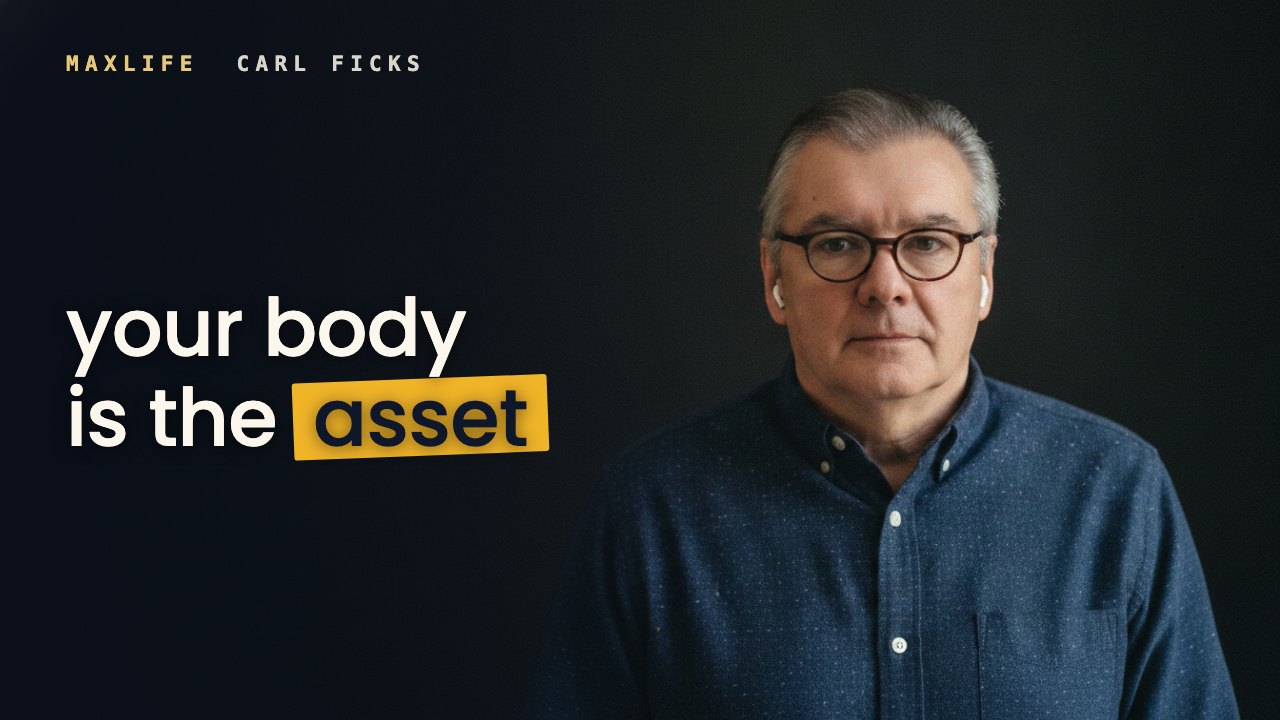
Carl Ficks spent over 30 years as a trial lawyer, a job where staying calm under pressure isn't optional. Every pleading he signed was a public act of ownership. Every time he stood before a judge, he had to hold his ground, read the room, and deliver. "When the judge says, 'Mr. Ficks, on page 15 of your brief, you state the following, tell me more about that,' I can't say a clerk did that," Carl told Ben. "You own it. You can't escape it."
That discipline didn't stay in the courtroom. It became the foundation for how Carl leads, coaches, and lives, and it's the throughline of this conversation.
Protect the asset: the habit most leaders skip
Five years into practicing law, Carl was billing long hours and eating fettuccine alfredo at 10 at night. He bought his first new car and polished the rims with a toothbrush. "I treated that car way better than I treated myself," he said. The mirror moment came around 1993. He signed up for the New York Marathon, ran it in 1995, and never looked back.
His framework is simple: if you're not vertical, you're not in service to anybody or anything. Think about the wheel of service, your partner, your kids, your clients, your colleagues, your community. Every person in that wheel needs you present. "We are in service to them. And if we're not protecting the asset, our body and our mind, we are offline."
The fix isn't complicated. What gets scheduled gets done. Twenty minutes you'd spend in a Starbucks line is a full workout. The Peloton has 20-minute HIIT sessions that, as Carl puts it, "will have you crying for your mother when you're done."
How to build trust as a leader through radical ownership
Carl posts a column every Friday called the Friday Fix. He's done it for over five years, 250-plus consecutive weeks. He ends every post the same way: own the day, own the weekend. That's not a slogan. It's a practice he's lived since he was a paper boy delivering the news at 5:30 in the morning, seven days a week.
When he took over a foundation after 25 years in law, he told his new team: "If this initiative fails, it's on me. If it succeeds, it's all of us." The room visibly relaxed. That's how trust gets built, not through titles or speeches, but through consistency and accountability that people can actually feel.
"Keyboard warriors hide in anonymity," Carl said. "In the professional world I lived in for 30-plus years, you can't do that. Every pleading I signed, Carl R. Ficks Jr., I was stating to the court that what's in this pleading is not designed to mislead. You own that."
How to stay calm under pressure at work using emotional intelligence
Carl uses the acronym RUM to break down emotional intelligence: Recognizing, Understanding, and Managing your emotions. The first step, recognizing, is self-awareness, and he thinks it's the skill most missing in leaders today.
"The ability to read the room is not something the next generation is getting practice with," he said. When all communication happens through a screen, tone, inflection, and facial expression disappear. Miscommunication fills the gap. The leaders who stay calm under pressure are the ones who've done the inner work to notice what they're feeling before they react to it.
Carl's honest about his own gaps. At his 40th college reunion, a classmate told him he was "a little different" back then. "I came to college as a 17-year-old boy," he said. "My emotional intelligence was zero in 1981. What do scared boys do? They act tough. That's your default." The man standing before her 44 years later had done the work.
Consistency: the underrated habit that compounds everything
Carl rode 62 miles on his 62nd birthday, months after a hip replacement. He screenshots his Strava rides and sends them to his daughters every Saturday morning, not to impress them, but to inform. "If dad just rode 50 miles, then I can go to the library for five hours." That's modeling. That's consistency. That's the compounding effect of showing up the same way, over and over, until people stop asking if you did the thing and start asking how far.
The Friday Fix started during the pandemic as a way to deliver good news when the news cycle was apocalyptic. It's 250 to 300 words, every Friday, no exceptions. "The Gettysburg Address was under three minutes," Carl said. "Lincoln said a lot in three minutes. You can say a lot with very few words."
Rage against the dying of the light
Carl's brother-in-law Paul disappeared in the Tonto National Forest in Arizona in 2014, the same year Carl's mother died. He was 57. Carl was also 57 when he left the law firm to found No Surrender. That parallel wasn't lost on him. "I'm sure Paul didn't think he was going to disappear that morning." The poem by Dylan Thomas, "Do Not Go Gentle into That Good Night", became the title of his chapter in The Difference and the operating philosophy of his second act.
He's 62 now. He has a new hip. He's still riding, still posting, still coaching. "Get busy living or get busy dying," he said, quoting Shawshank. "I categorically reject the idea that the magic fades. Every time I get on my bike, I feel it."