MaxLife Podcast · Episode

The Clarity System You Need with Mike Williams

Most high performers keep adding systems when the real move is subtraction. Mike Williams, former CEO of Getting Things Done and enterprise architect at Zappos, shows you how clarity, not hustle, is the actual unlock.

With Mike Williams1h 48mClarity · Productivity · Leadership
The short version

Clarity isn't a feeling you wait for, it's a practice you build. Mike Williams, former CEO of Getting Things Done, teaches a framework called Doing to Done: identify your roles, name one next action per project, and let beautiful questions replace vague statements. The system works at every level, from 'what do I eat today' to 'who am I becoming in the next decade.' Roles are the superheroes that make up the whole you, and naming them is an act of courage. When you get clear on what you're doing and why, you say a stronger yes and a stronger no, and your surface area for luck expands every time you take one real action.

Key moments
What you'll take away

9 ideas from this conversation

01

Clarity is kind

The whole Doing to Done system rests on one idea: getting clear with yourself first lets you get clear with everyone around you. Ambiguity costs more than the discomfort of naming things.

02

Questions are fateful

The questions you ask yourself shape what you see and what you pursue. Curating a beautiful question is an act of courage, you have to be willing to stay in relationship with it over time.

03

One next action, not fifty

The minimum viable product of the system is simple: name the one next action that moves something forward, then write what done looks like. Everything else builds from those two sentences.

04

Roles are your superheroes

You are not one person, you are a collection of roles, each with its own purpose and vision. Naming them and drawing what success looks like in each one is where real clarity begins.

05

Luck needs a surface area

Luck is preparation meeting opportunity. When your roles, projects, and next actions are mapped, you train your brain to see the opportunities you want, and every action you take increases the probability.

06

Statements shut people down

A statement is just a poorly worded question. Turning your answers back into questions for the people around you creates space for them to find their own wisdom, and frees you to work at a higher level.

07

The party in the brain drowns wisdom

Your internal wisdom is always whispering, but the noise of an overloaded mind drowns it out. Getting everything out of your head is how you finally hear what you already know.

08

Transitions demand a next-me role

When a season of life ends, kids leave, a job disappears, a relationship changes, the move is to create a role called 'the next me' and start asking what you're optimizing for in this new chapter.

09

The 20-year life map changes goodbyes

Mapping your family's ages in five-year chunks surfaces what's finite before it's gone. Mike changed how he said goodbye to his mother because of it, and a 6'6' construction executive changed how he went home at night.

Full show notes

The Clarity System You Need with Mike Williams

Why high performers need a clarity system, not more hustle

Mike Williams has sat inside two of the most operationally demanding organizations on the planet, as CEO of Getting Things Done and as a productivity architect at Zappos. What he kept seeing was the same pattern: smart, driven people adding more systems, more routines, more inputs, and still feeling stuck. His answer, built into his book Doing to Done, is a clarity-first framework that works in the opposite direction. "Clarity is kind," he says. "Clarity is kind for ourselves, and if we get clear with ourselves, we can get clear with those around us."

The framework is deceptively simple. It starts with one question and one next action. But as Mike walks through it with Ben, it becomes clear that the simplicity is the point, and that most people are skipping the foundational step entirely.

Beautiful questions and the courage it takes to ask them

The first unlock in Doing to Done isn't a tool, it's a mindset shift about questions. Mike draws a sharp line between statements and questions: "A statement is just a poorly worded question." When a COO answers every problem that walks into his office, he looks competent. But he's also ignoring the strategic question he should be working on, and he's robbing his team of the chance to find their own wisdom.

The alternative is what Mike calls a beautiful question, one you stay in relationship with over time, one that changes how you see the world. "The questions we ask ourselves are fateful," he tells Ben. "And the act of curating a beautiful question is an act of courage, because you have to want to turn and face and be in relationship with that question for a period of time."

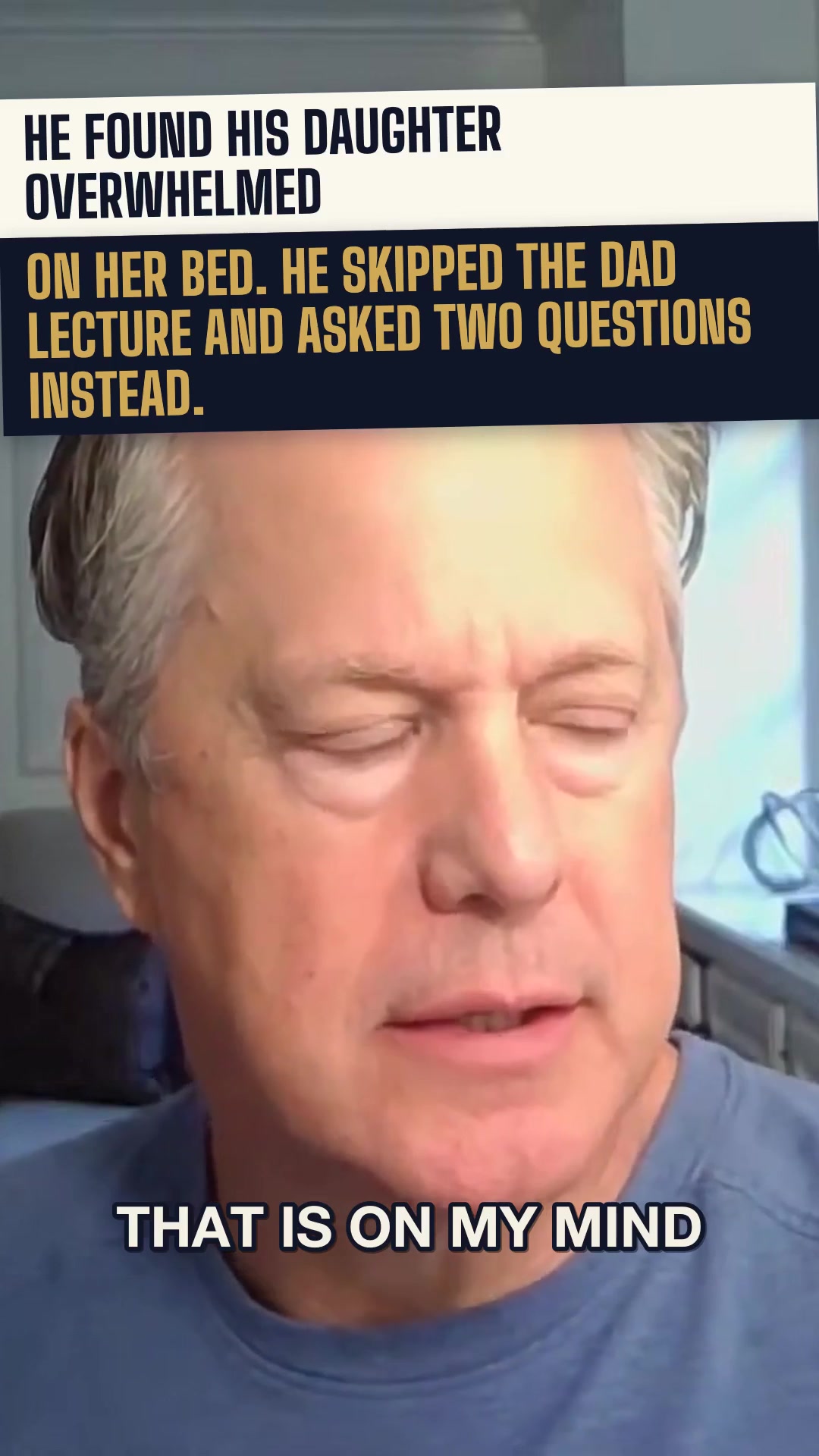
He used this exact approach with his daughter Hannah, who was drowning in AP classes and college applications. Instead of a dad lecture, he asked two questions: what's on your mind, and what's one action you can take to move each of those things forward? "You could see the overwhelm kind of disappear and the control go back to her body," he says.

The Doing to Done framework: role, project, action

The structural backbone of the system is straightforward. Every area of your life maps to a role. Every role has practices (things you do repeatedly to build mastery) and projects (discrete efforts with a finish line). Every project has exactly one next action, the single physical thing you'd do if someone said "action" right now.

"If this is the only thing in your world to work on right now and I said action and I watch you, the hero, do the thing, what would I see you do?" Mike asks. "You'd either be buying something, drafting something, organizing something, nailing something in the wall, that's the first next action."

The done statement matters just as much as the action. Writing what the finish line looks like, not just what you're doing, but what done actually means, is what closes the loop and keeps agreements with yourself honest.

Roles as superheroes: the clarity key most people skip

The deepest part of the conversation is about roles. Mike frames each role, dad, CEO, entrepreneur, self, as a superhero with its own purpose, vision, and set of practices. "These roles are the many superheroes that make up the whole you," he says. Naming them is an act of courage. Drawing what success looks like in each one pulls the left and right brain together in a way that a to-do list never can.

One pattern Mike sees repeatedly, especially with women who have been giving heavily in every other role: the anchor role, the self role, gets hollowed out. One client, a pediatric doctor turned homeschool mom, named her self role "This is Gina!", exclamation point included. The punctuation was intentional. It was a reclamation.

For anyone in transition, Mike adds a role called the next me. It's a space to explore what you're optimizing for, money, time, freedom, flexibility, before you commit to a direction. "It's like wearing a Halloween costume," he says. "You get to cosplay for a little bit with that role without doing the full investment."

The 20-year life map and what it changes

One of the most practical exercises in the episode is the 20-year life map. You write your name at the top, list the people important to you with their current ages, then age everyone out in five-year chunks across the next two decades. What surfaces is what's finite, and what's still possible.

Mike did this himself and noticed his mother's health trajectory. It changed how he said goodbye to her every visit: "I love you. I'll see you soon." When the call came that she was gone, he was on a rental shuttle at LAX. He said the same words. "I was playing the long eternal game," he says. "This part of it has ended." A construction executive did the same exercise and realized he had four years left with his daughter before college. He went home differently that night.

Doing vs. being, and why both need structure

Ben pushes Mike on the doing-versus-being tension, especially in a world where Alex Hormozi-style productivity culture says grind from wake to sleep. Mike's answer is nuanced. Doing has two flavors: doing something and doing nothing. Being has its own structure too, sometimes the focus card just says "dad" and "husband," and that's the whole plan for Saturday.

"I don't know what the doing is going to look like," Mike says. "I'm just going to show up in this context and be a dad and live into my vision for being a dad today. Not a big to-do list, a big to-serve list." The system holds the structure so that when you choose to do nothing, you can do it guilt-free. The inventory is trusted. The open loops are closed. The whisper of your own wisdom finally has a chance to be heard.
Quotable

Lines worth sitting with

The questions we ask ourselves are fateful. And the act of curating a beautiful question is an act of courage, because you have to want to turn and face and be in relationship with that question for a period of time.
Mike Williams
If this is the only thing in your world to work on right now and I said action and I watch you, the hero, do the thing, what would I see you do?
Mike Williams
Clarity is kind. Clarity is kind for ourselves. And if we get clear with ourselves, we can get clear with those around us.
Mike Williams
You increase your surface area of possibility and probability. Luck is when preparation meets opportunity. You just gave the framework of what preparation is and how to do that again and again and again.
Mike Williams
Free · No. 40 of the series

I keep doing more, but I still don't feel clear on what actually matters
Reflection Worksheet

The episode is 1h 48m. This worksheet is fifteen minutes. The fifteen minutes is the part that changes anything: five questions from this exact conversation, pointed at your business and your life. Answer them on paper while the ideas are still fresh, and they become yours for good.

  • Dump What's On Your Mind
  • The Statement Underneath
  • Turn It Into A Question
  • Which You Owns This
  • The One Shot
You get this worksheet plus the full 75-worksheet binder, free.
5 prompts, 1 pagePrintable, binder-readyFree, no spam
Open the full worksheet →
Clips · grab & share

Short highlights from the episode

Short clips from this episode are on the way. Watch the full episode while we cut them.
The guest

Meet Mike Williams

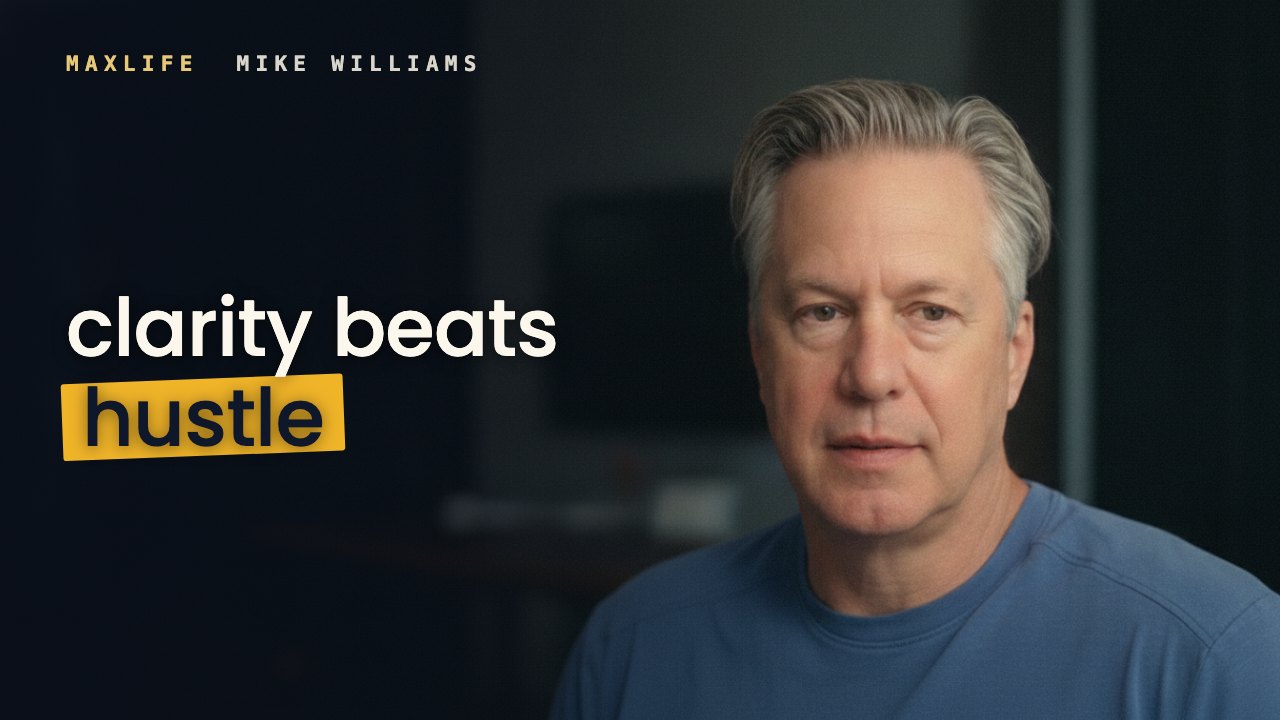
Mike Williams on the MaxLife Podcast

Mike Williams

Author of Doing to Done · Former CEO, Getting Things Done · Productivity Architect, Zappos

Mike Williams spent years inside two of the most operationally rigorous organizations in the world, GTD and Zappos, before distilling what he learned into Doing to Done, a clarity-first framework for high performers. He coaches executives, entrepreneurs, and parents on how to subtract complexity, name their roles, and take one real next action at a time. His core belief: clarity is kind, and beautiful questions are the engine of everything.

Questions, answered

Questions & answers

What is the Doing to Done framework?
Doing to Done is a clarity-first productivity system built around roles, projects, practices, and next actions. You map every area of your life to a role, give each role a purpose and vision, and then identify one next action per project. The system is designed to get everything out of your head so you can hear your own wisdom and take action with intention.
How do you find clarity when you feel overwhelmed?
Mike's approach starts with a simple two-step: write down everything on your mind, then write one action you can take to move each item forward. This moves control back into your body and makes the game winnable. The key is making the first action small enough that you can actually do it today.
What is a beautiful question and how do you find one?
A beautiful question is one you stay in relationship with over time, it changes how you see the world and surfaces wisdom you didn't know you had. Mike suggests starting by writing down a statement you keep making, then rewriting it as a question. The act of sitting with that question, rather than forcing an answer, is where the real clarity comes from.
How often should you review your roles in a productivity system?
Mike recommends reviewing your roles as often as you need to feel connected to them, and always during major life transitions, a job change, a relationship shift, kids leaving home. Transitions are when roles get added, deleted, or redefined, and having a map makes that process intentional rather than reactive.
What is the difference between a project and a practice in GTD-style systems?
A project has a discrete finish line, a done statement you can write down and check off. A practice is never done; it's something you do repeatedly to build mastery over time, like working out, meal prepping, or having dinner at the table as a family. Practices create the conditions for outcomes to show up; you can't do an outcome directly.
How do high performers avoid burnout while staying productive?
Mike's answer is role clarity and intentional being. When your roles, projects, and next actions are mapped in a trusted system, you can choose to do nothing, or just show up in a role without a to-do list, without guilt. The structure is what makes rest feel safe, because nothing is falling through the cracks.
Share kit

Help spread this episode

Ready-to-post copy for guests and fans. Grab a caption, pick a clip above, and link this page.

Copy any of these word-for-word, or make them your own. They tag the show so it shows up when you post.

Social caption — long
What if the thing holding you back isn't a lack of systems, it's a lack of clarity? Mike Williams, former CEO of Getting Things Done and productivity architect at Zappos, joined Ben Laws on the MaxLife podcast to break down the Doing to Done framework: how to find your beautiful questions, map your roles like superheroes, and take one real next action at a time. This conversation covers everything from the 20-year life map that changes how you say goodbye, to why a statement is just a poorly worded question, to how to reclaim yourself when a season of life ends. Full episode + free reflection worksheet at https://maxlifecoach.com/episodes/the-clarity-system-you-need-with-mike-williams, @MaxLifeBenLaws
Social caption — short / quote
Clarity is kind. Mike Williams on beautiful questions, role mapping, and the one next action that changes everything. Full episode at https://maxlifecoach.com/episodes/the-clarity-system-you-need-with-mike-williams, @MaxLifeBenLaws
Email — share with your audience
Subject: You have to hear this episode

Hey,

I just listened to Mike Williams on the MaxLife podcast and I keep thinking about something he said: "The questions we ask ourselves are fateful."

He's the former CEO of Getting Things Done and he built a clarity framework called Doing to Done, and the whole conversation with Ben Laws is one of those rare ones where you finish it and immediately want to do something differently.

They cover how to map your roles like superheroes, why beautiful questions beat statements every time, and a 20-year life map exercise that will genuinely change how you think about the people you love.

Full episode here: https://maxlifecoach.com/episodes/the-clarity-system-you-need-with-mike-williams

There's also a free reflection worksheet on the page if you want to actually work through it.

Think you'll get a lot out of it.
Copied