MaxLife Podcast · Episode

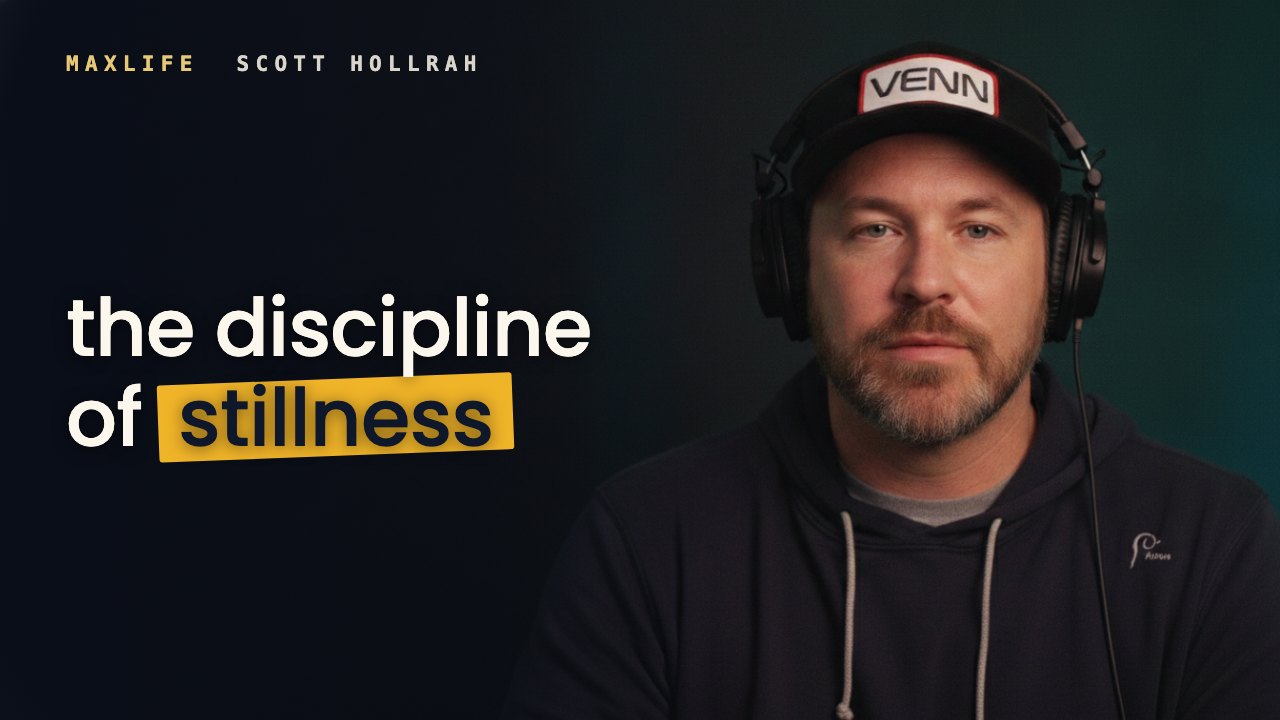
The Discipline of Stillness: Leading Without Losing Yourself with Scott Hollrah

What happens when a high-growth founder stops chasing and starts listening? Scott Hollrah built Venn Technology to the Inc. 5000, then stepped away at its peak, and what he found in the silence reshaped everything about how he leads.

With Scott Hollrah2h 0mLeadership · Identity · Delegation
The short version

Scott Hollrah, founder and CEO of Venn Technology, spent the first decade of his company swinging between white-knuckle control and quiet abdication, and learned that delegation is the only sustainable place in between. After years of conflict avoidance, identity tied to his title, and a growing numbness he mistook for peace, he took a solo retreat to a cabin in Estes Park and came back changed. The core insight: stillness is not passive. It is the most active, strategic thing a founder can do. He also argues that a supportive spouse, honest mentors, and the willingness to have the conversation you keep kicking down the road are the real levers of a lasting business. The goal was never a bigger company, it was creating the kind of company he actually wanted to work for.

Key moments
What you'll take away

9 ideas from this conversation

01

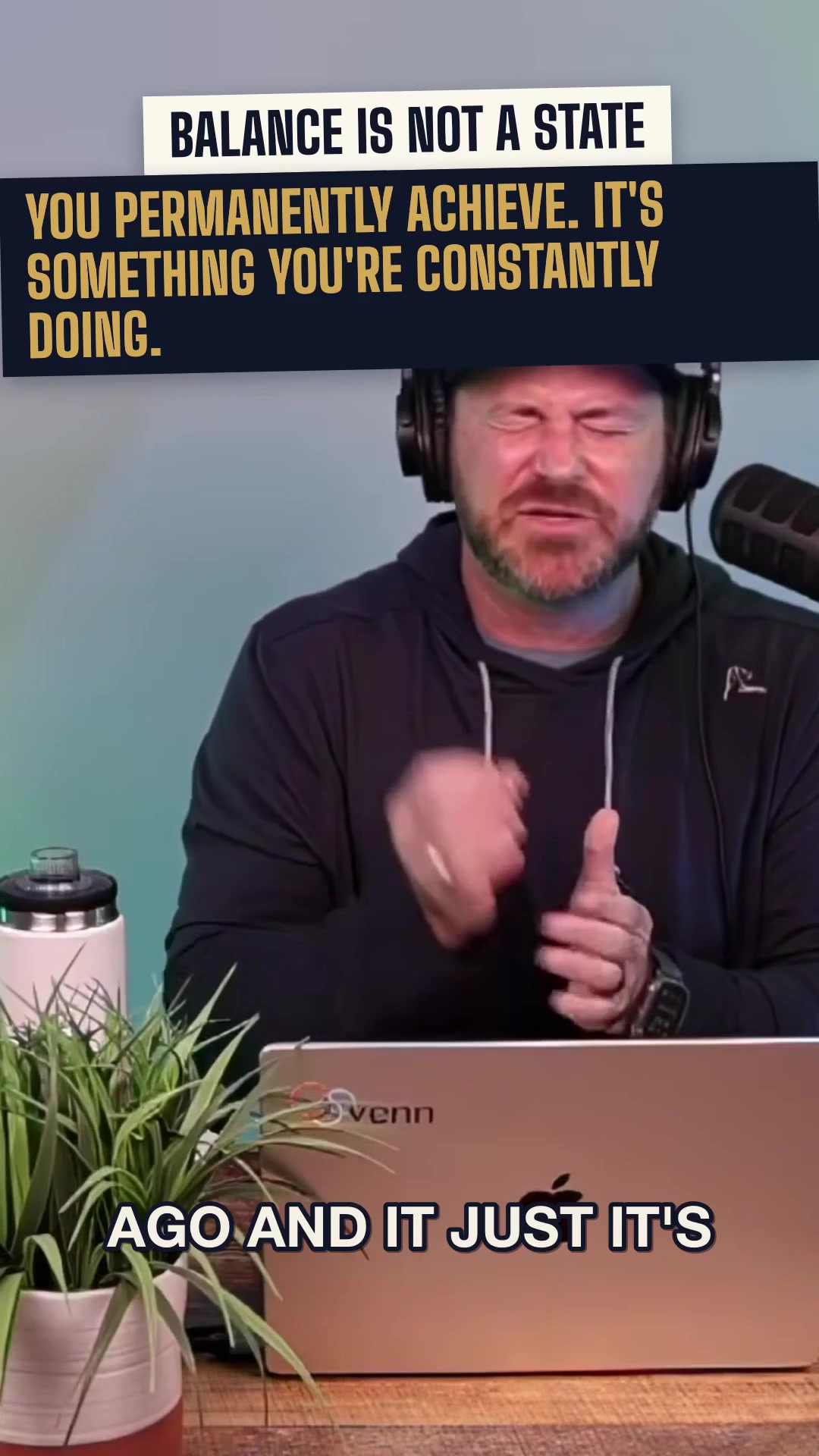
Balance is something you do

Scott's mentor reframed balance not as a destination but as a constant act: 'Every step you take, you're balancing and rebalancing.' The same is true for control and delegation.

02

70% is enough to let go

Scott's turning point came when he realized that if someone could do a task 70% as well as he could, handing it off created leverage. In practice, they usually hit 100%.

03

Abdication is not the same as trust

Stepping back too far without clear expectations and metrics is not freedom, it is checked-out leadership. What gets measured gets managed.

04

Identity tied to a title is fragile

'I realized I have put my identity in Scott the business owner. And if I am not Scott the business owner, what am I?' Knowing who you are outside the role is not optional.

05

Kicking the can costs more than the conversation

Years of avoiding one hard conversation created more internal damage than the conversation itself ever could have. Conflict avoidance is not kindness, it is a slow tax.

06

Numb and peaceful look the same from the outside

Scott spent a long stretch mistaking numbness for peace. The difference is not the symptoms, it is the condition of your heart underneath them.

07

Stillness is a strategic act

A solo retreat to a cabin in Estes Park shifted Scott from numb to genuinely at peace. Getting still and listening, not just praying, was the move his business and his soul both needed.

08

Build the company you want to work for

Scott borrowed this line from a mentor and made it his north star: 'I want to create the kind of company that I want to work for.' It is a simpler and more durable filter than any revenue target.

09

A supportive spouse is a business decision

Scott is direct: without a spouse who is genuinely behind the mission, you are setting yourself up for failure. Every entrepreneur he has interviewed who lasted had one.

Full show notes

The Discipline of Stillness: Leading Without Losing Yourself with Scott Hollrah

Why founder identity is the hidden variable in business growth

Scott Hollrah did not set out to build a company worth studying. He set out to build one worth working for. But somewhere between his first hire and his tenth anniversary on the Inc. 5000, he ran into the same wall most founders hit: the business had grown, and he had not kept pace with it internally. 'I realized I have put my identity in Scott the business owner,' he says. 'And if I am not Scott the business owner, what am I?' That question, deceptively simple, genuinely destabilizing, is the thread that runs through this entire conversation.

For Scott, the identity crisis showed up as a visceral reaction to acquisition offers. Partners would pull him aside at conferences and suggest rolling Venn into their organization. He was offended every time. When he finally unpacked that reaction, he found something useful: the offense was not about the offer. It was about what the offer implied, that he could exist without the title. Learning to separate his worth from his role did not happen in a workshop. It happened slowly, through mentorship, through loss, and eventually through stillness.

The control to delegation to abdication continuum every founder needs to map

One of the most practical frameworks Scott brings to this conversation is a simple continuum: control on one end, abdication on the other, delegation as the only sustainable middle. In the early days of Venn, he was deep in control, not because he doubted his team, but because if he was not the one doing the work, he did not know how it got built. His first contractor knocked the project out of the park. His first employees spent their first year frustrated because he had hired them to do a job and would not let them do it.

The shift came in a quiet moment in his second office, door closed: 'All right, Scott. If you will hand these things off and if they can actually do these things 70% as well as you can, that creates a tremendous amount of leverage for you to go and do the things that are going to grow the business further.' More often than not, they were not doing it 70% as well. They were doing it close to 100%, sometimes better.

But the story does not end at delegation. As the team grew, Scott drifted toward the other extreme. 'If I'm being really just brutally honest and self-reflective, I think I got to a point where I had kind of abdicated.' A lunch with a friend snapped him back: 'Scott, you need to be a wartime CEO.' The lesson is not that founders should stay in control. It is that the continuum requires constant, active rebalancing, like walking down a hallway, every step a small act of balance.

Conflict avoidance and the conversations founders keep kicking down the road

Scott is an Enneagram Nine. He does not like conflict. He will tell you that plainly, and then tell you exactly what it has cost him. There was a team member situation he let drag on for years, years of dreaded meetings, kicked cans, and mounting internal damage. A mentor told him what to do. He did not do it. Then one Saturday morning at 6 a.m., he shot out of bed with a clarity he describes as the Holy Spirit speaking directly to his heart: 'Scott, you are avoiding this situation because you're afraid that this person might leave. If you don't act, you are deliberately choosing to have this constant internal consternation. You need to act and damn the consequences.'

He had the conversation. The person left. And the peace that followed was immediate. 'It does not get better by kicking the can,' he says. 'It will only get better if you address it.' For any founder who has a conversation they have been postponing for months, or years, this section of the episode is worth the full two hours on its own.

The solo retreat and the discipline of stillness in leadership

The title of this episode is not metaphorical. Scott took a solo retreat to a small cabin in Estes Park, Colorado, right outside Rocky Mountain National Park. No agenda. No team. Just scripture, silence, and the specific instruction a wise woman in his Convene group had given him: 'How often are we actually taking time to get still and not talk, but just listen?'

What he found was not a business insight. It was a shift in his internal state, from a numbness he had been carrying for years to something he could finally call peace. 'The symptoms of numbness and peace are very similar,' he says, 'but the condition of your heart, the condition of your mind is really the differentiation.' He came back a different kind of leader. Not louder, not more aggressive, more present. More willing to make the hard call. More grounded in who he is outside the company.

He is clear that this is not a faith-specific prescription. 'Whether you're a person of faith or not, if you need to go and get away by yourself, be alone with your thoughts for a few days in an unfamiliar environment, I cannot tell you how important having those times to reset is.' Stillness, in Scott's framework, is not a luxury. It is a leadership discipline.

Building a company worth working for: culture, mentorship, and the long game

Scott borrowed his company's north star from a mentor: 'I want to create the kind of company that I want to work for.' That single sentence has been more durable than any revenue target. It shows up in how Venn handles conflict across departments, how Scott thinks about the golden rule in client relationships, and why he has stayed in a Convene peer group for years, surrounding himself with lawyers, marketing agencies, a property management firm, and a highway maintenance company, all pushing back on his blind spots from angles he would never find inside his own industry.

His advice for founders just starting out is direct: get a supportive spouse or do not start. Get mentors who will tell you what you do not want to hear. And do not build an echo chamber, diversity of thought is good, but diversity of heart, as Ben puts it, is what actually changes you. Ten years in, Scott's team surprised him at their annual kickoff with a video that ended with his wife on camera. He lost it. That moment, not the Inc. 5000 listing, not the revenue milestone, is what ten years of building the right way actually looks like.
Quotable

Lines worth sitting with

I realized I have put my identity in Scott the business owner. And if I am not Scott the business owner, what am I?
Scott Hollrah
If you will hand these things off and if they can actually do these things 70% as well as you can, that creates a tremendous amount of leverage for you to go and do the things that are going to grow the business further.
Scott Hollrah
Balance is not a state that you permanently achieve. Balance is something that you are constantly doing.
Scott Hollrah
Scott, you are avoiding this situation because you're afraid that this person might leave. You need to act and damn the consequences.
Scott Hollrah
Free · No. 50 of the series

I know what I've built
Reflection Worksheet

The episode is 2h 0m. This worksheet is fifteen minutes. The fifteen minutes is the part that changes anything: five questions from this exact conversation, pointed at your business and your life. Answer them on paper while the ideas are still fresh, and they become yours for good.

  • Where Are You Gripping
  • The Thing You Won't Hand Off
  • The 70 Percent Test
  • What You're Afraid Would Happen
  • Your Quiet Hour
You get this worksheet plus the full 75-worksheet binder, free.
5 prompts, 1 pagePrintable, binder-readyFree, no spam
Open the full worksheet →
Clips · grab & share

Short highlights from the episode

Short clips from this episode are on the way. Watch the full episode while we cut them.
The guest

Meet Scott Hollrah

Scott Hollrah on the MaxLife Podcast

Scott Hollrah

Founder & CEO, Venn Technology

Scott Hollrah founded Venn Technology in Dallas-Fort Worth after 26 cross-country flights in a single year convinced him he could do the work he loved on his own terms. Ten years later, Venn has landed on the Inc. 5000 and the Aggie 100 and been recognized as a best place to work. Scott also hosts his own podcast and is a member of Convene, a peer advisory group for Christian business leaders.

Questions, answered

Questions & answers

What is the difference between delegation and abdication for founders?
Delegation means handing off a task with clear expectations, defined metrics, and ongoing accountability. Abdication is stepping back without any of that structure, essentially checking out while still holding the title. Scott describes abdication as what happens when a founder gets comfortable and stops measuring what matters, and warns that it quietly damages both the business and the team.
How do you know when you have tied your identity to your business?
Scott's tell was a visceral, almost angry reaction to acquisition offers, offers that were actually compliments. When he unpacked that reaction, he found that the offense came from what the offer implied: that he could exist without the founder title. If the thought of stepping away from your company feels like a threat to who you are, not just what you do, that is the signal.
What is a wartime CEO and when does a founder need to become one?
A wartime CEO prioritizes speed and decisive action over consensus. Scott's friend used the term to describe a moment when the business needed clear direction and fast decisions, not another round of input-gathering. The shift is not about being harsh, it is about recognizing that in certain seasons, kindness looks like making the call, not deferring it.
How can a founder overcome conflict avoidance in leadership?
Scott's honest answer is that it does not get easier by waiting, it only gets more expensive. He let one difficult team situation drag on for years, and the internal cost far exceeded what the actual conversation cost him. His practical advice: pick your moment, choose your words carefully, and accept that you cannot control the outcome. The peace that follows is worth it.
What does a leadership sabbatical or solo retreat actually look like?
For Scott it was a few days alone in a small cabin in Estes Park, Colorado, with no agenda beyond prayer, scripture, and silence. The specific instruction that sent him there was simple: stop talking and start listening. He came back having shifted from a years-long numbness to a genuine peace, and credits that reset with making him a more present, more decisive leader in the months that followed.
How important is a supportive spouse to entrepreneurial success?
Scott calls it non-negotiable. He has interviewed dozens of entrepreneurs on his own podcast and says without exception, every founder who has lasted a meaningful amount of time has a spouse who is genuinely behind the mission. His own wife gave him both the green light and a clear line in the sand at the start, and was still the person who made him cry at his ten-year company kickoff.
Share kit

Help spread this episode

Ready-to-post copy for guests and fans. Grab a caption, pick a clip above, and link this page.

Copy any of these word-for-word, or make them your own. They tag the show so it shows up when you post.

Social caption — long
What does it actually cost a founder to stay in control of everything? Scott Hollrah, Founder & CEO of Venn Technology, sat down with @MaxLifeBenLaws to talk about the decade-long journey from white-knuckle control to real delegation, and the solo retreat to a Colorado cabin that shifted him from numb to genuinely at peace. He gets honest about identity tied to a title, the conflict-avoidant decisions that dragged on for years, and why stillness might be the most strategic move a leader can make. If you have ever felt like you are the business, or like you have quietly checked out of it, this one is worth two hours of your time. Full episode + free reflection worksheet at https://maxlifecoach.com/episodes/the-discipline-of-stillness
Social caption — short / quote
"I realized I have put my identity in Scott the business owner. And if I am not Scott the business owner, what am I?" Scott Hollrah on identity, delegation, and the discipline of stillness, with @MaxLifeBenLaws. Full episode: https://maxlifecoach.com/episodes/the-discipline-of-stillness
Email — share with your audience
Subject: Episode worth your time, The Discipline of Stillness

Hey,

Thought of you when I listened to this one. Scott Hollrah, founder of Venn Technology, spent ten years building a company to the Inc. 5000, and somewhere along the way realized he had tied his entire identity to the title. He talks through the control-to-abdication trap most founders fall into, why he finally had the conversation he had been avoiding for years, and what a solo retreat to a Colorado cabin actually did for his leadership.

There is a free reflection worksheet on the page too if you want to sit with the ideas.

Full episode here: https://maxlifecoach.com/episodes/the-discipline-of-stillness

Worth the listen.
Copied