The inner battle entrepreneurs don't talk about
Most entrepreneurship content lives on the surface: the strategy, the systems, the scale. This episode goes somewhere different. Ben Laws sits down with three entrepreneurs, Kelly Knight, Chris Johnson, and Dennis McIntee, and the conversation goes straight to the stuff that success alone can't fix. Identity. Grief. Gratitude. The question underneath all the momentum: am I enough?
If you've ever built something real and still felt hollow, this one is for you.
Kelly Knight on confidence, trust, and adversity in entrepreneurship
Kelly Knight, President of EOS Worldwide, opens with a deceptively simple idea: there are two kinds of people, those who trust first, and those who make trust earned at every step. Kelly is firmly in the first camp, and she traces it directly to her parents. "I trust first, which sometimes means you can get burned. But I think that trusting first has allowed for me to move more freely and autonomously."
But the conversation gets more interesting when Ben asks about struggle. At 12, Kelly was diagnosed with scoliosis and given a bleak long-term prognosis. Twenty doctors walked into the room. Her mom's face said everything. And Kelly's internal response, even then, was flat refusal. "Something in me just was like, 'No, this isn't going to be me.'" She can't fully explain why a 12-year-old would push back against a room full of specialists. But that moment flipped her from passive to active, and it's been the frame ever since.
Her advice for anyone who didn't get a confident upbringing is two sentences long: you are enough, and keep going. Not because the obstacles disappear, but because what you already have is sufficient if you don't stop.
Emotional honesty and the gratitude practice that changes everything
Chris Johnson's segment starts on the floor of his office, door locked, tears running, trying to figure out how to make payroll. He heard a sermon that asked one question: what do you have left? And when he actually looked, the answer stopped him cold. A wife who loved him. Healthy kids. A life that, even at its lowest, a million people would stand in line to live for one day.
"So how dare I walk with a spirit of lack."
That shift didn't produce instant results. But it changed the quality of the journey. Chris started surrendering the parts he couldn't control and fortifying the parts he could, specifically, his mornings. Before email, before texts, before social media, he builds what he calls a blessing list. He writes down what's working. He names his expectations, not as pressure, but as anticipation. "Expectation is a superpower. Anticipation of something good happening. It's the opposite of anxiety."
The practical logic is tight: if you roll out of bed and go straight into your inbox, you're starting from neutral. One bad email and you're already in a hole. But if your mindset is already high when the slights arrive, they don't have enough altitude to reach you. You've already won the day.
Chris also named something most people avoid: some people suffer twice. Once from the anxiety of what might not happen, and once when it doesn't. The morning practice is specifically designed to break that loop.
Identity, unprocessed grief, and why entrepreneurs chase what success can't give them
Dennis McIntee goes deepest. He was 15 when his dad was arrested and taken to prison. The word he uses for what that felt like is simple and exact: abandoned. And he carried that wound for decades without fully naming it.
The insight he brings isn't just personal, it's a framework. "When somebody has a wound, everything becomes about that wound." Every slight, every perceived disrespect, every moment of being overlooked gets filtered through the original injury. You can't win for trying, because the wound is doing the interpreting.
And then he says the thing that lands hardest: "I think sometimes we are the most damaged people with high-functioning coping skills." A lot of entrepreneurial drive, he realized, was really a chase for healing. The new car, the new deal, the next win, all of it trying to fill something that external success structurally cannot reach.
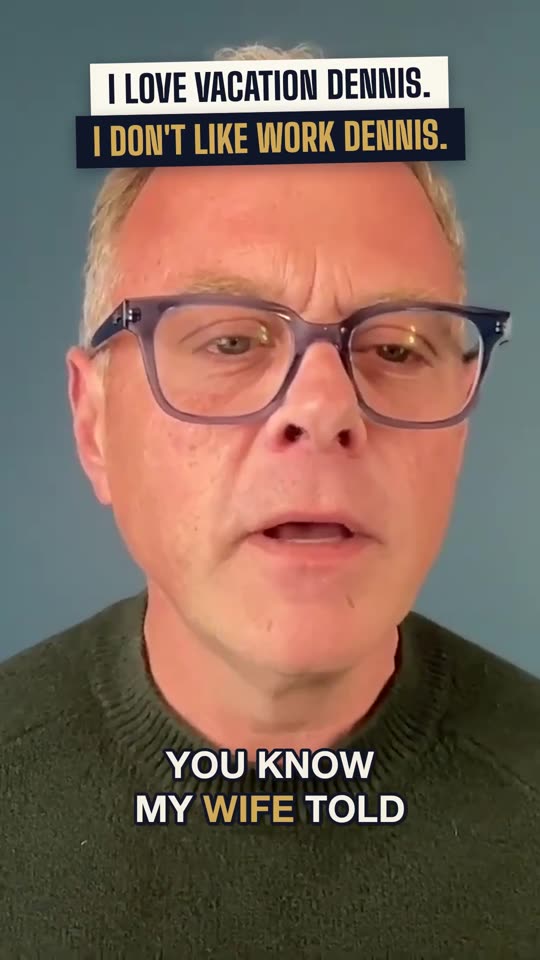
The shift, for Dennis, came from processing the grief instead of stuffing it. His wife told him she loved vacation Dennis but didn't always like work Dennis. That landed. He started asking what was actually driving the anxiousness, the irritability, the relentless push. And slowly, the drive became less about filling a void and more about the genuine joy of growth.
He left a workshop with a decision: he was done being Perfect Dentist. He was bringing Messy Dentist home. "It's really freeing. It's really fun to be messy, and it's okay."
What this episode is really about
Three conversations, one through-line: the inner work that success cannot do for you. Confidence built on trust. Gratitude as a daily discipline, not a feeling. Grief processed instead of buried. Identity chosen instead of inherited from a wound.
Ben ties it together with something from his own life, the loss of his son 16 days after birth, and the realization that bittersweet is a God term. The sorrow is only as big as the love. You don't get one without the other. And the courage required to keep building, keep showing up, keep going, that's not the absence of pain. It's what you do with it.