Why high performers struggle to stop being productive
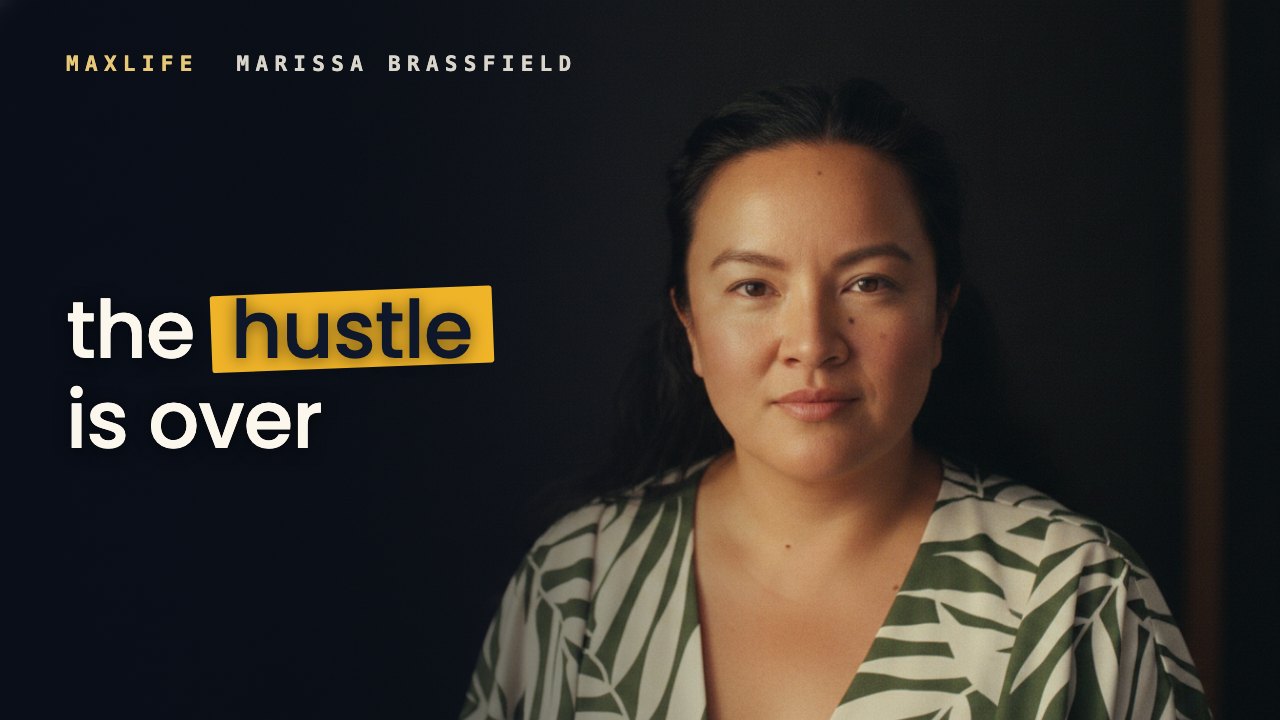
Ben Laws opens the conversation with a question that cuts straight to the bone: are we addicted to the grind? Marissa Brassfield doesn't flinch. She traces it back to her own family, grandparents who worked sugarcane plantations, a mother who prized a government job, a father who quoted the harder I work the luckier I get. "There are all these different axioms and quotes that would keep me going," she says. "And it was almost like outwork them." For most high performers, productivity isn't just a habit. It's an identity. And that's exactly what makes the AI moment so disorienting.
AI agents for entrepreneurs: what they actually look like in practice
Marissa runs CTOX with her partner Lior Weinstein, and as of Q2 2026 they have 99 AI agents running across four departments. She walks through what that means in plain language. Her content OS has ingested 15,000 articles, two ghostwritten books, and years of transcripts to extract her voice print, signature phrases, sentence length, story structure, power phrases. On top of that sits a simulated editorial panel: a developmental editor, a line editor, a copy editor, and a fictitious book agent. "None of this is to replace the actual human beings who do those jobs," she's clear to say. "But it is to make sure that when it gets to those humans, they have a higher quality product to work with." The question Lior asks his whole team: if you could hire 30 people, what would they do? That's where agent work begins.
Redefining value when output is no longer the measure
One of the most honest moments in this conversation comes when Marissa describes doing her unique ability exercise for the first time. The feedback she kept getting was about energy, you light up the room, you bring positivity. "At that time I'm like, yeah, but talk about the things I do," she admits. "Because it didn't feel special enough." That gap between what we produce and who we are is where a lot of high performers are stuck right now. AI is forcing the reckoning early. Value is in the eye of the buyer, she says, and the internet plus AI means you can now reach exactly the buyers for whom being fully, unapologetically you is more than enough.
Your past experience is unmined IP
Ben Laws lands on an image that stops the conversation cold: your life is like an Alaskan mining claim that's been worked with a pan when there's still a fortune left in the tailings. Marissa builds on it. Three days before recording, she ran a value mining exercise on herself, feeding her own journal entries, professional history, and meditation notes into an AI system and asking: what are the things I'm not even valuing right now that could be monetized assets? The exercise isn't about hustle. It's about recognizing that the discernment, the lived experience, the hard-won frameworks, those are the things no model can generate from scratch. "It used to be ideas are easy, execution is hard," Ben says. "Now the execution is not so hard either."
Sovereign income and the entrepreneurial education hiding in plain sight
Lior told his entire team to build an AI-powered side hustle and offered to help them do it. The story Marissa tells to illustrate why: their top sales closer used a lunch-and-learn on Claude Code to build a system that scraped local businesses without websites, sent automated outreach, and put up a prototype. He made $6,000 in three days. "Not even trying," she says. This is what she means by sovereign income, not a second job, but proof that your existing skills, combined with AI, can generate real money outside any single employer's control. When everyone can monetize what they already know, the whole relationship to work changes.
What it means to actually human again
The conversation turns to what Marissa calls being "rehumaned", unlearning the machine-like productivity that was drilled in, and figuring out what you actually want once the grind is optional. She finds her clearest model in her six-year-old son, who has been obsessed since age two with crashes and crumpling. Not the crash itself, the after. What happens next. "I'm trying to connect his passion and his interest to some kind of a destination," she says. For herself, it's plant propagation. For her son, it's material science. The point isn't the subject. It's that curiosity, not output, is the thing worth protecting. "Taking the efficiencies that we can get from AI and reinvesting them into the things that make life worth living", that's the whole thesis in one line.