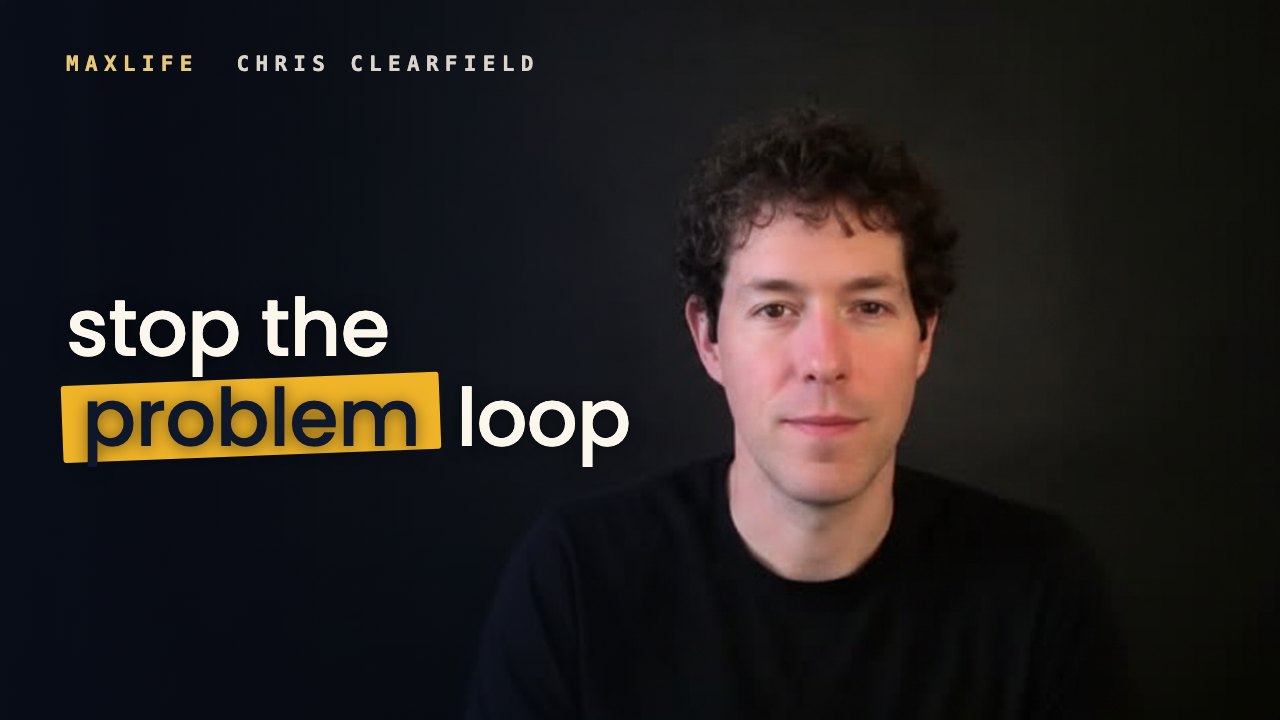
Why constant problem-solving creates more complexity, not less
Chris Clearfield opens with a definition most entrepreneurs haven't heard: complexity isn't about how many moving parts you have, it's about the number of interconnections between them. Every time you step in to solve a problem, you add a connection. You create a precedent. You signal to your team that the answer lives with you. "Our solution isn't actually creative," Chris says, "it doesn't actually bring our team into play, and it disempowers our team from stepping forward." The result is a business that gets more tangled, not simpler, the harder you work.
This is the trap. And it's invisible from the inside because it feels like leadership.
The problem-solving loop entrepreneurs can't see from inside it
Chris describes the pattern clearly: a mature business, a capable team, and an owner who still ends up with every issue landing on their desk. He worked with a property management entrepreneur who put it this way: "I've got my hands tied on the steering wheel and then I let go and hope somebody else will take over, and then things go wrong and I grip back on tightly again." That cycle, grip, release, grip again, is the problem-solving loop. And the reason it's so hard to break isn't willpower. It's that the loop is built on reward.
"When we solve that problem, it's really giving us that dopamine hit," Chris explains. "And that is at the center of reward-based learning." The problem isn't that the reward feels good. It's that reward competes with satisfaction, and most entrepreneurs don't realize that's what's happening.
Reward vs. satisfaction: the distinction that changes everything
This is the sharpest idea in the conversation. Entrepreneurs say they want free days, a team that takes ownership, space to focus on vision. Those are markers of satisfaction. But the problem-solving loop keeps delivering reward instead, and reward is faster, louder, and more immediate. "People are pursuing reward instead of satisfaction," Chris says, "and that is a distinction that I think so many entrepreneurs miss because they're operating from inside the reward loop."
Ben frames it as the difference between happiness and joy, between a transaction and a transformation. The caterpillar just keeps eating. At some point, you have to stop eating and transform. "If the caterpillar could just keep eating," Chris says, "it would become just a huge caterpillar that couldn't transform and could never fly."
How to move from urgent to strategic: a real client example
Chris shares the story of an entrepreneur running an industrial equipment repair company. She had a whiteboard full of strategic priorities she never got to, because urgency always won. Instead of telling her to just stop chasing urgent work, Chris asked a different set of questions: what's the upside of urgency for you? What are you afraid of if you lean into the strategic instead?
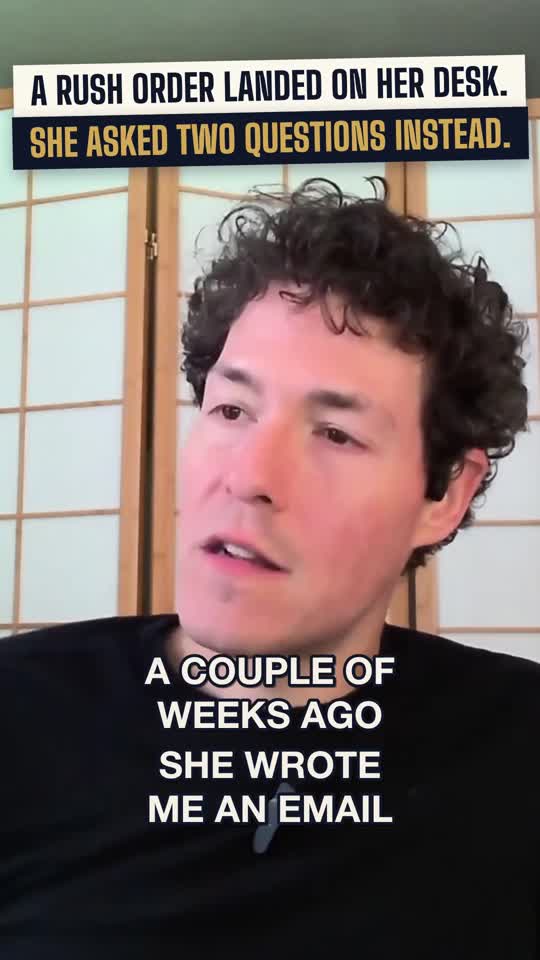
A few weeks later, she emailed him. A rush job came in. She looked at her whiteboard, asked two questions, how much profit is in this job and how does saying yes or no affect the customer relationship, and declined the work. "It's not that that's the right answer for her," Chris is careful to say. "But what she was able to do in that moment was make an aware choice instead of being pulled along by her habit."
That's the shift. Not a different decision, an aware one.
Why delegation fails without understanding what you get from control
"Just delegate" is advice that doesn't work for most entrepreneurs, and Chris is direct about why. Control has a payoff. Until you name what you're getting from holding on, and what you're afraid of losing if you let go, the habit stays in place. "Once you understand what you're holding on to and what you're afraid of," he says, "that just opens up the possibility for you to not only see yourself, but to design a system that lets you move forward in a totally different way."
This is where the personal history matters too. Chris shares his own: growing up as an only child with subtle pressure to perform, absorbing the belief that "if I'm not successful, I'm not loved." He's done the work to reshape that narrative. And he's clear that you don't need anyone else to change for you to start. "The gaze is always pointed inward."
The High Altitude Entrepreneur framework and where to start
Chris's book gives entrepreneurs a structured way to map the core tensions in their business, co-design around those tensions with their team, and build the conditions for real ownership. The companion workbook, free at highaltitudebook.com, runs alongside the reading so you're applying the framework to your actual business as you go.
His diagnostic starts with two questions: do you want to be somewhere different than where you are today, and are you curious about how your own tendencies have created the conditions you say you don't want? If both answers are yes, the work can begin.
He's also building a community called Elevate, a small-group salon for entrepreneurs to bring live challenges and practice something harder than problem-solving: sitting with a challenge long enough to let others grow through it too. Connect with Chris on LinkedIn or start at highaltitudebook.com.