MaxLife Podcast · Episode

The Truth About Money, Success, and Being Aligned

Money isn't the problem and it isn't the solution, it's an amplifier of everything you already are. Three conversations on what it actually takes to build a life that feels like yours.

With Jesse Mecham, Garrett Gunderson, Alex Bean32mMoney Mindset · Alignment · Entrepreneurship
The short version

Most people treat money as a scoreboard or a chore, but Jesse Mecham argues it's a direct representation of your time, energy, and identity, and that misalignment between how you earn it and how you spend it is the real source of financial stress. Garrett Gunderson adds that success can quietly pull you away from your values: people-pleasing, overcommitting, and chasing approval cost him a company, a licensing deal, and years of presence with his family before he course-corrected. Alex Bean built Divvy from zero to a $2.5 billion exit in five years and is honest that luck, timing, and macroeconomics were real factors, not just hustle. Across all three conversations, the through-line is the same: the life you're building only works when it's actually aligned with who you are.

Key moments
What you'll take away

9 ideas from this conversation

01

Money is a representation of you

Every dollar you earn carries your time, energy, ancestors, education, and identity. When how you spend it doesn't reflect who you are, friction and stress follow.

02

Alignment beats income every time

Jesse watched people feel content without earning a single dollar more, just by getting intentional about where their money went. The number isn't the fix.

03

Your yes is a no to someone else

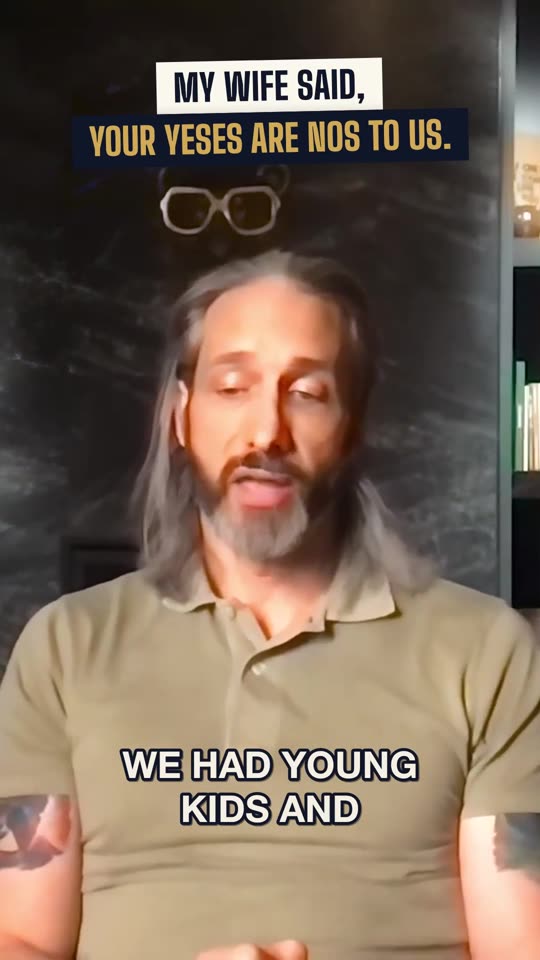
Garrett's wife told him, 'Your yeses are nos to us.' Overcommitting to be liked is a form of taking from the people who matter most.

04

Success can cost you your identity

Garrett sold his company, walked away from a seven-figure licensing deal, and spent time as a victim before he admitted his values and the business's values were no longer the same.

05

A positive no is a skill

Saying 'that's not for me right now, but I'll let you know if it changes' closes the loop without burning the relationship.

06

The mountaintop isn't what you expect

Alex Bean sold Divvy for $2.5 billion and is honest that some days he thought it was over. The trajectory only looks clean from the outside.

07

Get in the car before you drive it

Alex spent a decade riding in the cars of people he respected, watching how they operated, before he had the tools to build something of his own.

08

Hire the hungry number two

The person who drove the car already got paid and moved on. The number two or three knows the road, wants the keys, and still has something to prove.

09

Product-market fit is a billboard test

If someone driving 80 miles an hour can't tell in one sentence whether they're your customer or not, you haven't found it yet.

Full show notes

The Truth About Money, Success, and Being Aligned

How to live a meaningful life when money keeps getting in the way

Most conversations about money stop at tactics, budgets, investments, income targets. This episode goes somewhere different. Ben brings together three guests who've each wrestled with the deeper question: what does money actually mean, and what does it cost you when your life and your values stop pointing in the same direction?

Jesse Mecham, co-founder of YNAB, opens with a reframe that sounds simple but lands hard. "Money is you," he says. Every dollar you earn carries your time, your effort, your ancestors, your education, your entire self compressed into a transaction. The problem isn't earning money. The problem is when how you spend it has nothing to do with who you are. "I'm amazed at how many times we can have people not earn any more money than they did six months before when they started, but they just tell me, 'Jesse, I just feel content.'" The number didn't change. The alignment did.

Money mindset and the real source of financial stress

Jesse pushes back on two stories people tell themselves simultaneously: that money is evil and that you need a lot of it. Both can be true in a way, he says, but neither one helps you. The real issue is that most people treat money as a chore, something to manage, something to distance themselves from, instead of as a direct reflection of their choices and their life. "A tool in my shop, I can just pick it up, use it, set it down. Money, you can't leave it alone." When you stop treating it like a stranger and start treating it like a mirror, the stress starts to shift.

What losing alignment actually costs you

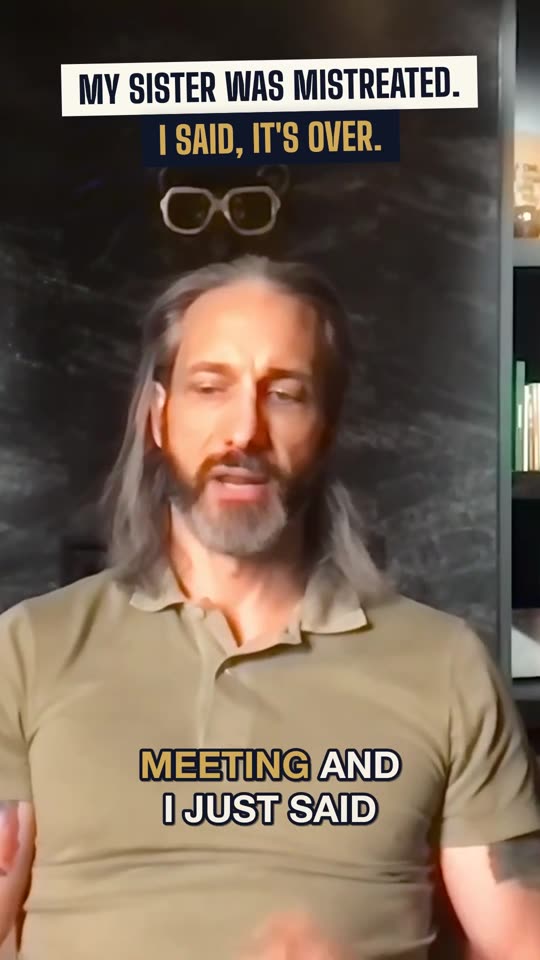
Garrett Gunderson's section of this episode is the most personal. He built a financial education company, sold it in 2020 for less than he'd been offered in 2019 because by then everyone knew he was done, held onto a licensing deal that paid seven figures a year, and then walked away from that too when his values and the firm's values stopped matching. "I can't put my name behind this anymore. This isn't aligned with who I am, and I'm going to have to walk away from seven figures a year. And I did."

What followed was a period he describes as becoming a victim, stuck in the past, grieving a business he'd built, until his wife asked him plainly when he was going to get over it. The honesty in that moment, he says, is what finally moved him. "It wasn't until my wife said, 'When are you going to get over this?' that I was like, 'Wow, I need to move on.'"

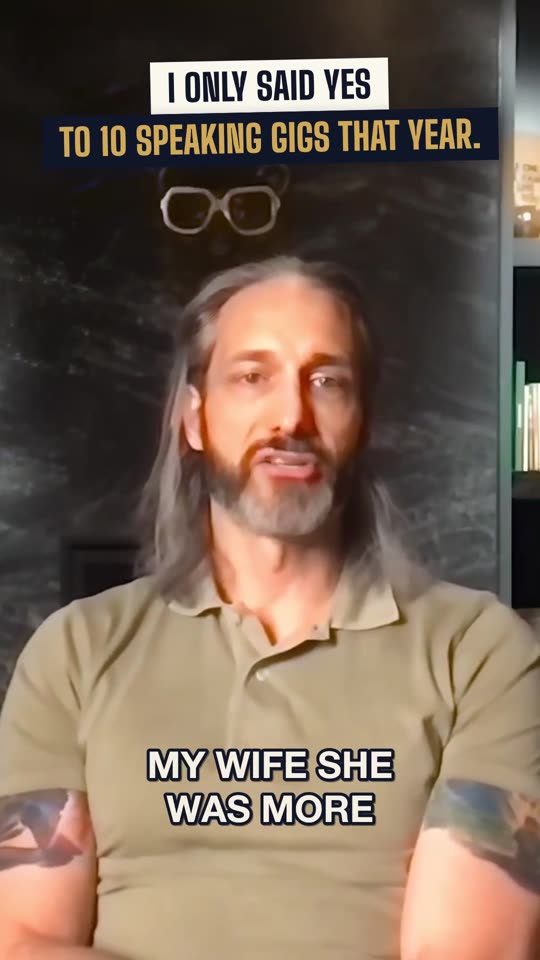
The people-pleasing thread runs through all of it. Garrett spent years saying yes when he meant no, overcommitting to be liked, and paying for it at home. His wife's line, "Your yeses are nos to us", is one of the most direct things in this episode. He eventually learned to say no in a way that closed the loop without burning the relationship: "That's not for me right now, but I'll let you know if it changes."

Building something big and what it actually takes

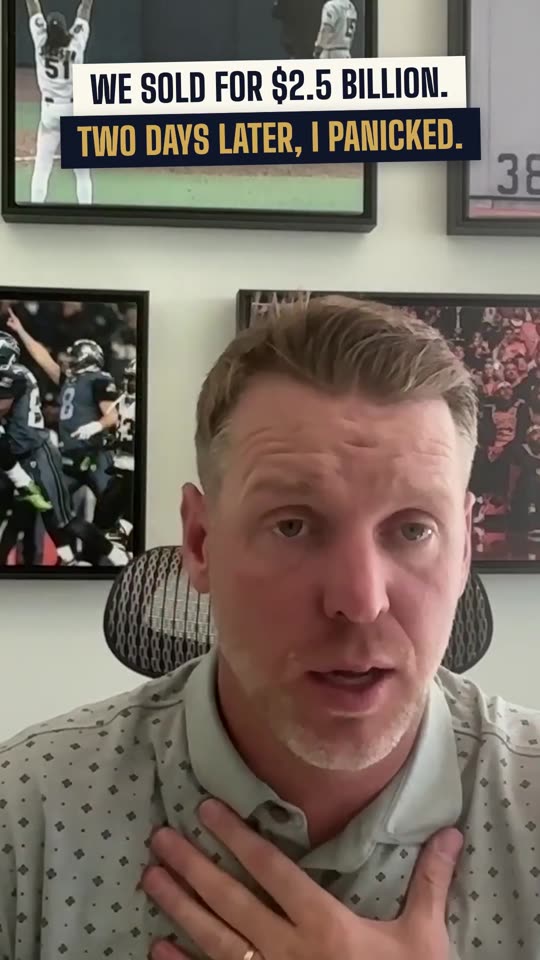
Alex Bean co-founded Divvy in 2016, went to market in 2018, and sold in 2021 for $2.5 billion. He's careful not to make it sound inevitable. "Some days I'd come home and I'd look at my wife and I'd be like, 'We've done it.' And other days, two days later, I'd come home and I'd be like, 'It's over.'" The trajectory only looks clean from the outside. From the inside, it was a roller coaster of down days, near-shutdowns, and moments of genuine doubt.

He's equally honest about the role of timing. Low interest rates, a specific window in fintech, the right macroeconomic conditions, all of it intersected with talent and execution. "There's some lightning in a bottle. There's some things that you do make happen. And it's a mixture of all that." He wouldn't claim he could replicate it today.

The get-in-the-car theory and how to live a meaningful life at work

Two frameworks from Alex are worth keeping. The first is the get-in-the-car theory: when you're recruiting, don't go after the person who drove the car at a company you admire. They've already been paid and they're not hungry. Go find the number two or three, someone who was in the car, knows the road, and wants the keys. "They know what the playbook looks like. They've seen the success, but they weren't the car driver. And they want the car keys to do it a little bit of their own way."

The second is the billboard test for product-market fit: if someone driving 80 miles an hour past your billboard can't tell in one sentence whether they're your customer or not, you haven't found it yet. Clarity about who you're building for is the foundation everything else sits on.

Taken together, these three conversations make the same argument from three different angles. Money is an amplifier. It makes more of whatever you already are. If your life is aligned, if how you earn and spend and build actually reflects who you are, it amplifies that. If it isn't, it amplifies the friction too. The question this episode keeps asking is a simple one: does the life you're building actually feel like yours?
Quotable

Lines worth sitting with

Money is you. Meaning, if you earn a lot of it, great. But when you give yourself for that money, we want to make sure that that money turns around and serves you well.
Jesse Mecham
Your yeses are nos to us. I just feel like a single mom. What if you just win the booby prize? You've helped everyone's life but your own.
Garrett Gunderson (quoting his wife)
I can't put my name behind this anymore. This isn't aligned with who I am, and I'm going to have to walk away from seven figures a year. And I did.
Garrett Gunderson
Some days I'd come home and I'd look at my wife and I'd be like, 'We've done it.' And other days, two days later, I'd come home and I'd be like, 'It's over.'
Alex Bean
Free · No. 72 of the series

I'm building toward something, but I'm not sure it's actually mine
Reflection Worksheet

The episode is 32m. This worksheet is fifteen minutes. The fifteen minutes is the part that changes anything: five questions from this exact conversation, pointed at your business and your life. Answer them on paper while the ideas are still fresh, and they become yours for good.

  • What Did You Trade For It
  • The Yes That's A No
  • Whose Car You're In
  • Your One-Sentence Billboard
  • Point It Back At You
You get this worksheet plus the full 75-worksheet binder, free.
5 prompts, 1 pagePrintable, binder-readyFree, no spam
Open the full worksheet →
Clips · grab & share

Short highlights from the episode

Short clips from this episode are on the way. Watch the full episode while we cut them.
The guest

Meet Jesse Mecham, Garrett Gunderson, Alex Bean

Jesse Mecham, Garrett Gunderson, Alex Bean on the MaxLife Podcast

Jesse Mecham, Garrett Gunderson, Alex Bean

YNAB Co-founder · Author & Financial Educator · Entrepreneur & Venture Capitalist

Jesse Mecham is a co-founder at YNAB (You Need A Budget), where he reframes money as a representation of your whole self rather than a chore to manage. Garrett Gunderson is the author of Money Unmasked and a financial educator who learned the hard way that people-pleasing and misaligned success carry a real price. Alex Bean co-founded Divvy, a business credit card and software platform that sold for $2.5 billion in 2021, and now works in venture capital helping early-stage founders find product-market fit.

Questions, answered

Questions & answers

How do you live a meaningful life when you're focused on building a business?
Garrett Gunderson's story is the clearest answer here: he built a successful company, sold it, and still felt lost because the business had stopped reflecting his values. Meaning comes from alignment, not achievement. The work is figuring out whether what you're building actually matches who you are, and being willing to walk away when it doesn't.
What does money really represent?
Jesse Mecham argues that money represents you, your time, energy, education, relationships, and everything that formed you. When you earn money, you're exchanging a piece of yourself. The stress most people feel around money comes not from having too little but from spending it in ways that don't reflect who they are.
How do you know when your life is out of alignment?
Garrett describes it as a slow drift: you keep saying yes to things you mean no to, you start performing for people who don't really know you, and the people closest to you start feeling like they're getting what's left. The signal is usually friction, in your relationships, your energy, or a quiet sense that the life you're living isn't quite yours.
What is the get-in-the-car theory for career growth?
Alex Bean's theory is simple: find the people doing the thing you want to do and find a way to work alongside them, even for free. You learn how they think, how they execute, and how they handle hard moments. That knowledge compounds in ways that no course or credential can replicate.
Is financial success enough to feel fulfilled?
All three guests say no, and they've each lived it. Jesse watched people feel more content without earning more money. Garrett walked away from seven figures because the money wasn't worth the misalignment. Alex sold a company for $2.5 billion and is careful to say the outcome was great but the journey was a roller coaster. The money amplifies whatever is already there.
How do you stop people-pleasing without burning relationships?
Garrett learned to use what he calls a positive no: 'That's not for me right now, but I'll let you know if it changes.' It closes the loop, doesn't invite follow-up, and keeps the relationship intact. The shift underneath it was realizing that saying yes to everyone was actually a form of taking, from his wife, his kids, and himself.
Share kit

Help spread this episode

Ready-to-post copy for guests and fans. Grab a caption, pick a clip above, and link this page.

Copy any of these word-for-word, or make them your own. They tag the show so it shows up when you post.

Social caption — long
Really enjoyed being part of this MaxLife compilation with Ben Laws. We got into something I think about a lot: money isn't just a medium of exchange, it's a representation of your time, your energy, and who you actually are. When how you earn it and how you spend it aren't aligned, that's where the stress lives. Ben pulls together three conversations that go way beyond tactics and into the real question: does the life you're building actually feel like yours? Worth a listen. https://maxlifecoach.com/episodes/the-truth-about-money-success-and-being-aligned @MaxLifeBenLaws
Social caption — short / quote
Money is an amplifier, not the answer. Three conversations on alignment, identity, and building a life that actually feels like yours. Full episode at https://maxlifecoach.com/episodes/the-truth-about-money-success-and-being-aligned @MaxLifeBenLaws
Email — share with your audience
Subject: Episode worth your time, The Truth About Money, Success, and Being Aligned

Hey,

Thought you'd get something out of this one. Ben Laws put together a 32-minute compilation with three guests, Jesse Mecham from YNAB, Garrett Gunderson, and Alex Bean (who sold his company Divvy for $2.5 billion), and the conversation goes somewhere most money podcasts don't.

The core idea: money isn't the goal, it's an amplifier. And when the life you're building isn't aligned with who you are, more money just amplifies the friction.

Garrett's section alone is worth it, he talks about walking away from a seven-figure licensing deal because his values and the business's values stopped matching, and what it cost him before he admitted it.

Full episode here: https://maxlifecoach.com/episodes/the-truth-about-money-success-and-being-aligned

Think you'll find it useful.
Copied