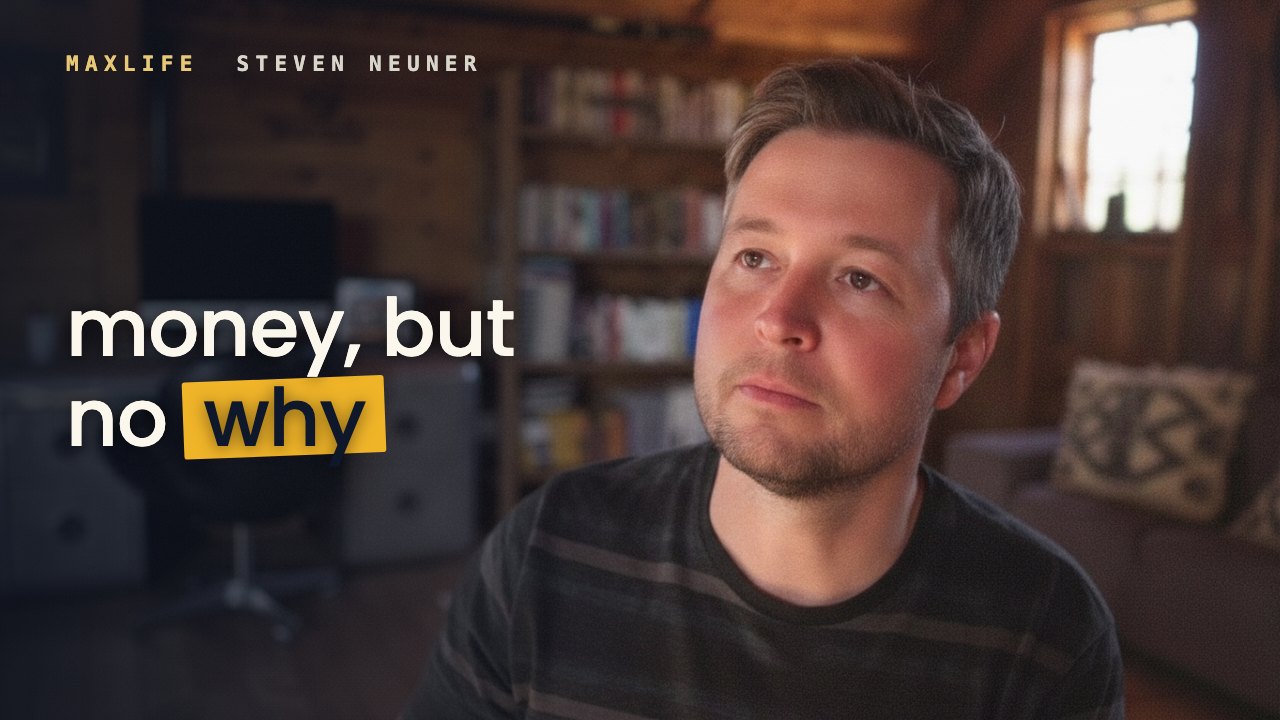
How to find purpose in life when success isn't enough
Steven Neuner had already built and exited a multi-million-dollar business when he realized the question he'd been carrying since childhood, why am I here?, hadn't gone away. "I had enough success that I just kind of felt like this is sort of meaningless," he tells Ben. "You remember Eeyore from Winnie the Pooh? He was just always, and so while that wasn't my expression, I felt that way internally." If you've hit the goals and still feel the hollow, this conversation is for you.
How to find your purpose in life: the three traps that keep you stuck
Steven spent years cycling through what he now calls three purpose traps, and he's writing a book, Freedom from Purpose, co-authored with Todd Kingston of Way Forward Adventures, to help others skip the detours.
The Eeyore trap is the quiet belief that nothing really matters, even when things are going well. The onion trap is the performance-minded idea that you have to clean up every layer of your past before God, or life, can actually use you. "Meanwhile, as I'm digging, digging, digging, I'm missing opportunities all around me to have an impact," Steven says. The burning bush trap is waiting for a dramatic, unmistakable calling while ignoring the small smoldering fires of opportunity right in front of you. Most people Steven coaches are stuck in one of these three, and they don't know it.
How to find God's purpose in your life: a carjacking, a Bible, and a locked house
Steven's faith story is not a tidy testimony. It starts with his brother dying before Steven turned three, his parents' marriage collapsing, and years of chasing things that felt good and ended empty. The turning point came in his mid-twenties after he was carjacked at gunpoint outside a Dallas Mavericks game. Shaken and paranoid, he was alone one night stripping wallpaper in a house he'd just bought, all the locks freshly changed, when his dog went berserk. He grabbed a hammer, walked through the empty house, and found a Bible sitting dead-center on the floor of a room no one had entered. "I've never had anything maybe more that's felt more real to me in my entire life," he says. "And my life has been a wild adventure, a quest, in a new way ever since."
How to find meaning and purpose in life through daily practice
The practical core of Steven's approach is disarmingly simple. Before every interaction, a client call, a dinner with his wife, picking up his kids, he runs through three questions: What roles am I playing today? What's the biggest difference I can make in each of these interactions? What's the worst version of me that would prevent that? "I may or may not know what you need," he tells Ben. "Maybe it's just for me to be present." He built a daily spreadsheet around these questions for years before turning it into the tooling that now anchors his book and his coaching work inside EO, YPO, and Strategic Coach communities.
How to find your purpose and passion in life: the Barnhill Vineyards trust fall
After exiting his insurance business, Steven planned to stay debt-free, invest passively, and serve quietly. Then he found a LoopNet listing for a 40-acre vineyard outside Dallas, and at the bottom of the seller's disclosure, the owner had written that a recurring dream was telling him to move to Houston to care for his aging parents. "This guy just scared away half of his buyers," Steven laughs. His wife Corey's first reaction: you can't change a light bulb without breaking it, you don't even drink wine, what do you know about music? But Steven kept feeling what he calls a nudge. They bought it. They sold their perfectly renovated dream home. And the vineyard, Barnhill Vineyards, turned out to be the same place his father, dying of pulmonary fibrosis and unable to leave the house during COVID, had been raving about for months. His dad recovered from a lung transplant and walked the property every day during his rehabilitation. "In a million years you could not write that," Steven says.
Purpose-driven entrepreneurship: Superpowers and the delegation leap
Steven's company Superpowers matches entrepreneurs with executive assistants and then coaches both sides of the relationship. The insight driving it is the same one driving his purpose work: most entrepreneurs treat delegation as dumping tasks downward, when the real move is handing the baton upward to someone who can run with it. "All the same things that rob them of their purpose, because they want to be in control, there's that chasm of like, if I'm going to work on something higher, there's a jump I've got to make. I've got to trust." Coaching entrepreneurs to let go, he says, is inseparable from coaching them to live on purpose.