MaxLife Podcast · Episode

What Bullfighting Taught Me- How Presence Under Pressure Transforms Performance

A real bullfighter walks you through how facing 1,800-lb animals taught him to enter flow state on command, lean into conflict, and lead with presence instead of control. This one gets under your skin.

With Raymond Ansotegui1h 19mFlow State · Pressure · Leadership
The short version

Raymond Ansotegui spent 10 years as a professional bullfighter, learning that the only way to influence an 1,800-lb animal is to get closer, not back away. His five-step framework for entering flow state under pressure is: Breathe, Commit, Get Close, Slow Down, and Get Up. Standing at a safe distance gives you zero influence; getting into the pocket slows everything down and puts you in charge. Flow isn't something you rent in the good moments. It's earned through preparation outside the arena and accessed by being fully present inside it. The bull is the conflict, and the rider is everything you care about. If you really engage with it, that's how you become successful.

Key moments
What you'll take away

9 ideas from this conversation

01

Get close or get run over

At eight feet from a bull, Raymond has zero influence. At arm's length, a small movement makes the bull swing its whole body. The same is true in conflict: distance feels safe but leaves you powerless.

02

Breathe before you commit

Raymond's first rule is breathe, because a breath-holder can't respond physically or mentally. One deliberate breath is the on-ramp to every other step in the framework.

03

Commitment happens before the arena

Raymond fought thousands of bulls in his mind before facing them in the dirt. By the time his body moved, the decision was already made. Hesitation is just a commitment that wasn't finished in advance.

04

Slow down inside the chaos

"Get through it and get out" is the instinct. Standing inside the conflict, letting it sink in, and making eye contact is what actually resolves it. Speed is avoidance in disguise.

05

Getting up is the whole game

If you don't get up, you don't stay in it. Raymond's job wasn't to lift riders off the ground; it was to buy them one second so they could get up themselves. That's what most people need from a leader.

06

Flow isn't only the sweet moments

Raymond was smiling face-down in the dirt because he knew exactly what he'd done wrong. Flow is a state of full presence, not a highlight reel. The wreck can be inside it just as much as the perfect save.

07

Being in control vs. being in charge

Staying at a managed distance is being in control. Stepping into the pocket and influencing the bull's movement is being in charge. One is about comfort; the other is about outcome.

08

Speak what's in the shame closet

Raymond compares unspoken shame to a wound with a scab over it. Speaking it in front of others cleans it all the way through, like a buffalo tongue, so it can become a scar and a story instead of a recurring infection.

09

You can't see your own shadow clearly

"You can see other people's shadows a lot easier than you can see your own." Until you're willing to identify it, you can't choose what to do with it.

Full show notes

#21: What Bullfighting Taught Me- How Presence Under Pressure Transforms Performance

How to enter flow state on command: the bullfighter's 5-step framework

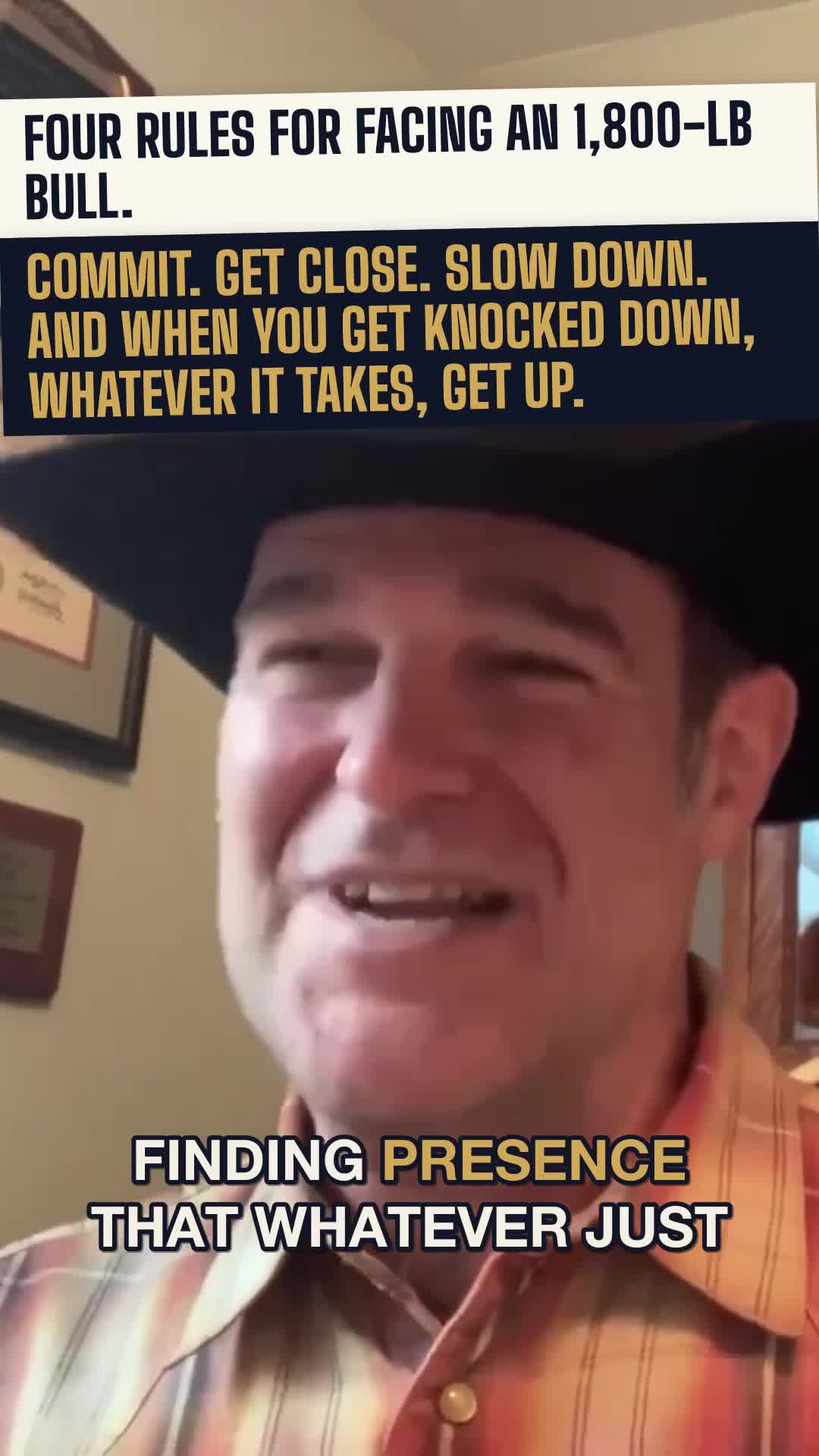
Raymond Ansotegui didn't learn to enter flow state in a seminar. He learned it standing in front of 1,800-lb bulls in a Montana rodeo arena, responsible for keeping riders alive. Over 10 years and thousands of bulls, he distilled the process into five words: Breathe. Commit. Get Close. Slow Down. Get Up. "My rules were just commit, get close, slow down," Raymond says. "And the last one, when you get knocked down, whatever it takes, get up." Each step is a direct answer to the question of how to enter flow state under real pressure, not manufactured pressure, but the kind where hesitation has physical consequences.

Presence under pressure: why distance is the enemy of influence

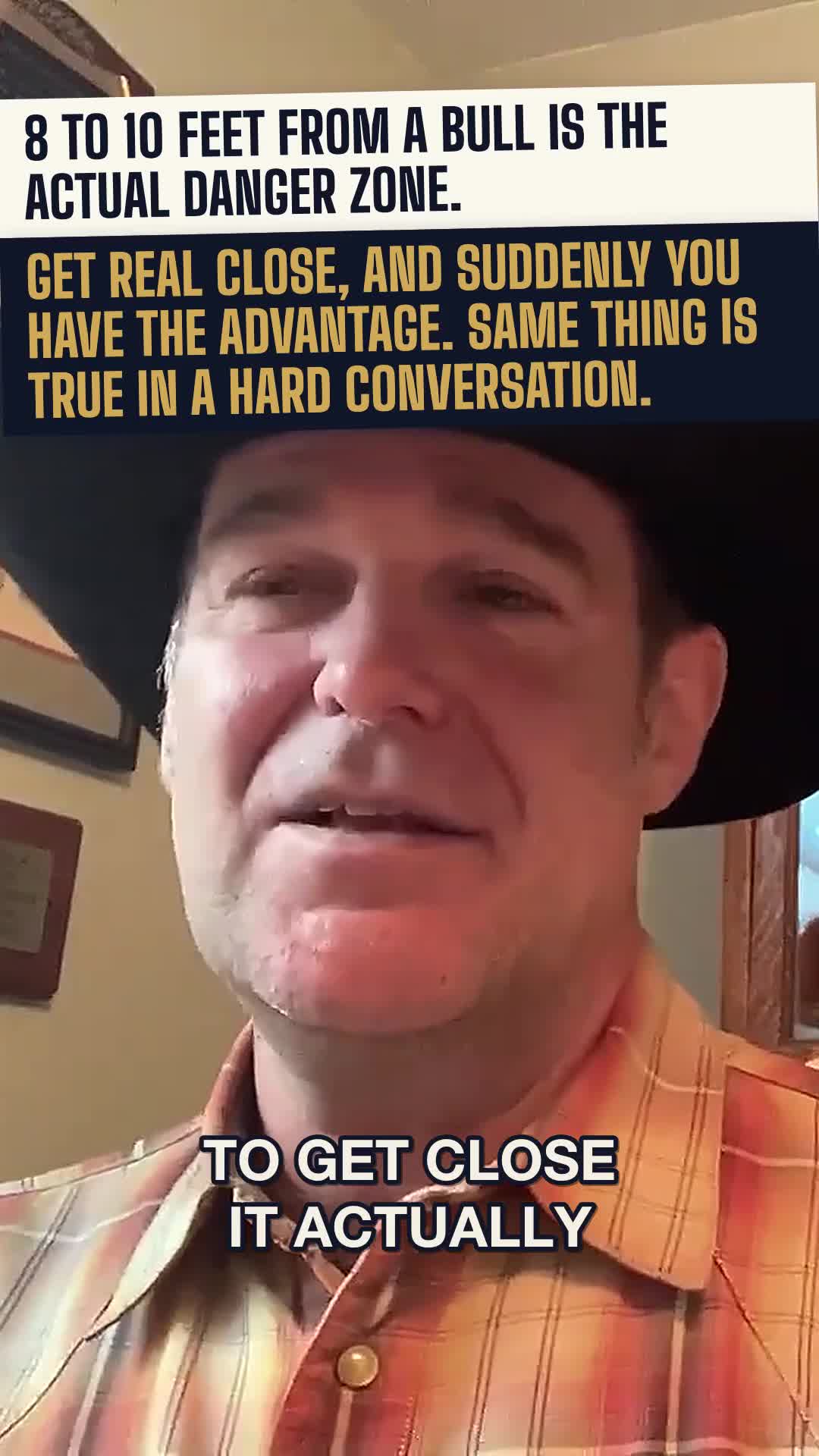
Most people manage conflict from a distance. Raymond's experience with bulls proved that distance is not safety, it's just delayed danger. "If I get a little braver and you kind of get close, it actually becomes, that's the danger zone. When I'm eight, 10 feet away from a bull, no matter what I do, he can outmaneuver me. But if I get close, real close, now the movement, I have a small movement, he has to swing his whole body around." The same principle applies in leadership, parenting, and business. Standing back feels like control. Getting into the pocket is what actually gives you influence. Ben Laws put it plainly during the conversation: "Standing back is avoidance. Coming only within eight feet, but still not willing to fully commit, that's being in control. But being in that pocket, getting in close, that's actually being in charge."

How to perform under pressure when your body wants to freeze

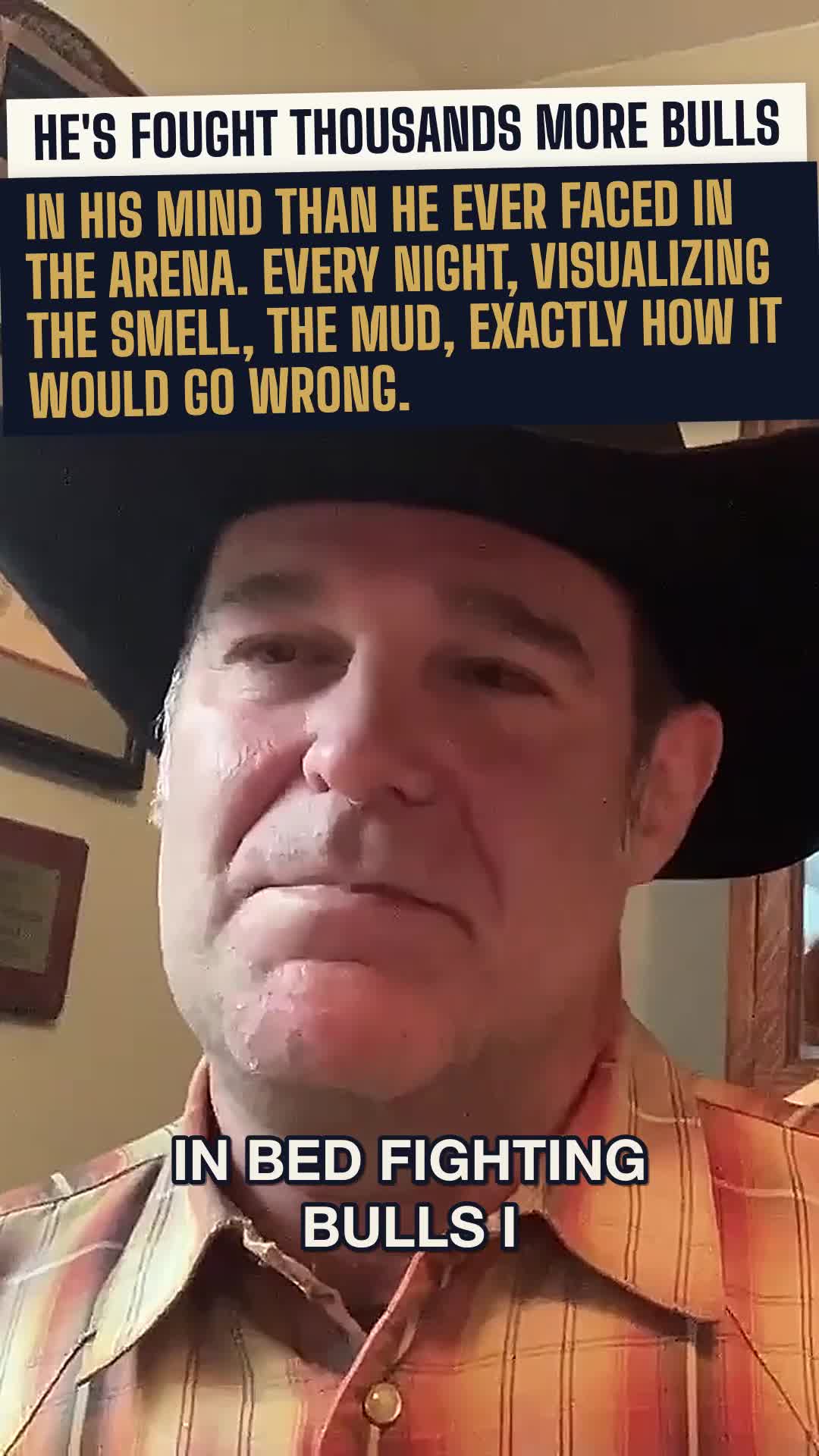
Raymond started bullfighting at 33, older than most, which meant he had to rely on his mind more than his athleticism. His solution was to fight bulls in his imagination first. "I have fought thousands more bulls in my mind than I ever faced in the arena. I would lay there at night and just imagine the scenario, what would it smell like? Is it raining? Is it muddy? How's this bull going to turn?" By the time his body moved in the arena, the commitment was already finished. "I'm three steps in when my brain finally says, 'Oh, are we really doing this again?' Because my body sees it, instead of 'Should we go now?' it just goes." That pre-commitment is the mechanism behind performing under pressure without freezing. The decision isn't made in the moment. It's made in the preparation.

High performance mindset: the bull as conflict, the rider as everything you care about

Raymond's central metaphor is simple and transferable. "That bull is the conflict. And that rider is anything in my life, whether it's my kids, my business, and if I really engage with it, that's how I'm successful." A high performance mindset, in his framework, isn't about eliminating fear or staying calm in a detached way. It's about grounding into the present moment so completely that the fear becomes information rather than a stop sign. He describes the moment of full presence as almost spiritual: "There's lightning that goes between these two beings." That lightning is available in any arena, not just a rodeo one, but only if you're willing to step close enough to feel it.

Flow state, shadow work, and the wound that won't close

Raymond connects the ability to enter flow state directly to shadow work, the willingness to look at the parts of yourself you'd rather avoid. He spent years doing land reclamation, helping disturbed soils recover, before he recognized he was avoiding his own reclamation. "I was a land reclamationist, but really at the end of the day, you did that to avoid the reclamation that really needed to happen, which was the one of yourself," Ben observed. Raymond's answer to unprocessed shame and fear is the same as his answer to a bull: get close, speak it out loud, let it be witnessed. "Speak it to a group of people. Now it's out. And it starts healing. It's like the tongue of a buffalo going into a wound, it's brutal, but it cleans it all the way. It doesn't just put a scab over it and let the infection stay inside." Flow state and shadow work aren't separate conversations. You can't fully enter one without doing the other.

You can't rent bliss: what flow state actually feels like

Raymond is clear that flow isn't a permanent address. "You don't get to rent flow. You don't get to rent that space." It arrives when preparation meets full presence, and it leaves the moment ego steps back in to admire itself. He describes a three-day rodeo where he made a beautiful save on the third bull, felt the sweetness of it, and was immediately launched into the air by the same bull. "I have a picture of me with my legs wrapped over his head and I'm looking down his belly. And that was number three. So I had 27 more bulls that day." The practice isn't to hold onto flow. It's to return to presence quickly enough to access it again. "Whatever just happened happened. Whatever is going to happen is going to happen. But right now, I'm just here and I'm ready."
Quotable

Lines worth sitting with

That bull is the conflict. And that rider is anything in my life, whether it's my kids, my business, and if I really engage with it, that's how I'm successful.
Raymond Ansotegui
Whatever just happened happened. Whatever is going to happen is going to happen. But right now, I'm just here and I'm ready.
Raymond Ansotegui
You don't get those by doing. You get those by being only. When I'm being is when the gifts come. That's when flow comes.
Raymond Ansotegui
You can see other people's shadows a lot easier than you can see your own.
Raymond Ansotegui
Free · No. 21 of the series

I know what my bull is
Reflection Worksheet

The episode is 1h 19m. This worksheet is fifteen minutes. The fifteen minutes is the part that changes anything: five questions from this exact conversation, pointed at your business and your life. Answer them on paper while the ideas are still fresh, and they become yours for good.

  • The Thing You Circle
  • What Distance Costs
  • Breathe Before You Step
  • Control Versus Influence
  • One Step In, And Back Up
You get this worksheet plus the full 75-worksheet binder, free.
5 prompts, 1 pagePrintable, binder-readyFree, no spam
Open the full worksheet →
Clips · grab & share

Short highlights from the episode

Short clips from this episode are on the way. Watch the full episode while we cut them.
The guest

Meet Raymond Ansotegui

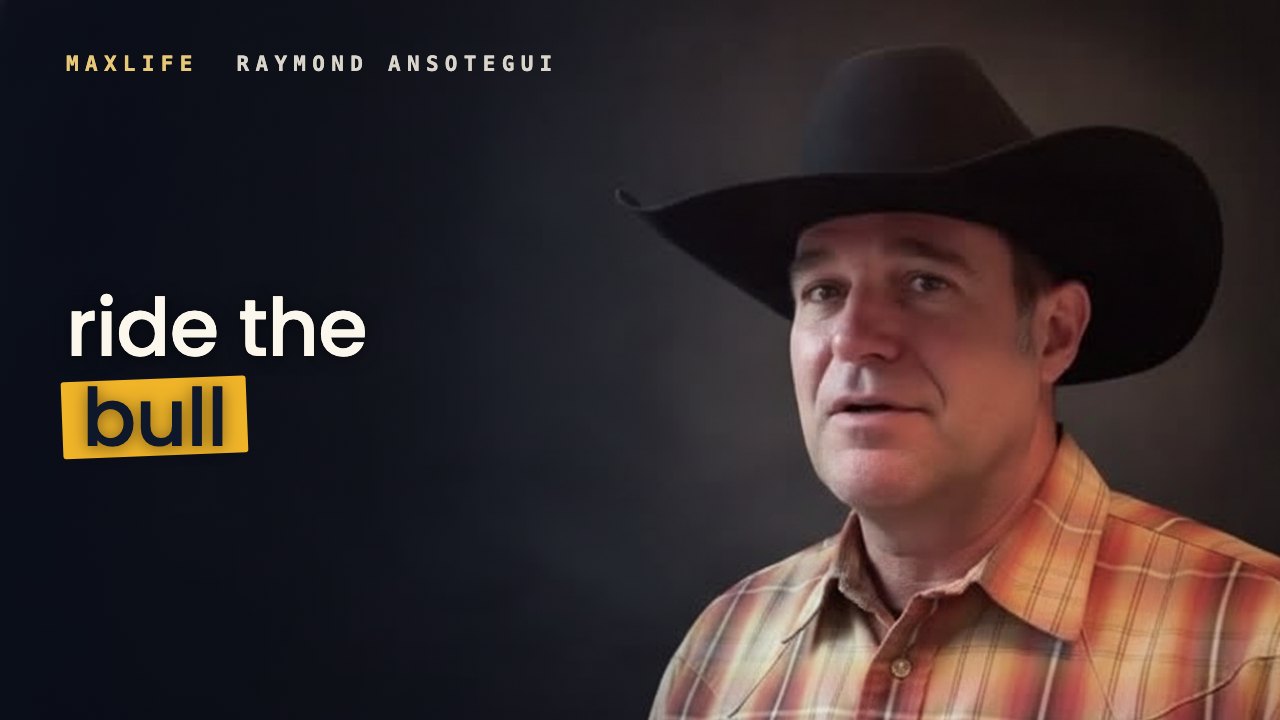
Raymond Ansotegui on the MaxLife Podcast

Raymond Ansotegui

Bullfighter, land reclamationist & leadership facilitator

Raymond Ansotegui grew up in rural Montana, the son of a ruminant nutrition professor, and spent eight years doing land reclamation at the Nevada Test Site before returning home at 33 to test his grit in the rodeo arena. Over a 10-year amateur career he developed a five-step presence framework from working with bulls that he now brings into leadership facilitation and live storytelling events. He retired from bullfighting at 43 on his own terms.

Questions, answered

Questions & answers

How do you enter flow state on command?
Raymond's framework starts with breath, a deliberate pause that shifts your body from reactive to ready. From there, the sequence is commit, get close, slow down. The key insight is that flow isn't triggered in the moment; it's earned through repetition and mental rehearsal outside the arena so that when the gate opens, your body already knows what to do.
How do you stay calm under pressure?
Raymond distinguishes between calm and grounded. He wasn't calm in the arena, he was fully present. Grounding, in his words, isn't about calming down; it's about feeling the earth charge you and channeling nervous energy into readiness. The breath is the first tool, followed by committing fully so there's no mental bandwidth left for second-guessing.
How do you perform under pressure without freezing?
The answer Raymond found is pre-commitment. He fought thousands of bulls in his imagination before facing them in the dirt, including letting himself get wrecked in his mind so the muscle memory was already built. By the time his body moved in the arena, the decision was already made. Freezing happens when the commitment is still being negotiated in real time.
What is a flow state and how does it feel?
Raymond describes flow as everything going slow even when it's moving fast, with heightened awareness of every detail, the ground under his feet, his partner's position, the bull's next move. It's not just the perfect moments; he was smiling face-down in the dirt because he was still fully present and knew exactly what had happened. Flow is a state of complete engagement, not a highlight reel.
How do you lead through conflict instead of avoiding it?
Raymond's bullfighting analogy is direct: distance gives you zero influence. Getting close, into the actual conversation, into the discomfort, is what lets you change the direction of what's happening. He tells leaders to get in close with struggling employees the same way he got in close with a bull: not to overpower, but to slow things down and actually connect.
What is shadow work and why does it matter for performance?
Shadow work is the process of looking at the parts of yourself you'd rather avoid, the fears, the shame, the patterns you can see in others but not in yourself. Raymond connects it directly to performance: you can't fully commit in the arena if you're still running from something outside it. Speaking your shadow out loud, letting it be witnessed, is how it stops running the show from underneath.
Share kit

Help spread this episode

Ready-to-post copy for guests and fans. Grab a caption, pick a clip above, and link this page.

Copy any of these word-for-word, or make them your own. They tag the show so it shows up when you post.

Social caption — long
What does bullfighting have to do with leadership, flow state, and facing the conflicts you've been avoiding? Everything, it turns out. Raymond Ansotegui spent 10 years as a professional bullfighter and came out with a five-step framework that applies to business, parenting, and any arena where the pressure is real: Breathe. Commit. Get Close. Slow Down. Get Up. He joined @MaxLifeBenLaws to talk about presence under pressure, why distance gives you zero influence, and how you can't rent bliss. Full episode at https://maxlifecoach.com/episodes/what-bullfighting-taught-me-how-presence-under
Social caption — short / quote
"That bull is the conflict. And that rider is anything in my life." Bullfighter Raymond Ansotegui on flow state, pressure, and getting close enough to actually lead. Full episode at https://maxlifecoach.com/episodes/what-bullfighting-taught-me-how-presence-under, @MaxLifeBenLaws
Email — share with your audience
Subject: This episode made me think of you

Hey,

I just listened to this conversation between Ben Laws and bullfighter Raymond Ansotegui and couldn't stop thinking about it. Raymond spent 10 years in rodeo arenas learning that the only way to influence an 1,800-lb bull is to get closer, not back away. He built a five-step framework out of it, Breathe, Commit, Get Close, Slow Down, Get Up, and it maps directly onto how we handle conflict, leadership, and the things we keep avoiding.

The part about flow state being available even when you're face-down in the dirt hit me. Worth an hour of your time.

https://maxlifecoach.com/episodes/what-bullfighting-taught-me-how-presence-under
Copied