MaxLife Podcast · Episode

What High Performers Learn Too Late

The drive that builds something meaningful can also create hidden costs you won't see until later. Four guests share the lessons high performers tend to learn too late.

With Jeff Benton, Charlotte Grimmel, Michael Isom, Patrick Walker20mBlind Spots · Stress · Self-Awareness
The short version

High performers rarely fail because of a lack of capability. They struggle because of what they can't see: stress that feels like ambition, goals chasing feelings they already have access to, a sense of worth tied to a financial balance sheet, and blind spots they've never been curious enough to examine. Jeff Benton explains how the body stores stress long before the mind registers it. Charlotte Grimmel shows how the pursuit mindset keeps moving the goalpost until you ask what you actually want. Michael Isom describes rebuilding self-worth after his financial balance sheet went negative. Patrick Walker argues that blind spots aren't flaws to be ashamed of, they're edges to get curious about, and journaling is the most reliable tool for finding them.

Key moments
What you'll take away

9 ideas from this conversation

01

Unconscious patterns run your life

Until you make the unconscious conscious, as Jeff Benton puts it, you're on autopilot. Awareness creates the pause where a different choice becomes possible.

02

Stress hides inside the body

Stanford research links 70 to 80 percent of chronic illness to stress. Most high performers are cut off from the neck down and don't notice until physical symptoms appear.

03

Reactivity is the clearest stress signal

If you're living in the past or the future, sleeping poorly, or snapping at people, your body is already telling you something your mind hasn't admitted yet.

04

You want the feeling, not the outcome

Charlotte Grimmel's core insight: you don't want the money, the car, or the title. You want the feeling you think those things will create. Find the feeling first.

05

The goalpost always moves

High achievers are conditioned to strive, but without presence the satisfaction is always brief. The shift is from pursuit to defining life in a broader way.

06

Worth isn't on a financial balance sheet

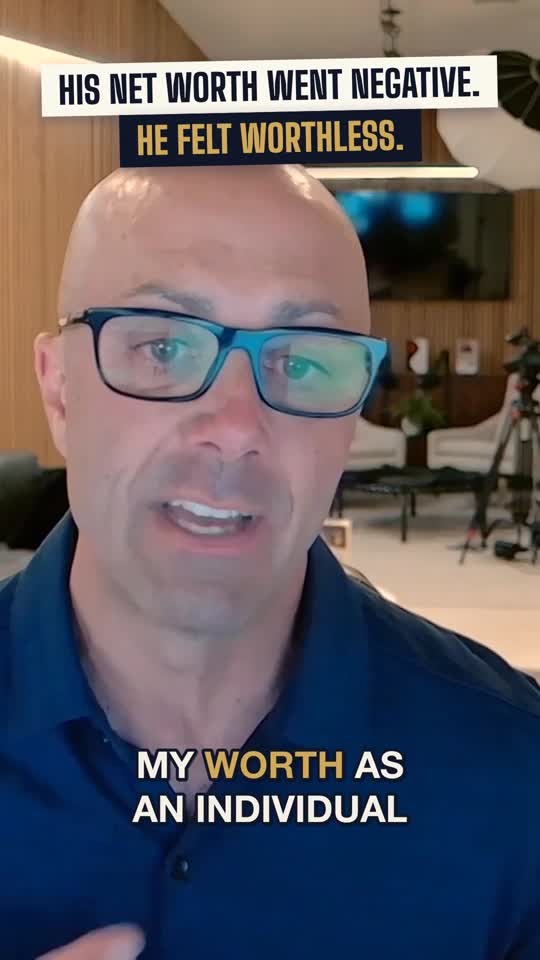
Michael Isom tied his identity to his net worth and felt worthless when it went negative. Relationships, knowledge, and experience are real assets on a human life value balance sheet.

07

Ask: is it true?

Byron Katie's three questions, is it true, can I absolutely know it's true, is there evidence it wasn't true, dissolve the stories that drive 99.9 percent of self-limiting behavior.

08

Blind spots are edges, not flaws

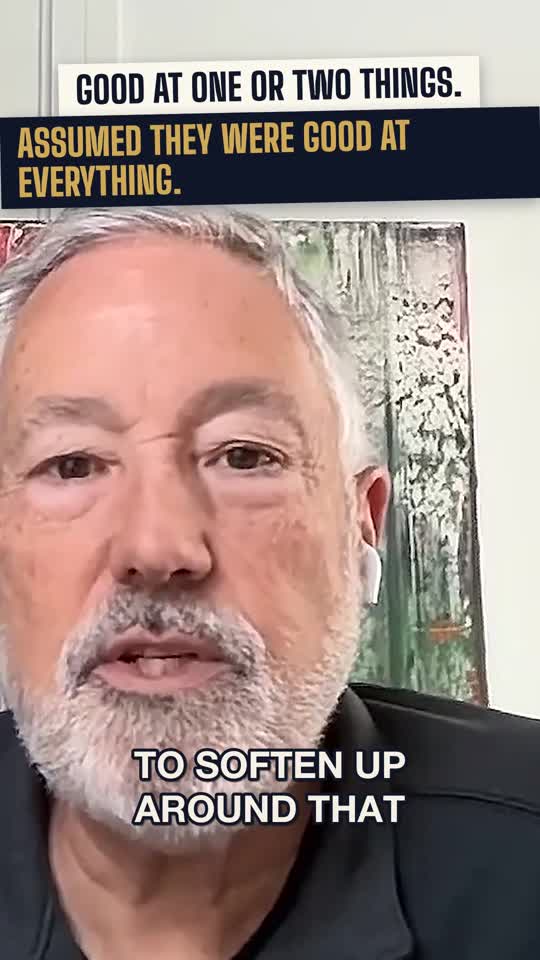
Patrick Walker says the most successful people he's met got good at one or two things and assumed that meant they were good at everything. Curiosity about blind spots is what separates growth from stagnation.

09

Reflection is how you actually improve

Football teams watch game film because they can't process everything in real time. Journaling does the same thing for your decisions, patterns, and intentions.

Full show notes

What High Performers Learn Too Late

What high performers learn too late about stress and the body

Jeff Benton works with CEOs and special forces operators, and he's direct about what most driven people miss: stress isn't just a mental state, it's stored in the body. Stanford Medical School research links 70 to 80 percent of chronic illness and disease to stress, and Benton says the number may be even higher. The problem is that high performers are so conditioned to push through that they become, as he puts it, "cut off from the head down." They don't notice what's happening until physical symptoms appear.

So how do you know if you're actually stressed? Benton points to reactivity as the clearest signal. "If we've got sort of high cortisol, people know, right, because they're on such automatic behavior." Poor sleep, weight gain, living in the past or the future, feeling burnt out, these aren't personality traits. They're data. And the first move is simply noticing them without judgment.

Making the unconscious conscious: the self-awareness work that changes everything

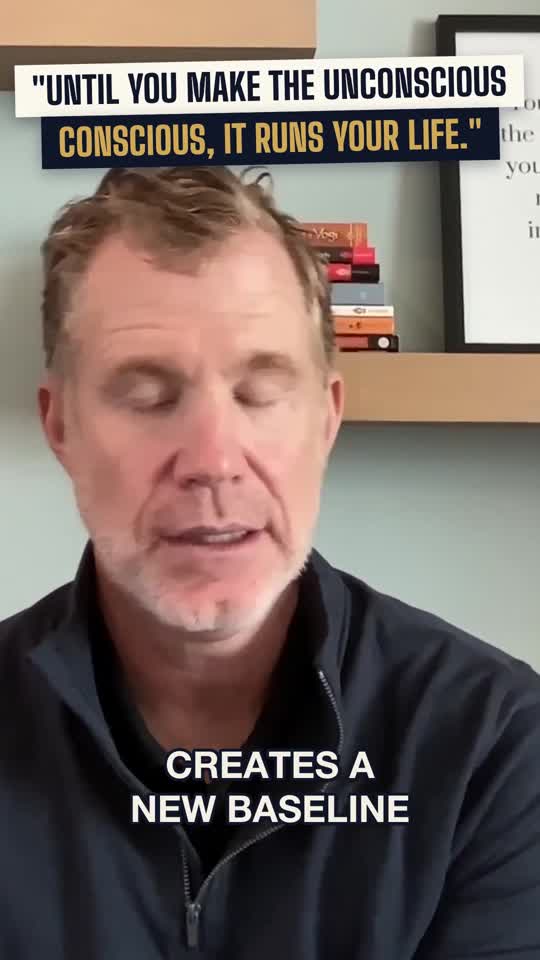
Benton draws on Carl Jung's insight that until you make the unconscious conscious, it runs your life and you call it fate. The work he does with clients is about creating awareness throughout the day so that automatic reactions get replaced by genuine choice points. "When we start to see that... they'll actually pause, right, take that couple seconds and instead of reacting, right, and going back to past behaviors and baselines, then they know they have space to create different decisions."

This is the core of what Strategic Coach calls self-awareness exercises: not self-criticism, but the ability to witness a thought without being attached to it. Once you can do that, you realize the thought isn't you. It's a conditioned pattern. And conditioned patterns can change.

The pursuit trap: why high achievers keep moving the goalpost

Charlotte Grimmel coaches high achievers and she names something most of them don't want to hear: the pursuit itself can become the problem. "We're often so conditioned and so used to striving for something and achieving something... that what we also do is consistently move the goalpost." You hit the goal, get a brief moment of satisfaction, and then it falls off. Then you wonder why the achievement didn't feel the way you expected.

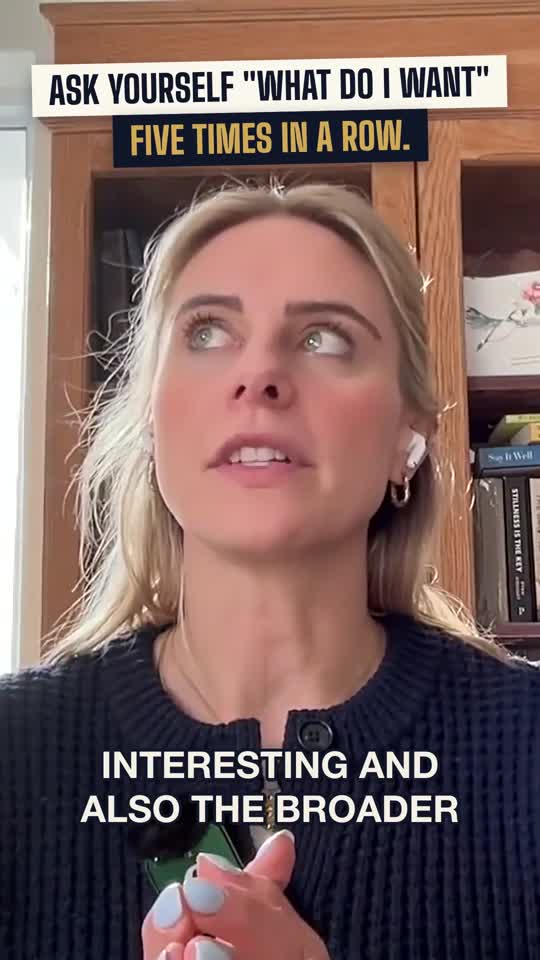
Her answer isn't to stop being ambitious. It's to ask a deeper question. Most people stop at the surface layer, more money, a bigger company, a better title. But if you keep asking "what else, and what else, and what else" at least five times, you usually land somewhere much simpler: time with your kids, waking up healthy at 70, feeling secure. The outer goal is just a proxy for a feeling. And when you identify the feeling, you can often find it's already partially available to you right now.

What do you actually want? The question most entrepreneurs stop too early

Grimmel's go-to question for any entrepreneur who's built something impressive but feels hollow is simply: what do I want? It sounds almost too simple. But she's clear that most people answer it once and stop. The real work is staying with it. "You usually don't want the outcome. You want a feeling that you expect the outcome to bring." Security, presence, freedom, these are the actual targets. And once you name them, you can ask: in what ways is that already here? In what ways am I actively blocking it by chasing the next income goal?

Worth beyond the financial balance sheet: Michael Isom's hard lesson

Michael Isom, author of What We're Worth, describes the moment his financial balance sheet went negative, not just lower, but negative, and what happened to his sense of self. "I felt worthless, of no worth." He had tied his identity entirely to a number. What he'd forgotten was what he calls the human life value balance sheet: knowledge, experience, relationships, the capacity to create value. "People are the true assets. Things are not."

The house you're sitting in has no value until a human being gives it value. That reframe didn't just help Isom recover. It became the foundation of his work with others who've confused their net worth with their self-worth.

The three questions that cut through self-limiting stories

Drawing on Byron Katie's work, Isom shares three questions he uses with clients. First: is it true? Second: can I absolutely know that it's true? Third: is there any evidence in my past where that wasn't true? These questions slow the noise, the "I'm a failure, I'm not worthy" loop, long enough for a different answer to surface. "99.9% of the time it's not true. But we tell ourselves that story and then we believe it, and all of our actions and results in our life are affected as a result of that story."

Blind spots for high performers: edges to get curious about

Patrick Walker has spent his career in executive coaching, and he's noticed a consistent pattern: many successful people get very good at one or two things and then generalize that competence to everything else. They stop being curious about their edges. "Edges or blind spots are the opportunities for growth. So we want to get really curious about those."

Walker makes journaling compulsory for all his coaching clients. The reason is simple: you don't have the bandwidth to process everything in real time. You need to look back. Football teams watch game film. Leaders need the equivalent. Whether it's a journal, a trusted peer, a spouse, or even a well-prompted AI, the reflecting is what produces improvement. Without it, you keep running the same plays and calling it strategy.
Quotable

Lines worth sitting with

Until you make the unconscious conscious, it runs our life and we call it fate.
Jeff Benton
You usually don't want the outcome. You want a feeling that you expect the outcome to bring.
Charlotte Grimmel
I had tied my worth as an individual to my financial balance sheet. And when it went to a negative, I felt worthless, of no worth.
Michael Isom
People can keep doing the same things over and over again and never really improve. It's the reflecting that helps you improve.
Patrick Walker
Free · No. 66 of the series

I keep achieving, but something still feels off
Reflection Worksheet

The episode is 20m. This worksheet is fifteen minutes. The fifteen minutes is the part that changes anything: five questions from this exact conversation, pointed at your business and your life. Answer them on paper while the ideas are still fresh, and they become yours for good.

  • The Story On Autopilot
  • What Do You Actually Want
  • Your Real Balance Sheet
  • Who Holds The Mirror
  • One Thing, This Week
You get this worksheet plus the full 75-worksheet binder, free.
5 prompts, 1 pagePrintable, binder-readyFree, no spam
Open the full worksheet →
Clips · grab & share

Short highlights from the episode

Short clips from this episode are on the way. Watch the full episode while we cut them.
The guest

Meet Jeff Benton, Charlotte Grimmel, Michael Isom, Patrick Walker

Jeff Benton, Charlotte Grimmel, Michael Isom, Patrick Walker on the MaxLife Podcast

Jeff Benton, Charlotte Grimmel, Michael Isom, Patrick Walker

Performance coach, executive coach, author, and leadership advisor

Jeff Benton works with CEOs and special forces operators on stress physiology and self-awareness. Charlotte Grimmel coaches high achievers through the shift from relentless pursuit to present-tense living. Michael Isom, author of What We're Worth, rebuilt his identity after financial collapse by developing a human life value balance sheet. Patrick Walker is an executive coach who has spent his career helping leaders find and work their blind spots.

Questions, answered

Questions & answers

What do high performers get wrong about stress?
Most high performers mistake stress for ambition or drive, so they never address it. Jeff Benton points out that stress is stored in the body and often shows up as reactivity, poor sleep, or physical symptoms long before the mind acknowledges it. Stanford research links 70 to 80 percent of chronic illness to stress. The first step is learning to read the body's signals rather than overriding them.
Why do high achievers feel empty after reaching their goals?
Charlotte Grimmel explains that high achievers are conditioned to pursue, which means the goalpost always moves. The satisfaction after hitting a goal is brief because the goal was never really the point. What you actually want is the feeling you expected the outcome to create, and that feeling needs to be found in the present, not deferred to the next achievement.
How do you identify blind spots as a leader?
Patrick Walker says the key is getting curious rather than defensive. Blind spots require outside help, close friends, peers, or a coach, because by definition you can't see them yourself. Journaling is one of the most reliable tools because it creates the distance needed to review your own patterns, much like a football team watching game film after a match.
What is the human life value balance sheet?
Michael Isom developed this concept after his financial net worth went negative and he felt worthless. The human life value balance sheet includes assets like knowledge, experience, relationships, and the capacity to create value. Isom's argument is that people are the true assets and things are not, your property only has value because a human being gave it value.
What questions help you stop negative self-talk?
Michael Isom uses three questions drawn from Byron Katie's work: is it true, can I absolutely know it's true, and is there any evidence from my past where that wasn't true? These questions interrupt the automatic loop of self-limiting stories. According to Isom, 99.9 percent of the time the story isn't true, but we believe it and act accordingly.
Why is journaling important for high performers?
Patrick Walker makes journaling compulsory for all his coaching clients because you don't have the bandwidth to process your decisions, reactions, and patterns in real time. Reflection is what produces actual improvement. Without it, you repeat the same behaviors and mistake familiarity for strategy. Even an interview-style conversation with a trusted person or a well-prompted AI can serve the same function.
Share kit

Help spread this episode

Ready-to-post copy for guests and fans. Grab a caption, pick a clip above, and link this page.

Copy any of these word-for-word, or make them your own. They tag the show so it shows up when you post.

Social caption — long
This episode of the Max Life Podcast hits on something most high performers don't want to admit: the same drive that builds something meaningful can also create blind spots that quietly cost you. Ben Laws revisits conversations with Jeff Benton, Charlotte Grimmel, Michael Isom, and Patrick Walker, four people who've spent years in the trenches with entrepreneurs and leaders. Jeff breaks down how stress lives in the body long before the mind notices. Charlotte asks the one question most achievers stop too early: what do you actually want? Michael shares what happened when his financial balance sheet went negative and he realized he'd tied his entire worth to a number. And Patrick makes the case that blind spots aren't flaws, they're edges, and getting curious about them is what separates growth from stagnation. Worth a listen if you've ever hit a goal and wondered why it didn't feel the way you expected. Full episode + free reflection worksheet at https://maxlifecoach.com/episodes/what-high-performers-learn-too-late @MaxLifeBenLaws
Social caption — short / quote
The lessons high performers learn too late, stress, blind spots, worth, and what you actually want. New episode of the Max Life Podcast with Jeff Benton, Charlotte Grimmel, Michael Isom, and Patrick Walker. https://maxlifecoach.com/episodes/what-high-performers-learn-too-late @MaxLifeBenLaws
Email — share with your audience
Subject: Episode worth sharing, What High Performers Learn Too Late

Hey,

Thought of you when I listened to this one. Ben Laws pulled together clips from four different guests, a performance coach, an executive coach, an author, and a leadership advisor, all talking about the things driven people tend to figure out later than they should.

Stress that feels like ambition. Goals that are really just proxies for feelings you already have access to. Tying your worth to a number. Blind spots you've never been curious enough to examine.

It's a 20-minute episode and there's a free reflection worksheet if you want to go deeper.

https://maxlifecoach.com/episodes/what-high-performers-learn-too-late

Let me know what you think.
Copied