MaxLife Podcast · Episode

Why Entrepreneurs Fail at Their Dream Life (and the 4 Keys to Fix It) with Jerome Wade

Most high performers think they know what they want, but their goals are fuzzy, their actions scattered, and their results inconsistent. Jerome Wade breaks down the four frameworks that actually close the gap between the dream and the life.

With Jerome Wade1h 35mClarity · Entrepreneurship · Dream Life
The short version

Entrepreneurs fail at their dream life not because they lack ambition but because they lack simple clarity on what they actually want. Jerome Wade's four C framework gives you a repeatable diagnostic: get crystal clear on the specific life you want, make your commitment absolute, stay consistent even when results lag, and take courageous bold action even without a complete plan. The 'how' question kills dreams before they start because it invites disbelief before you ever take a step. When results stall, you go back to the framework and find which C you're violating. It really is that simple, and simple does not mean easy.

Key moments
What you'll take away

9 ideas from this conversation

01

Clarity means specific, not vague

Jerome didn't write 'I want a boat.' He wrote the hull length, the features, and the price range. Vague goals produce vague results.

02

Never answer 'what' with 'how'

'How' is a fear-based question that invites disbelief before you ever set out. Get clear on what you want first, then let the how follow.

03

Give yourself permission to dream

A chiropractor in his mid-30s had never been asked what he wanted because his career was decided for him at birth. Permission is often the first missing ingredient.

04

Commitment is full throttle

Jerome's son won a desert race by sending it with nothing left in the throttle. That's the measure of commitment a dream life requires.

05

Consistency is compounding in action

The tenth push-up on day one and the tenth push-up on day one thousand are the same movement but completely different outputs. Repetition builds capacity.

06

Indecision costs more than failure

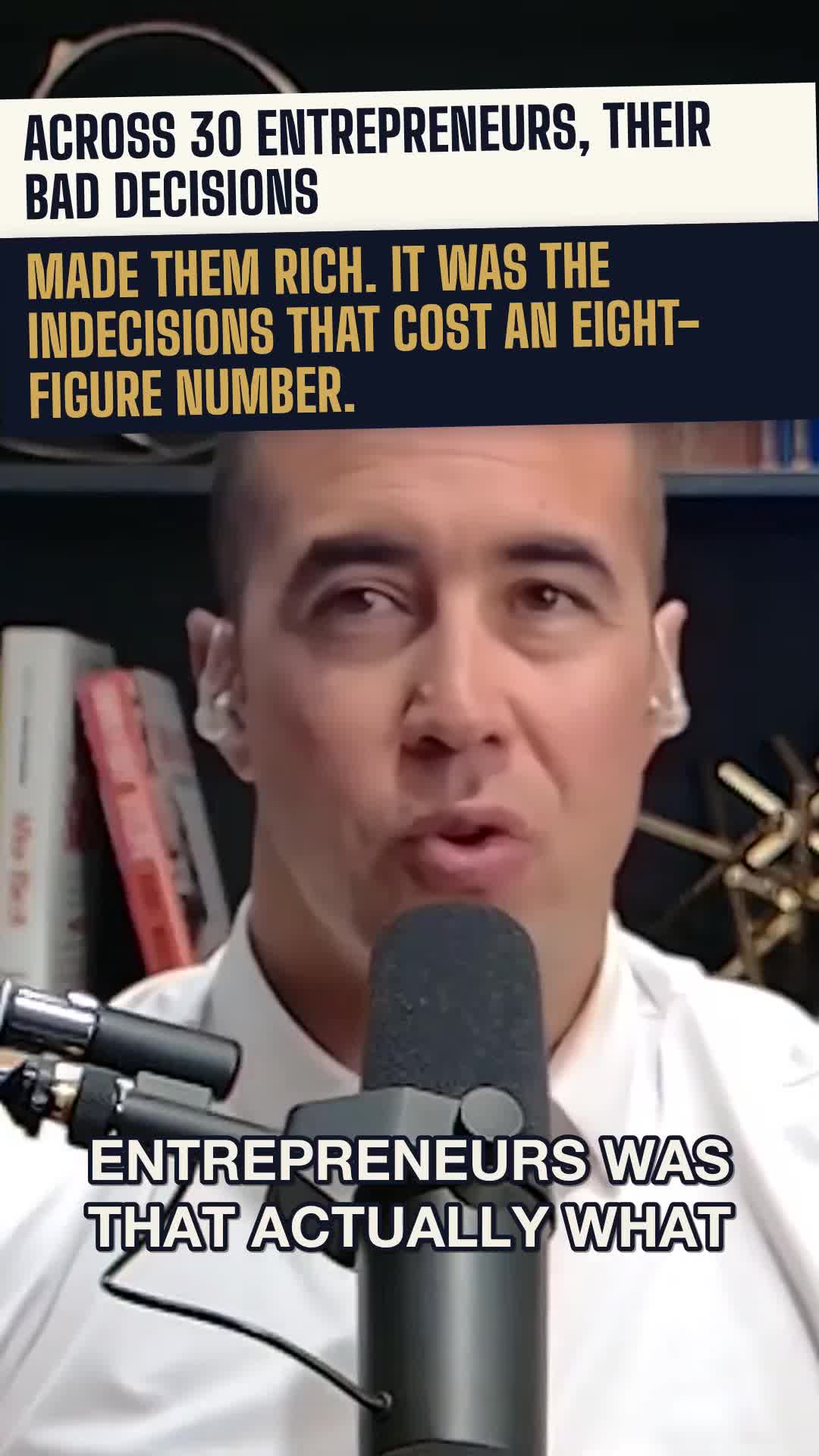
Across 30 entrepreneurs, bad decisions mostly led to financial wins. Indecisions, when tallied, cost each person an eight-figure number.

07

Your beast is chasing you

Jerome's compulsive overgiving traced back to a childhood adoption his soul interpreted as rejection. Identifying what's chasing you is the first step to stopping the run.

08

Redefine success as significance

Success is a moving target that leaves you empty when you arrive. Jerome shifted the spotlight from what he was building to who he was helping build.

09

Take care of number one first

Prioritizing yourself isn't selfishness. Jerome found that when he refilled his own tank, he had more capacity to give his family, his clients, and his community.

Full show notes

Why Entrepreneurs Fail at Their Dream Life (and the 4 Keys to Fix It) with Jerome Wade

How to build the life you want: why clarity is the first move

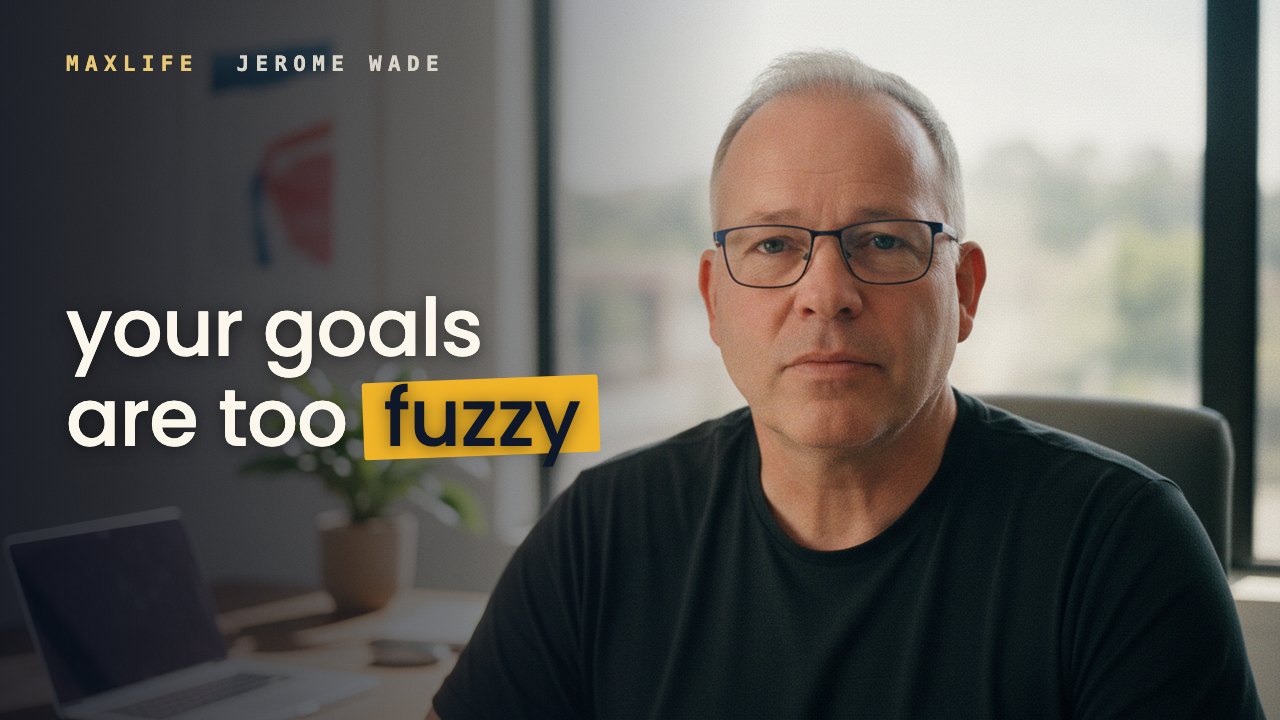
Most people say they want a better life, but when you press them on the details, the picture goes fuzzy fast. Jerome Wade calls this the old-school TV problem: "Too many people live with the old standard definition. It's so fuzzy that there's a lot of white noise and so they can't accomplish what they want because they don't know what they want." The upgrade isn't motivation or hustle. It's specificity. Jerome didn't write 'I want a house in the mountains.' He wrote the neighborhood, the terrain, the wildlife, the proximity to trails. He didn't write 'I want a sailboat.' He wrote the hull length, the solar capacity, and the price tier he'd target depending on the year he bought. That level of explicit detail is what separates a dream from a plan.

The practical move here is simple but uncomfortable: sit down with a half sheet of paper and write out every dimension of the life you want. Time off per year. Income. Business impact. Lifestyle specifics. Relationships. Then get more specific on each one until there is zero ambiguity. Simple does not mean easy, but it does mean measurable, and measurable means you can actually track progress.

How to get clarity on what you want in life: stop answering 'what' with 'how'

Jerome identifies one pattern that kills more dreams before they start than almost anything else: people answer the clarity question with a how question. The moment you ask how, you invite disbelief. You start calculating whether it's possible before you've even committed to wanting it. "The problem is when you start answering the what do I want question, the clarity question with how, you'll never have the answer that you want because you're going to start disbelieving it's possible before you ever set out to do it."

How is not the first question. It might be the second or third, but it can't be the first. The first question is simply: what do I want? And to answer that honestly, most people need to do something they've never been given permission to do. Jerome sat across from a chiropractor in his mid-30s, asked him what he wanted in life, and the man went speechless. His great-grandfather, grandfather, and father were all chiropractors. Nobody had ever asked him. Give yourself permission to see a different future. That's where clarity actually begins.

Why entrepreneurs fail at their dream life: the four C diagnostic

Jerome's four C framework is the core of this episode and it works as both a road map and a troubleshooting tool. The four C's are clarity, commitment, consistency, and courage. When someone isn't seeing the results they want, Jerome runs them back through the framework and finds which C is being violated.

Clarity is specific, explicit, and measurable. Commitment is absolute, full-throttle, no vacillating. Jerome's son won a desert motocross race at 19 by sending it with nothing left in the throttle. That's the standard. Consistency is the repeated behavior that keeps the locomotive moving. As Ben puts it, consistency is compounding in action: the same ten push-ups on day one thousand produce a completely different output than on day one. Courage means putting risk in the equation. Jerome lost multiple six figures on an investment last year. It stung. It also produced a level of financial intelligence that shaped a major strategic decision the very next year. "If you're afraid to fail, you will never create the life that you want. You've got to get comfortable with failure."

The framework isn't just forward-looking. It's a diagnostic. Relationship not improving? Go back to the four C's and find the leak. Business stalling? Same process. The simplicity is the point.

How to create your dream life by asking two harder questions

Toward the end of the conversation, Jerome introduces the framework that came out of his darkest season: three questions he worked through alone in a hammock at the trailhead of the Appalachian Trail in May 2014. He was leading a nonprofit at the height of its success, 48 to 67 percent growth year over year, recognized by the governor's office, the mayor's office, and communities across the state. And he was completely empty inside. Nobody knew. Not his wife. Not his kids. Not his closest friends.

The first question is: what are you chasing? Jerome had stopped chasing his wife, his kids, his own wellbeing. He was chasing reputation and organizational growth. The answer required him to refocus his attention, reprioritize his life, and redefine success. He landed on significance over success, and on taking care of himself first so he had more to give everyone else. "It truly was an act of selfishness that leads to selflessness. Because now I can truly be selfless because there's more of me to give the world."

The second question is: what's chasing you? For Jerome, the answer traced back to a childhood adoption his soul had interpreted as rejection and abandonment, even though the Wade family gave him everything. That unresolved wound drove decades of compulsive overgiving, an inability to say no, and a relentless need to perform. Identifying the beast is the first step to stopping the run. Most high performers, Jerome argues, are being driven by something they've never named.

Why am I not achieving my goals: the real cost of indecision

Ben ran a thinking exercise with 30 entrepreneurs, cataloguing bad decisions and indecisions over the past 10 to 20 years. The finding was striking: bad decisions mostly led to financial wins over time. Indecisions, when totalled, cost each person an eight-figure number. Jerome connects this directly to insecurity: "The root cause of indecision is insecurity. We're just not confident in moving forward." No successful business leader planned with 100 percent certainty. They took steps, made mistakes, learned, and kept moving. Staying in the valley of indecision, Jerome says, is a prison that keeps too many people there for their entire life. Action, even imperfect action, is a clarifying agent. You hit a wall and suddenly you know exactly what you want.
Quotable

Lines worth sitting with

This is where I think people miss their opportunity and why maybe they're not creating the life that they want, they're not crystal clear. Or let me say it this way, they're not simply clear.
Jerome Wade
The problem is when you start answering the what do I want question, the clarity question with how, you'll never have the answer that you want because you're going to start disbelieving it's possible before you ever set out to do it.
Jerome Wade
If you're afraid to fail, you will never create the life that you want. You've got to get comfortable with failure, you've got to get comfortable with being uncomfortable.
Jerome Wade
Life is not about understanding yourself, life is about creating yourself.
Jerome Wade
Free · No. 38 of the series

I know what I want, but I keep getting in my own way
Reflection Worksheet

The episode is 1h 35m. This worksheet is fifteen minutes. The fifteen minutes is the part that changes anything: five questions from this exact conversation, pointed at your business and your life. Answer them on paper while the ideas are still fresh, and they become yours for good.

  • Crystal Clear, Not Fuzzy
  • What Are You Chasing
  • What's Chasing You
  • Grade The Four C's
  • The Courageous Step
You get this worksheet plus the full 75-worksheet binder, free.
5 prompts, 1 pagePrintable, binder-readyFree, no spam
Open the full worksheet →
Clips · grab & share

Short highlights from the episode

Short clips from this episode are on the way. Watch the full episode while we cut them.
The guest

Meet Jerome Wade

Jerome Wade on the MaxLife Podcast

Jerome Wade

Global adventurer, entrepreneur, and executive success coach

Jerome Wade is a pilot, glider, sailor, deep-water diver, Ironman triathlete, and keynote speaker who has impacted hundreds of thousands of people on stages around the world. He built and scaled a nonprofit from zero to rapid multi-year growth before hitting personal rock bottom, and that journey forged the four C framework he now teaches entrepreneurs and executives. He coaches high performers on clarity, commitment, consistency, and courage as the irreducible system for building the life they actually want.

Questions, answered

Questions & answers

How do I build the life I want if I don't know where to start?
Start with clarity before anything else. Sit down and write out every dimension of the life you want in specific, explicit detail: time, money, relationships, lifestyle, and impact. Vague goals produce vague results, and the clearer you get, the more opportunities you create. Don't ask how yet. Just answer what.
How do I get clarity on what I want in life?
Give yourself permission to answer the question honestly, which sounds simple but is genuinely rare. Jerome found that many people have never been asked what they want because their path was decided for them. Start by removing the how question entirely and just describe the life in as much sensory, measurable detail as you can. Then look at every dimension: relationships, career, health, finances, and time freedom.
Why am I not achieving my goals even when I work hard?
Jerome's four C diagnostic is the fastest way to find the leak. Check clarity first: is your goal specific and measurable or still vague? Then check commitment: are you full-throttle or are you dating other ideas? Then consistency: are you showing up with the same behavior even when results lag? Finally check courage: are you playing it too safe and avoiding the risks the goal actually requires?
How do I create my dream life as an entrepreneur?
Jerome's framework is clarity, commitment, consistency, and courage in that order. Get crystal clear on the specific life you want before you ask how to get there. Make your commitment absolute. Build the daily rhythms that keep momentum going. Then take courageous bold action even without a complete plan, because firing before you're fully aimed is often the only way to actually start.
What gets in the way of knowing what you want?
The biggest blockers are the belief that you're not enough, the feeling that you're not worthy of a different life, and the fact that most people have never been given permission to answer the question honestly. Answering the clarity question with a how question also kills dreams early because it invites disbelief before you've committed to the vision.
Is indecision worse than making a bad decision?
Based on Ben's exercise with 30 entrepreneurs, yes. Bad decisions mostly produced financial wins over time through learning. Indecisions, when tallied across 10 to 20 years, cost each person an eight-figure number. Jerome ties indecision directly to insecurity and says the valley of indecision becomes a prison for too many people across their entire career.
Share kit

Help spread this episode

Ready-to-post copy for guests and fans. Grab a caption, pick a clip above, and link this page.

Copy any of these word-for-word, or make them your own. They tag the show so it shows up when you post.

Social caption — long
Jerome Wade has stood on stages in front of hundreds of thousands of people, sailed the Caribbean, kayaked the Grand Canyon, and built organizations from zero to significant impact. He's also hit rock bottom in the middle of his biggest success. In this conversation on the MaxLife podcast with @MaxLifeBenLaws, Jerome breaks down the four C framework he used to rebuild: clarity, commitment, consistency, and courage. The insight that hit hardest? Most people never answer the 'what do I want' question honestly because they immediately jump to 'how,' and how is a fear-based question that kills the dream before it starts. If you're a high performer who knows something is off but can't quite name it, this one is worth your full attention. Full episode, show notes, and a free reflection worksheet at https://maxlifecoach.com/episodes/why-entrepreneurs-fail-at-their-dream-life-and-the-4
Social caption — short / quote
Most entrepreneurs fail at their dream life not because they lack drive but because they lack simple clarity. Jerome Wade's four C framework on the MaxLife podcast with @MaxLifeBenLaws is the diagnostic you didn't know you needed. Full episode and free worksheet: https://maxlifecoach.com/episodes/why-entrepreneurs-fail-at-their-dream-life-and-the-4
Email — share with your audience
Subject: This episode made me rethink what I actually want

Hey,

I just listened to this conversation between Ben Laws and Jerome Wade on the MaxLife podcast and I kept thinking of you.

Jerome built a nonprofit to 67% year-over-year growth, was months away from becoming president of his local chamber of commerce, and was completely falling apart on the inside. Nobody knew. The framework he built coming out of that season is called the four C's: clarity, commitment, consistency, and courage.

The part that stuck with me most: most of us answer the 'what do I want' question with 'how do I get it,' and that one move kills the dream before it starts.

Full episode, show notes, and a free reflection worksheet here: https://maxlifecoach.com/episodes/why-entrepreneurs-fail-at-their-dream-life-and-the-4

Thought you'd get something out of it.
Copied