MaxLife Podcast · Episode

Why Stress Looks Like Drive (Until It Destroys You) | Jeff Benton on Peak Performance

The stress keeping you productive is the same stress quietly dismantling your health, your relationships, and your ability to lead. Jeff Benton has spent a decade proving there's a faster way out than willpower.

With Jeff Benton1h 36mStress · Peak Performance · Heart Coherence
The short version

High-functioning stress doesn't feel like stress, it feels like drive, urgency, and identity. Jeff Benton, founder of Paragon Performance, explains that 95% of our thoughts run on autopilot from the subconscious, and most high performers have simply normalized a chronic stress response. The fix isn't more discipline, it's physiology first. Using HeartMath-backed heart coherence techniques, Jeff's clients shift from fight-or-flight into a coherent state in under five minutes, which literally changes the chemistry of the brain, expands frontal cortex function, and creates new neural baselines. The result isn't softer performance, it's clearer thinking, deeper connection, and measurably better outcomes across sales teams, special forces units, and Fortune 500 leadership teams.

Key moments
What you'll take away

9 ideas from this conversation

01

Stress masquerades as your identity

When 95% of thoughts run from the subconscious and 90% repeat daily, chronic stress stops feeling like stress and starts feeling like personality. Awareness is the first intervention.

02

Physiology beats willpower every time

You can't outthink a stress response. Jeff's approach targets the body first, change the physiology and the mind follows within minutes, not months.

03

Heart coherence is a measurable state

The HeartMath Institute's 40 years of research shows that heart coherence grows gray matter in the frontal cortex and shrinks the amygdala, the science behind why calm leaders make better calls.

04

Your field changes the room

The heart broadcasts a magnetic field measurable 3 to 8 feet out. Jeff's SWAT teams and sales clients both report that entering a coherent state visibly shifts the people around them before a word is spoken.

05

Anger is almost always fear

"A lot of times when people are in anger, rage, whatever, they're really just in fear." Owning the emotion without attaching a story is how you move through it instead of storing it.

06

Visualization only works with emotion

The prep technique pairs heart coherence with vivid mental rehearsal. The brain can't distinguish a real experience from a memory, so emotion-loaded repetition rewires what the body expects to feel on game day.

07

Victim mode vs. creator mode

Jeff's entire framework moves clients from 'this is just how it is' to knowing they can shift their internal state moment by moment, a choice point available in every interaction.

08

Gratitude is a performance chemical

Deep gratitude produces DHEA, the vitality hormone, and the gamma brain waves documented in Tibetan monks. Harvard research confirms it's not metaphor, it's biochemistry.

09

Reframe the survival mechanism, not the person

Jeff's coach asked him how his avoidance served him as a child. That one question dissolved years of self-judgment. Every limiting behavior made sense once, understanding why is how you update it.

Full show notes

Why Stress Looks Like Drive (Until It Destroys You) | Jeff Benton on Peak Performance

Why high-functioning stress is the hardest kind to catch

Jeff Benton opens the conversation with a line that reframes the whole episode: "We are seeing more and more that people are defining their normal state of being as being in a stress response." That's not a metaphor. In every pre-assessment Paragon Performance runs, leaders across Fortune 500 companies, special forces units, and elite sports programs are scoring their baseline as stressed, and calling it normal. The cortisol, the adrenaline, the reactivity, the poor sleep, it all gets filed under drive. Stanford Medical School research links 70 to 80% of chronic illness to stress, and Jeff argues the reason it keeps compounding is that nobody flags it as the problem. It feels like ambition.

Heart coherence and peak performance: what the science actually says

Jeff's work is grounded in 40 years of research from the HeartMath Institute, and the core finding is simple: the heart has a magnetic field that broadcasts 3 to 8 feet from the body, and the emotional state driving that field changes the chemistry of everyone nearby. When leaders get into what Jeff calls a coherent state, the frontal cortex gains gray matter, the amygdala shrinks, and the capacity for clear thinking, empathy, and communication all go up. "When we are in a stress response, we're literally limited in our ability to think clearly, make decisions, communicate, and have empathy," Jeff says. The flip side is equally true: a four-minute coherence technique can shift a client from rage to presence, and that shift is measurable. Paragon's partnership with a molecular oncologist from Harvard Medical School produced a white paper documenting chronic pain resolution in groups practicing collective heart coherence, outcomes that surprised even the researcher who ran the study.

How chronic stress rewires the nervous system and how to reverse it

The mechanism Jeff keeps returning to is the subconscious operating system. Sixty to seventy thousand thoughts per day. Ninety percent the same as yesterday. Ninety-five percent running below conscious awareness. "Until you make the unconscious conscious, it runs our life," Jeff says, citing Carl Jung. The stress response isn't a bad day, it's a trained baseline, and the body gets addicted to the familiar chemistry of cortisol and adrenaline. Reversing it requires more than insight. It requires repetition of the opposite state: heart focus breathing, renewing emotions like gratitude and love, and what Jeff calls the prep technique, pairing vivid mental rehearsal with genuine emotion so the brain encodes a new physiological expectation before the high-stakes moment arrives.

Trauma, the body, and the cost of emotional suppression in leadership

Jeff is unusually candid about his own history. He grew up in an environment of toxic masculinity and violence where being invisible was a survival strategy. "Not being vulnerable and just playing small actually kind of kept me alive," he says. That pattern followed him into his marriage and his leadership, showing up as avoidance and emotional shutdown. The turning point wasn't a mindset shift, it was a coach trained in Internal Family Systems who asked a single question: how did this behavior serve you when you were younger? That reframe dissolved the self-judgment. Jeff now teaches the same move to executives: go back to the belief, find the logic it had at the time, have compassion for the version of you that needed it, and then ask whether it still serves you now. The micro-traumas, the repeated reliving of old patterns in new relationships, compound the original wound until that question gets asked.

Practical performance techniques: from choice points to the prep technique

Jeff's toolkit is deliberately accessible. The quick coherence technique takes under five minutes and has been used with veterans with severe PTSD, autistic communities, SWAT teams, and sales organizations. The prep technique uses heart coherence as the foundation for visualization, adding the emotional layer that most visualization practices skip, because, as Harvard piano studies confirm, the brain cannot distinguish a real experience from a vividly felt memory. For teams, Jeff introduces gratitude practices that break silo behavior by rewiring how colleagues perceive each other at a neural level. A Cornell University case study showed that a leadership team that used to retreat into turf protection under stress began moving toward collaboration instead. "Our internal state truly creates our external reality," Jeff says. The performance gain isn't a side effect of the inner work. It is the inner work.


Quotable

Lines worth sitting with

Stress lives in the body. And the reason that's good news is we can't always change our external circumstances, but we can always change our physiology. And when we do that, it literally then creates different external circumstances.
Jeff Benton
We are seeing more and more that people are defining their normal state of being as being in a stress response.
Jeff Benton
Our internal state truly creates our external reality. But not only that, when we change our own internal state we are truly alchemists and we can start to change the environment around us.
Jeff Benton
Every time I grew on a personal level, spiritually and emotionally, that is when my business expanded the most.
Jeff Benton
Free · No. 52 of the series

I perform at a high level and I'm exhausted, and I'm starting to wonder if those two things are connected
Reflection Worksheet

The episode is 1h 36m. This worksheet is fifteen minutes. The fifteen minutes is the part that changes anything: five questions from this exact conversation, pointed at your business and your life. Answer them on paper while the ideas are still fresh, and they become yours for good.

  • Your Normal By 10am
  • What Stress Is Wearing
  • The Loop's Real Cost
  • The Choice Point
  • Quick Coherence
You get this worksheet plus the full 75-worksheet binder, free.
5 prompts, 1 pagePrintable, binder-readyFree, no spam
Open the full worksheet →
Clips · grab & share

Short highlights from the episode

Short clips from this episode are on the way. Watch the full episode while we cut them.
The guest

Meet Jeff Benton

Jeff Benton on the MaxLife Podcast

Jeff Benton

CEO & Founder, Paragon Performance · Peak Performance Strategist

Jeff Benton works with Fortune 500 executives, special forces operators, professional athletes, and autistic communities to replace chronic stress with what he calls heart coherence, a measurable physiological state that sharpens decision-making, communication, and empathy. His company Paragon Performance partners with the HeartMath Institute and has produced white papers with researchers from Harvard Medical School. Jeff's own path through a childhood marked by toxic masculinity and emotional suppression is the foundation of everything he teaches.

Questions, answered

Questions & answers

What is heart coherence and how does it improve performance?
Heart coherence is a measurable physiological state in which the heart's rhythm becomes smooth and ordered, producing chemicals like DHEA that support clear thinking, empathy, and resilience. Jeff Benton uses HeartMath Institute research to show that even five minutes of coherence practice grows gray matter in the frontal cortex and shrinks the amygdala. The result is better decision-making, communication, and leadership under pressure.
How does stress affect leadership and decision-making?
When you're in a stress response, the frontal cortex, the part of the brain responsible for judgment, empathy, and strategic thinking, gets suppressed. Jeff explains that most leaders are running their entire day from this limited state without realizing it, because chronic stress has become their baseline. The reactive behavior, poor listening, and silo mentality common in leadership teams are often symptoms of a nervous system stuck in fight-or-flight.
What is the difference between good stress and bad stress?
Jeff points to research showing that the same challenging situation produces different hormones depending on how you frame it. Leaders who see difficulty as a meaningful challenge produce DHEA, the vitality hormone, and maintain performance longer. Those who experience the same situation as overwhelming produce cortisol and adrenaline, which deplete the body and narrow thinking. The framing is a choice point, and it's trainable.
Can you really change your stress response in minutes?
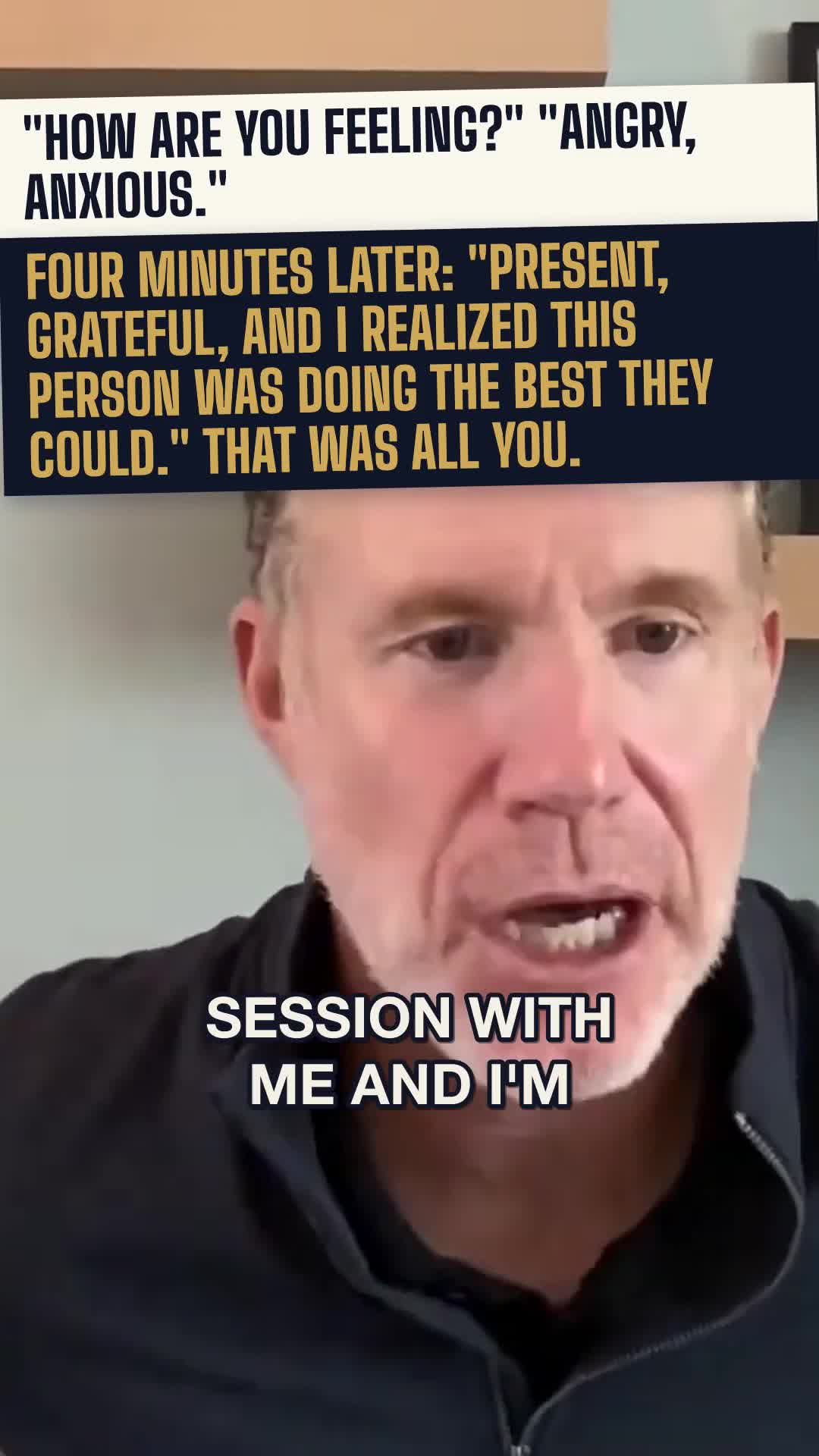
Yes, and Jeff demonstrates this live with clients. He leads a four-minute coherence technique and then asks how they feel, the shift from anger or anxiety to presence and gratitude is consistent and immediate. The technique works by changing the body's physiology first, which then changes the brain's chemistry and the lens through which you interpret your situation. Repeated practice creates a new nervous system baseline over weeks and months.
What is the prep technique for athletes and executives?
The prep technique combines heart coherence with emotionally charged visualization. Because the brain cannot distinguish a vividly felt memory from a real experience, pairing mental rehearsal with genuine renewing emotions like love and gratitude encodes a new physiological expectation. Jeff has used this with tennis players preparing for Wimbledon and executives preparing for high-stakes presentations, and the research parallels Harvard studies showing that mental practice alone produces nearly the same neural development as physical practice.
How does childhood trauma affect high-performing adults?
Jeff shares his own experience of growing up in a volatile household where emotional suppression was a survival strategy. That pattern became a subconscious operating system that showed up decades later as avoidance and difficulty with vulnerability in relationships and leadership. The body stores unprocessed emotion, and without awareness it runs behavior on autopilot. Jeff's approach, rooted in Internal Family Systems and coherence work, helps leaders trace limiting behaviors back to their original logic, build compassion for the younger self who needed them, and consciously choose different responses.
Share kit

Help spread this episode

Ready-to-post copy for guests and fans. Grab a caption, pick a clip above, and link this page.

Copy any of these word-for-word, or make them your own. They tag the show so it shows up when you post.

Social caption — long
This conversation stopped me in my tracks. Jeff Benton, peak performance strategist to Fortune 500 executives, special forces operators, and elite athletes, just joined Ben Laws on the Max Life Podcast to talk about the thing most high performers never see coming: the stress that looks exactly like drive. Jeff breaks down why 95% of our thoughts run on autopilot, how chronic stress literally shrinks the frontal cortex, and the heart coherence techniques his teams use to shift a client's entire physiology in under five minutes. He also gets personal about growing up in a home defined by toxic masculinity, and how learning to feel his emotions, instead of storing them in his body, changed everything about how he leads and loves. If you perform at a high level and you're quietly exhausted, this one is for you. Full episode + free reflection worksheet at https://maxlifecoach.com/episodes/why-stress-looks-like-drive-until-it-destroys-you-jeff @MaxLifeBenLaws
Social caption — short / quote
"Every time I grew on a personal level, that is when my business expanded the most." Jeff Benton on stress, heart coherence, and the performance nobody talks about. Full episode at https://maxlifecoach.com/episodes/why-stress-looks-like-drive-until-it-destroys-you-jeff @MaxLifeBenLaws
Email — share with your audience
Subject: That Max Life episode on stress and performance

Hey,

I thought of you when I listened to this one. Ben Laws sat down with Jeff Benton, the performance strategist behind Paragon Performance, and the conversation goes way deeper than the usual productivity stuff.

Jeff works with Fortune 500 leaders, special forces, and elite athletes, and his whole argument is that the stress most high performers are carrying isn't a side effect of success, it's quietly limiting everything: decision-making, empathy, health, and relationships. He explains the science behind heart coherence, shares techniques that shift your physiology in minutes, and gets surprisingly personal about his own story.

Full episode and a free reflection worksheet here: https://maxlifecoach.com/episodes/why-stress-looks-like-drive-until-it-destroys-you-jeff

Worth an hour of your time.
Copied