What is a shaman healer and why does the label matter?
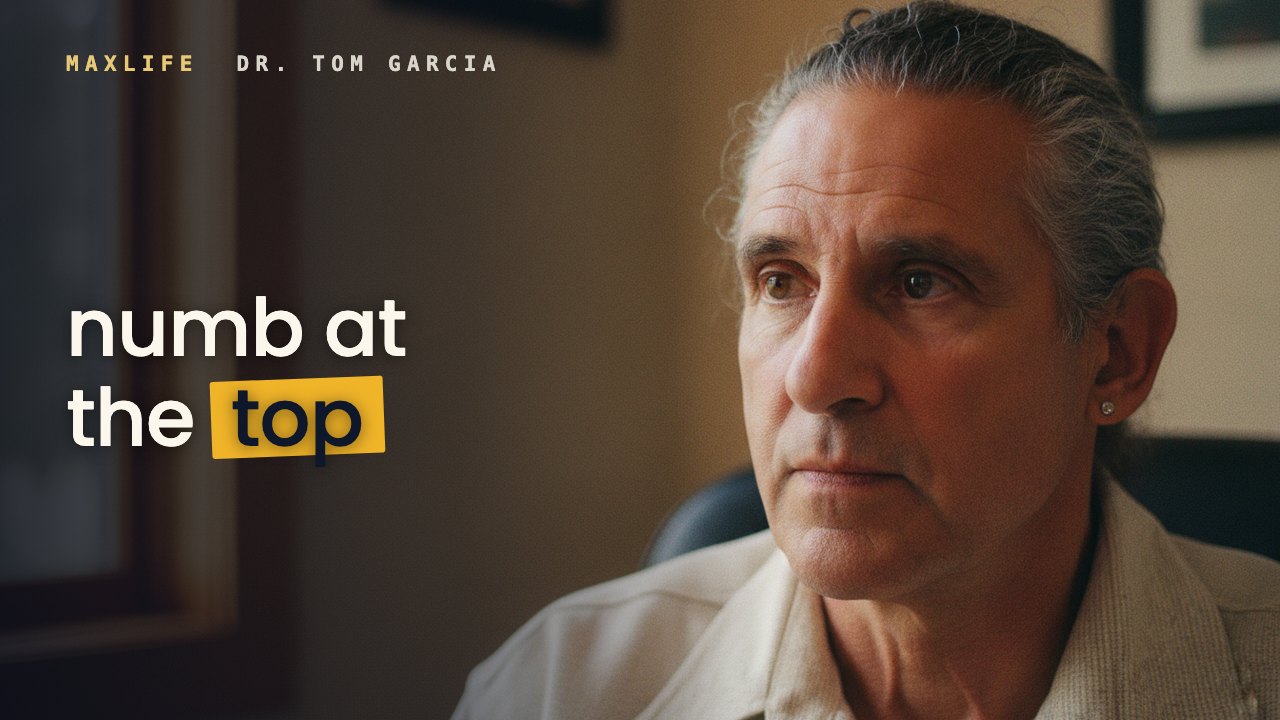
Ben opens by asking the question most listeners are already holding: what exactly is a shaman? Tom's answer cuts through the mystique. "For me it's more of a modern, the closest label to describe what I do," he says. A shaman healer, in the traditional sense, was a medicine person who worked with plants, animals, and the unseen. In Tom's modern practice, it means living close to the earth, hosting fire circles, guiding ceremony, and claiming the mantle of elderhood, not by age, but by deliberate choice. The label matters because it carries fear for some listeners and instant recognition for others. Tom doesn't brandish it. It's background context for a way of being, not a title he needs to defend.
Feeling spiritually disconnected: where it actually starts
The people who find their way to Tom's fire circle aren't broken. They're often high-functioning, outwardly successful, and quietly hollow. "Something's missing and they don't really quite know what," Tom says. He traces that hollowness to a single root: we relinquished our inner authority. We handed the capacity to bless, to heal, to connect directly, to clergy, to doctrine, to institutions, instead of claiming it for ourselves. "We abdicated the throne," is how he puts it. The word "sin," Ben notes, may trace back to "lost connection" in its oldest usage. That framing lands for Tom: the work is reconnection, not punishment.
What is the role of a shaman in modern ceremony?
Tom's role at the fire is attentive, focused, and relational. He opens a circle, acknowledges the four directions, offers prayer, and then creates a space where no topic is off limits. His job isn't to fix or diagnose. It's to see through the noise of someone's conditioned identity to who they actually are underneath it, and reflect that back with love and directness. "My job is to move some of that out of the way for people and then reflect back to them who I see." That includes calling people out when their programming is running, gently, but without flinching. The ceremony is the container. The conversation is the medicine.
How to reconnect with God without a middleman
Tom grew up Catholic, rejected it at 13, and spent decades searching. What shifted was simple and unglamorous: he started going to the woods alone before sunrise, kneeling, building a small fire, and waiting. No tradition telling him how. No authority validating the approach. Just showing up, day after day, until the connection became, in his words, "so grounded within me there's no shaking me loose." He's clear this isn't anti-religion. Some of his closest friends are ministers and fallen Catholics. "All faiths are welcome here if they come in peace." The vertical connection he describes, a direct, personal relationship with whatever you call the creative life force, is identical in function to what devout Christians mean when they say God is in the pilot seat. The difference is the absence of an intermediary.
Plant medicine as sacrament, not drug
Tom doesn't call psilocybin a drug. He calls it a sacrament, a sacred ally. He draws a deliberate line between the clinical, therapeutic model now emerging in regulated spaces and the ceremonial approach he practices. "There's nothing wrong with you" is the premise he brings to every session. That's incompatible with a diagnostic framework. He's worked with sober clients who were terrified of relapse and found the medicine non-addictive and profound. He's worked with corporate executives, authors, and entrepreneurs who came looking for a deeper experience of life and left with what he calls sovereignty, a full, unabashed ownership of their inner authority. The research from Johns Hopkins, UCLA, and the Royal College is catching up to what indigenous traditions have known for centuries: these compounds, used with intention and care, reliably deepen the sense of connection to something larger than the ego.
Daily practices for strengthening your vertical connection
Tom is emphatic that plant medicine and fire circles are tools, not requirements. For anyone listening who wants to start building that vertical connection today, he offers a short, practical list: make a circle and put a fire in it, even a candle in a quiet corner counts. Read something inspirational and sit with it quietly. Write a prayer in your own words and let it change over time. Journal not as narrative but as listening, open the page and ask, what do you have for me? Get outside, move, put your feet on the earth when you can. And treat self-care as non-negotiable: sleep, water, food, tended relationships. "If it's not practical, then it's too esoteric, too vague," Tom says. The insights from ceremony only matter if they get anchored into the everyday.