MaxLife Podcast · Episode

Selective Ambition, Build a Life by Values, Not Vanity with Charlotte Grimmel

What if ambition could feel calm? Charlotte Grimmel, psychologist and founder of The Mind Friend, shares how to stop chasing external wins and start building from the inside out.

With Charlotte Grimmel1h 55mAmbition · Values · Fulfillment
The short version

Most high achievers are optimizing for the wrong thing. Charlotte Grimmel, a performance psychologist and entrepreneur, calls this the happiness trap: chasing external milestones that deliver a brief hit and then fade, leaving you in a state of languishing. Her framework, Selective Ambition, flips the question from 'what do I want to achieve?' to 'what am I actually trying to feel?' By excavating your real values through questions about death, anger, and envy, you build an inner compass that makes decisions clearer and fulfillment more consistent. The goal is not to stop being ambitious but to choose what you are ambitious about on purpose.

Key moments
What you'll take away

9 ideas from this conversation

01

Externalize success, lose fulfillment

When success is defined by titles, income, or status, you hand the measuring stick to everyone else. The internal measure is harder to quantify and infinitely more fulfilling.

02

Languishing is not depression

Languishing is the dull middle where everything is fine but nothing is alive. It is the default state for high achievers who keep moving the goalpost without ever landing in the present.

03

Ask 'what do you want?' five times

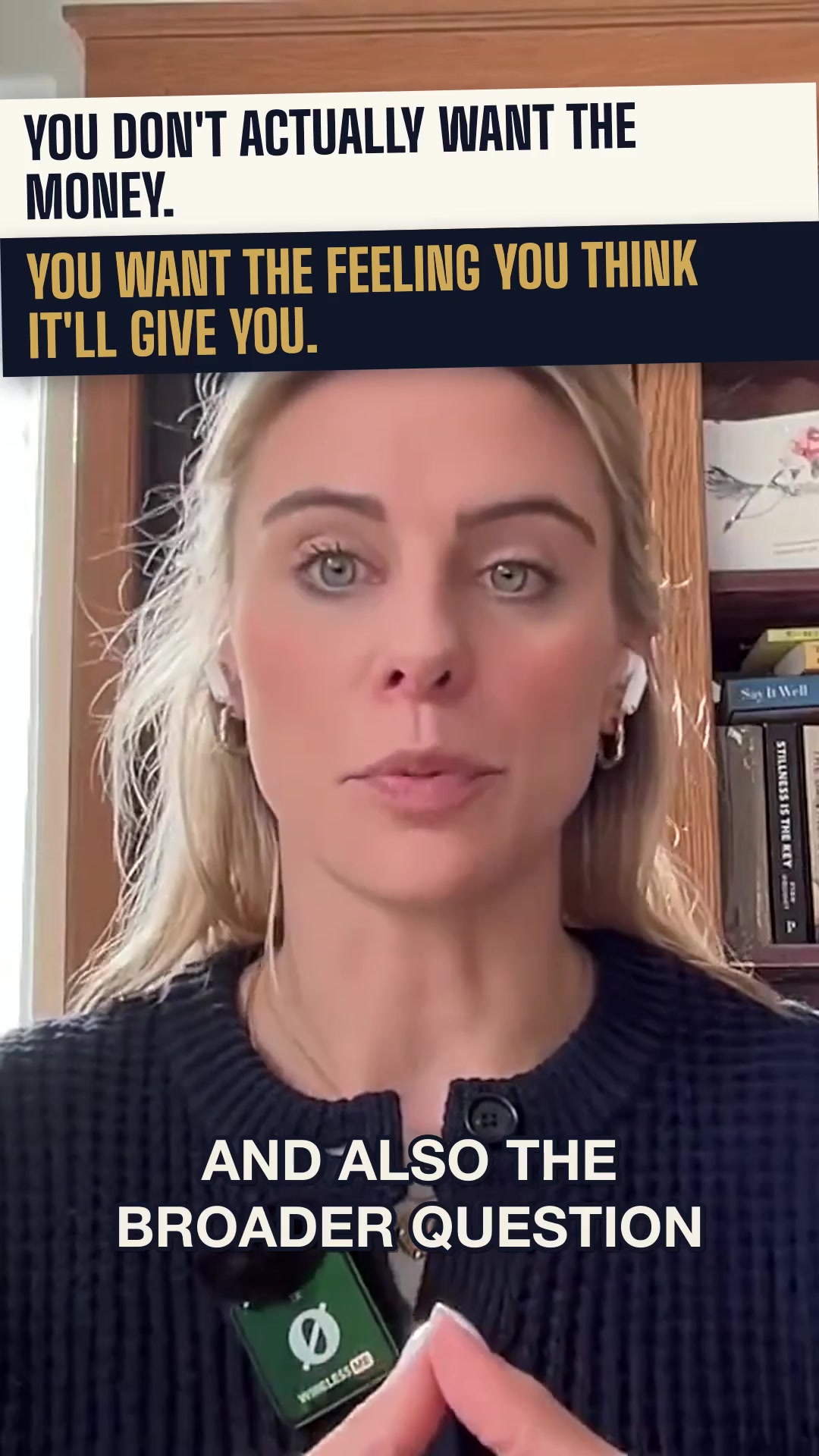
The first answer is always the outer layer. Keep asking and you move from 'more money' to the feeling the money was supposed to buy, which is where the real work begins.

04

Perfectionism is not high standards

High standards require iteration and feedback. Perfectionism avoids both, because it assumes the work can be made perfect in isolation before anyone sees it.

05

Fulfillment is a baseline, not a peak

Happiness is a transaction tied to an outcome. Fulfillment is a consistent background hum that comes from living in alignment with your actual values, not the values you think you should have.

06

Values are your cooking method

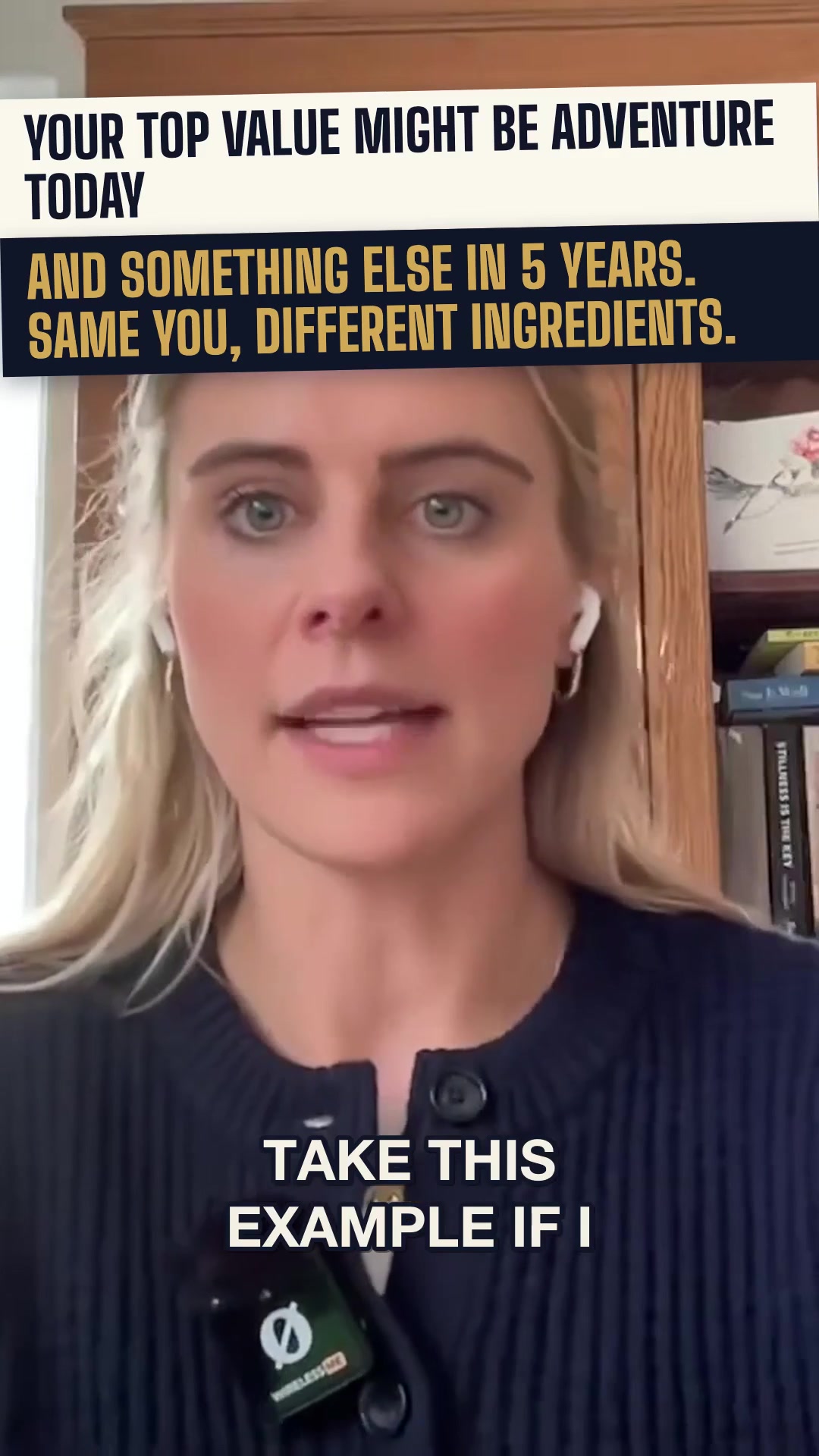
Goals are ingredients that expire. Values are the method you bring to every season of life, and when your method and your ingredients fall out of sync, nothing lands the way it should.

07

Selective Ambition means choosing your pursuit

Ambition is not the problem. Undirected ambition is. Selective Ambition asks what you are actually ambitious about and whether that thing can ever be fully achieved, or whether it pulls you forward indefinitely.

08

Your anger is a values map

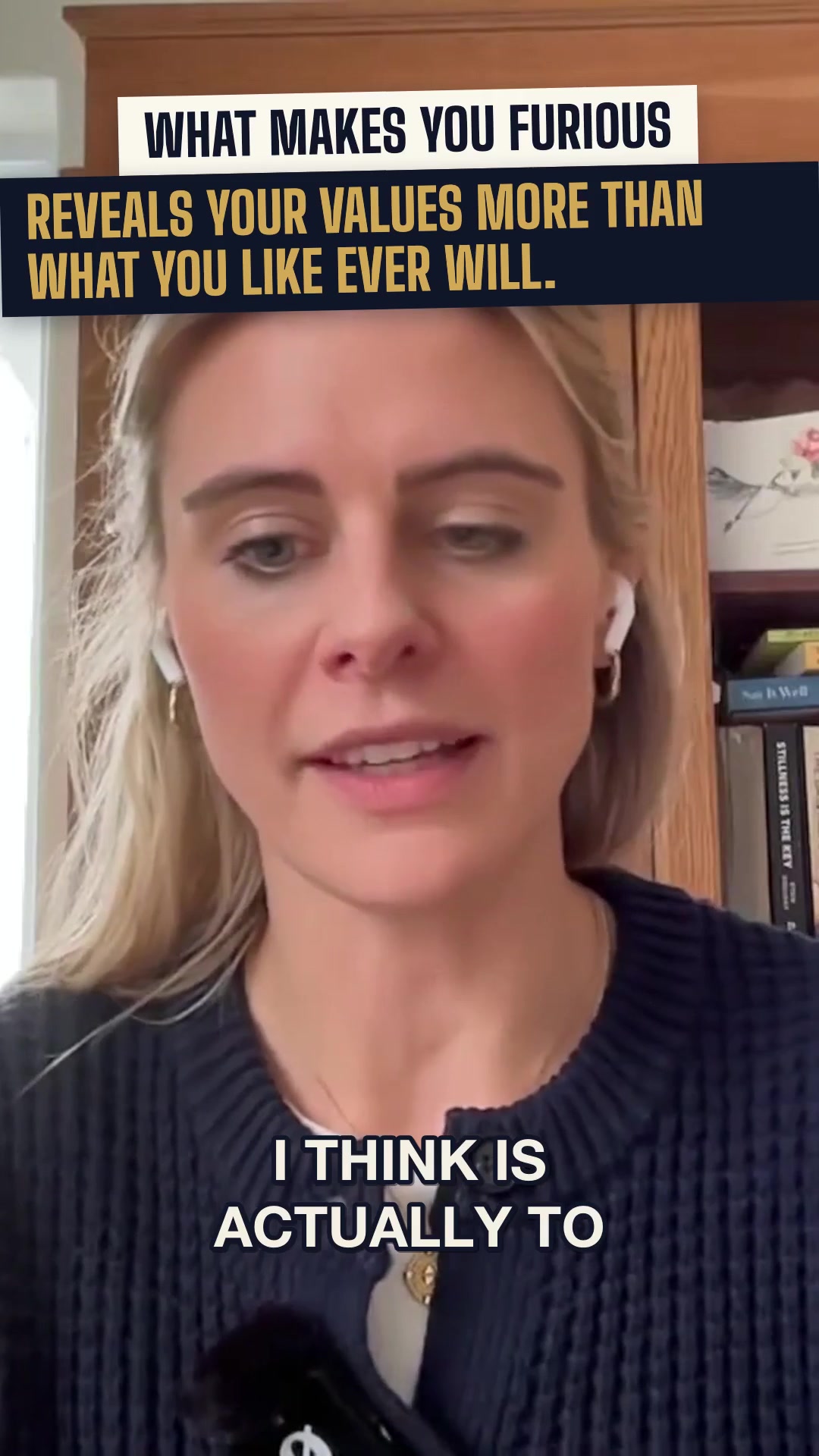
What drives you crazy is a reliable signal of what you care about most. Excavating your values through frustration and envy often reveals more than asking what you admire.

09

Values shift; the reshuffling matters

It is rare to do a 180 on your values, but the priority order changes with life circumstances. Checking in on that reshuffling is what keeps your ambition pointed at the right thing.

Full show notes

Selective Ambition, Build a Life by Values, Not Vanity with Charlotte Grimmel

What selective ambition actually means

Charlotte Grimmel did not arrive at the concept of Selective Ambition from a whiteboard. She arrived at it from Switzerland, Cape Town, a small Pacific island, and years of watching high-performing people achieve everything they said they wanted and feel nothing. "It's not about achieving anymore," she says. "It's that you need to make a mental shift around defining your life in a much broader way, around presence versus around getting somewhere or achieving something." Selective Ambition is the practice of deciding, on purpose, what you are actually ambitious about, and letting that decision be driven by values rather than vanity.

The happiness trap and the languishing problem

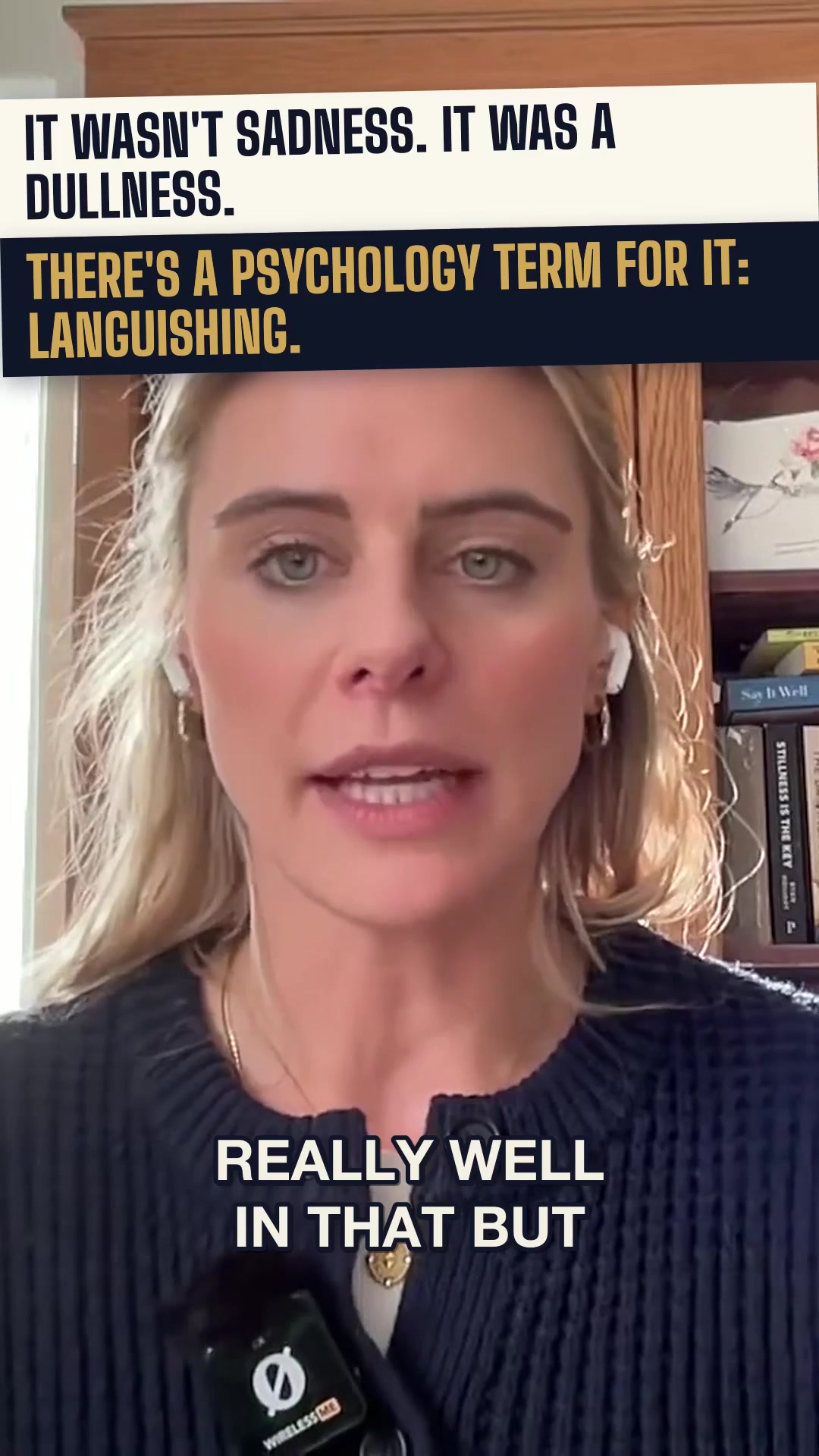
Most growth-minded people are not depressed. They are languishing. Charlotte describes languishing as "this kind of dullness, it wasn't a gaping hole, it wasn't like I was so sad or unhappy, it was just a dullness." The concept was popularized by Adam Grant during the pandemic, but Charlotte had lived it years earlier in a life that looked perfectly optimized from the outside. The trap is the hedonic treadmill: you strive, you hit the goal, you get a brief moment of satisfaction, and then the goalpost moves. The fix is not to stop striving. It is to balance the pursuit with the present.

Values alignment as the foundation of fulfillment

Charlotte draws a sharp line between happiness and fulfillment. Happiness is transactional and tied to outcomes. Fulfillment is a baseline, a consistent background hum that comes from living in alignment with your actual values. She uses the analogy of ingredients and cooking method: your values are not the dish you are trying to make, they are the method you bring to every season of life. When your values shift and your goals do not, nothing lands. The climber who summited Everest twice told two completely different stories about the same peak because his values had reshuffled between attempts. "As soon as my values change because of life circumstances, because I just age and I have more experiences and I silently change, but I do the same thing, it's not going to hit the same way because it's not aligned."

How to excavate your real values

Charlotte offers three questions that cut through the surface-level answers most people give when asked about their values. First, confront yourself with death: vividly imagine your funeral and listen to what people are saying. Very few eulogies mention income or title. Second, look at what drives you crazy. Anger and frustration are reliable maps to what you actually care about. If someone being late makes you furious, you probably value reliability. Third, ask who you would trade places with for a day, not a celebrity, but someone whose daily life you know well enough to imagine. "At the end of that, even just those three questions, you usually have a list that's more than five, and then the question becomes: what are the patterns, what are the overlaps, how do I distill this down into a workable number?"

Striving versus ambition: the push and the pull

Ben and Charlotte spend real time on the distinction between striving and ambition. Striving, in Charlotte's framing, is extrinsically driven, there is a reward at the end and you are pushing toward it. Ambition is more like an inner pull toward the kind of person you want to be. "The best ambition is often a lot more around the type of person I want to be or the type of impact I want to make in the world, than it is about that looking a specific way." A value, unlike a goal, can never be fully achieved. You can be ambitious about kindness every single day and never wake up finished. That is the point. The pursuit itself becomes the fuel.

Perfectionism is not the same as high standards

Charlotte is direct on this one. High standards require you to put work in front of people, collect feedback, and iterate. Perfectionism avoids exactly that, because it assumes the work can be made perfect before anyone sees it. When she challenges perfectionists to loosen their grip, they almost always jump to the opposite extreme in their imagination: "They immediately go, 'Well, but then I won't achieve anything in life', their image in their mind immediately goes to, 'I will become a complete and utter couch potato.'" The spectrum between perfectionism and couch potato is enormous, and the regulated middle of it is actually where excellent work gets made.
Quotable

Lines worth sitting with

It's that shift from what does it look like outside versus what does it actually feel like inside. And I think that's the only thing that actually can determine success, but it's also infinitely more fulfilling to look at it that way.
Charlotte Grimmel
There's so much joy that we can get from the pursuit. But if that's not balanced out with everything that's already in the present, then I think you are going to be in a space of languishing.
Charlotte Grimmel
Ambition is great, being pulled towards something is great, facing discomfort is great, being in pursuit of something is great. But what are you being ambitious about? That's the selective piece.
Charlotte Grimmel
Death is life's greatest gift. The problem is just that we live our everyday lives never thinking about the fact that it will end, and we don't know when, but eventually time will run its course.
Charlotte Grimmel
Free · No. 49 of the series

I know what I'm striving for
Reflection Worksheet

The episode is 1h 55m. This worksheet is fifteen minutes. The fifteen minutes is the part that changes anything: five questions from this exact conversation, pointed at your business and your life. Answer them on paper while the ideas are still fresh, and they become yours for good.

  • The Goal On Top
  • Vanity Or Values
  • The Rule You Never Picked
  • What People Say At The End
  • Aim Your Ambition Here
You get this worksheet plus the full 75-worksheet binder, free.
5 prompts, 1 pagePrintable, binder-readyFree, no spam
Open the full worksheet →
Clips · grab & share

Short highlights from the episode

Short clips from this episode are on the way. Watch the full episode while we cut them.
The guest

Meet Charlotte Grimmel

Charlotte Grimmel on the MaxLife Podcast

Charlotte Grimmel

Psychologist, entrepreneur & founder of The Mind Friend

Charlotte Grimmel is a Swiss-born performance psychologist who has lived in Cape Town, Europe, and the South Pacific. She built her practice at the intersection of positive psychology and entrepreneurship, helping growth-minded founders move from external striving to values-driven fulfillment. She is also a certified yoga teacher and dive master.

Questions, answered

Questions & answers

What is selective ambition?
Selective Ambition is Charlotte Grimmel's framework for choosing what you are ambitious about on purpose, rather than defaulting to society's external measures of success. Instead of striving toward income, status, or titles, you identify your core values and let those drive your pursuit. The result is ambition that pulls you forward rather than pressure that pushes you around.
How do I find my core values?
Charlotte recommends three questions: imagine your own funeral and listen to what people say about you, identify what makes you genuinely angry because frustration maps directly to what you care about, and ask who you would trade daily lives with and why. These questions bypass the surface-level answers and surface the values you actually live by.
What is the difference between happiness and fulfillment?
Happiness, in Charlotte's framing, is transactional and tied to specific outcomes. It spikes when you hit a goal and fades quickly. Fulfillment is a consistent baseline that comes from living in alignment with your values over time. It is less dramatic and far more durable.
What does languishing mean and how do I know if I am experiencing it?
Languishing is the psychological state between thriving and struggling. Everything is fine, but nothing feels alive. Charlotte describes it as a dullness rather than sadness. High achievers are especially prone to it because they keep moving the goalpost and never develop the capacity to feel satisfied in the present.
Is perfectionism the same as having high standards?
No. Charlotte is clear that high standards require iteration and feedback from the people your work is meant to serve. Perfectionism avoids that feedback loop entirely, assuming the work can be made perfect in isolation. The perfectionist mindset actually prevents excellence because excellence is built through contact with reality, not in spite of it.
How do I build a business that is sustainable and values-driven?
Charlotte's approach starts with clarity on what you are actually optimizing for, which means getting past the first layer of external goals to the feelings and experiences underneath them. Once you have that clarity, values become your inner compass for decisions, including what to say no to. Sustainability follows from alignment, not from better time management.
Share kit

Help spread this episode

Ready-to-post copy for guests and fans. Grab a caption, pick a clip above, and link this page.

Copy any of these word-for-word, or make them your own. They tag the show so it shows up when you post.

Social caption — long
What if ambition could feel calm? In this episode of the MaxLife podcast, psychologist and entrepreneur Charlotte Grimmel breaks down her concept of Selective Ambition, the practice of choosing what you are actually ambitious about instead of chasing whatever society says success looks like. She and Ben Laws go deep on why high achievers end up languishing, how to excavate your real values using three surprisingly sharp questions, and why fulfillment is a baseline you build rather than a peak you chase. If you have been winning on paper and wondering why it does not feel like enough, this one is for you. Full episode, show notes, and a free reflection worksheet at https://maxlifecoach.com/episodes/selective-ambition-build-a-life-by-values-not-vanity, @MaxLifeBenLaws
Social caption — short / quote
Ambition is not the problem. Undirected ambition is. Charlotte Grimmel on Selective Ambition, values alignment, and building a life that actually feels like yours. Full episode at https://maxlifecoach.com/episodes/selective-ambition-build-a-life-by-values-not-vanity, @MaxLifeBenLaws
Email — share with your audience
Subject: That MaxLife episode on Selective Ambition

Hey,

Thought of you when I listened to this one. Charlotte Grimmel, a psychologist and entrepreneur, talks about why so many high achievers end up feeling nothing even after they hit their goals, and what to do about it. She calls it Selective Ambition: getting clear on what you are actually ambitious about before you spend another year optimizing for the wrong thing.

The three questions she uses to excavate real values are worth the whole episode on their own.

Full episode and free worksheet here: https://maxlifecoach.com/episodes/selective-ambition-build-a-life-by-values-not-vanity

Enjoy.
Copied