MaxLife Podcast · Episode

The Last Human Advantage: Storytelling in an Age of AI with Tim Dyer

What happens when machines can tell better stories than you can? Tim Dyer, co-founder of Manifesto and the strategist behind Nike, Starbucks, and Amazon, makes the case that your lived experience, your B-plot, your dark night, is still the one thing AI can't touch.

With Tim Dyer1h 58mStorytelling · AI & Humanity · Brand Identity
The short version

Story is the universal language of human identity, and right now it's under pressure. AI can scrape every word ever written, synthesize archetypes, and reflect humanity back at scale, but it hasn't suffered. Tim Dyer argues that the B-plot of your life, the dark nights, the failures, the debt, the suicidal seasons, is exactly what makes a brand or a person trustworthy and real. The A-plot is what you want; the B-plot is what you need, and audiences can tell the difference. The last human advantage isn't cleverness or craft. It's the willingness to acknowledge where you've actually been.

Key moments
What you'll take away

9 ideas from this conversation

01

Your B-plot is the real story

The A-plot is what you want to land. The B-plot, the transformation underneath, is what audiences actually connect with. We reject stories where characters don't change.

02

Acknowledge the dark night

"If you don't acknowledge a dark night, you're not going to understand the mountaintop." Avoidance of your hardest seasons cuts you off from your most credible story.

03

AI knows the language, not the suffering

Large language models can synthesize every human story ever written, but they haven't gone into debt, hit rock bottom, or sat in a church basement at 2 a.m. That lived texture is still yours.

04

Shifting narratives shifts lives

"If you can shift your narratives, you can shift your story, you can also change your life." The stories you tell yourself are the ones you live out.

05

You must be present to win

"You have to stay in the story for the story to complete." Checking out mid-arc, personally or professionally, forfeits the resolution.

06

Origin stories anchor brand truth

Every brand Tim has worked with, from Intel to Starbucks, had to reckon honestly with where it came from before it could credibly claim where it was going.

07

Imperfection is the proof of humanity

The scribbled quotes on Manifesto's wall, the inside jokes from a brutal late-night client push, are things AI would never generate. Patina is the signal that something real happened.

08

The inner work is the forward motion

"We know the inner work is what really is the thing that's going to move us forward." The B-plot is always an inward journey, not an outward achievement.

09

Cohesion is what humans want most

ChatGPT, when asked for deep human truths, surfaced this: what people want most is a consistent, cohesive story. Not wealth, not fame. Meaning.

Full show notes

#11: The Last Human Advantage: Storytelling in an Age of AI with Tim Dyer

Storytelling for entrepreneurs in the age of AI

If you build a business on connection, creativity, or meaning, this conversation is going to hit differently. Tim Dyer has spent his career helping some of the world's most recognized brands, Nike, Starbucks, Amazon, Intel, Bacardi, find the story that's actually true about them. Not the polished version. The real one. And his argument in this episode is simple and a little unsettling: AI is coming for the craft of storytelling, but it can't come for the lived experience behind it. That's the last human advantage. The question is whether you're willing to use it.

Why human story is under threat right now

Tim doesn't panic about AI, but he takes it seriously. "When we've taken the whole of our stories and all of the collective mind of humanity and kind of sold it for a song to something smarter and greater than us," he says, "the question is, is that the relative end of storytelling?" The large language models training these systems were built on human language, human archetypes, human emotion. They're getting very good at reflecting humanity back at us. And when something can do that at scale, the brands and people who rely on surface-level storytelling are going to feel it first.

What Tim keeps coming back to is a data point that stopped him cold: when prompted to surface deep human truths, an AI model identified a consistent, cohesive story as the single thing humans want most. Not money. Not safety. Meaning. "What we're scratching for," Tim says, "is to have our life mean something."

The A-plot and B-plot of your brand and your life

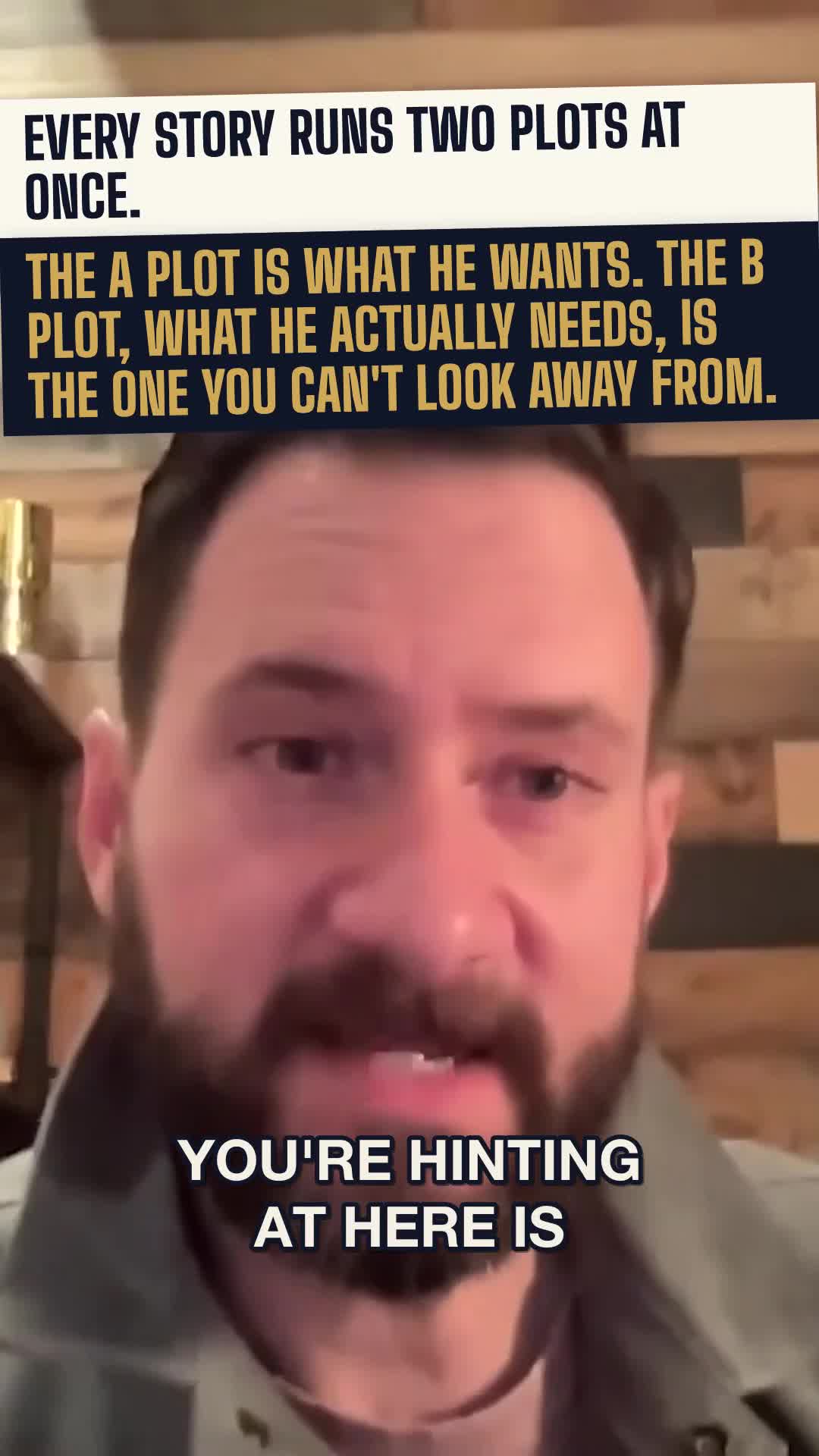
This is the framework at the center of the episode, and it applies whether you're running a company or just trying to figure out who you are. The A-plot is what you say you want. Land the client. Hit the number. Build the thing. The B-plot is the transformation happening underneath, the identity question, the failure you're carrying, the version of yourself that's being forged. "We don't like stories where characters don't transform," Tim says. "We reject them."

The problem is that most people, and most brands, only want to show the A-plot. The pitch, the win, the hockey stick. But audiences feel the absence of the B-plot. They can detect the uncanny valley of a story that's too clean. Tim's work with Intel is a good example: before the agency could help them claim "authors of amazing," they had to honestly reckon with decades of being the quiet ingredient brand. The ascension only read as true because the origin was acknowledged.

The dark night of the soul is not optional

Ben pushes Tim on this directly, and Tim doesn't flinch. "The greatest ascension of mankind is found in a church basement in the middle of a 12-step recovery group where people are broken and finding themselves." He's not being dramatic. He's describing the B-plot in its rawest form. And he includes himself: "I didn't tell you about the time I went into debt, and I didn't tell you about the time I was suicidal." Those are the chapters that give the rest of the story weight.

For entrepreneurs, the temptation is to skip to the part where things worked. But Tim's point is that skipping it doesn't make it disappear. It just makes your story feel hollow. "If you don't acknowledge a dark night, you're not going to understand the mountaintop."

What AI actually can't replicate

This is where the conversation gets genuinely interesting. Tim isn't anti-AI. He's watching it closely, using it, thinking about it. But he keeps circling back to something he calls the patina of humanity: the scribbled inside jokes on Manifesto's office wall, the imperfect handmade thing, the energy exchange between two people in the same room. "AI would never create them," he says. "They're reflections of the patina of humanity."

He also goes deeper, into quantum entanglement, forest bathing, the Imago Dei, the idea that what's most sacred about being human might exist in a register that language, and therefore language models, can't fully reach. Whether you track with the spiritual framing or not, the practical point holds: the lived experience of suffering, of failing, of sitting in the rubble and choosing to keep going, that's the thing that makes a story worth trusting. AI knows the language of suffering. It hasn't done it.

How to find your real origin story

Tim walks through the methodology his agency uses, a kind of Venn diagram of origin, white space, and truth, but the most important piece is the simplest: start where it was hard. Every brand he's worked with that found its footing did so by going back to the humble, sometimes embarrassing, sometimes painful beginning. The napkin. The garage. The moment before anyone believed in it. That's where the real story lives. And it's the same for individuals. "You must be present to win," Tim says. "You have to stay in the story for the story to complete."
Quotable

Lines worth sitting with

If you can shift your narratives, you can shift your story, you can also change your life.
Tim Dyer
If you don't acknowledge a dark night, you're not going to understand the mountaintop.
Tim Dyer
The greatest ascension of mankind is found in a church basement in the middle of a 12-step recovery group where people are broken and finding themselves.
Tim Dyer
What we're scratching for is to have our life mean something.
Tim Dyer
Free · No. 11 of the series

I know my A-plot
Reflection Worksheet

The episode is 1h 58m. This worksheet is fifteen minutes. The fifteen minutes is the part that changes anything: five questions from this exact conversation, pointed at your business and your life. Answer them on paper while the ideas are still fresh, and they become yours for good.

  • The Win You're Chasing
  • Who You'd Have To Become
  • Whose Growth You Binge
  • The Cost Of Avoiding It
  • Step Into One Scene
You get this worksheet plus the full 75-worksheet binder, free.
5 prompts, 1 pagePrintable, binder-readyFree, no spam
Open the full worksheet →
Clips · grab & share

Short highlights from the episode

Short clips from this episode are on the way. Watch the full episode while we cut them.
The guest

Meet Tim Dyer

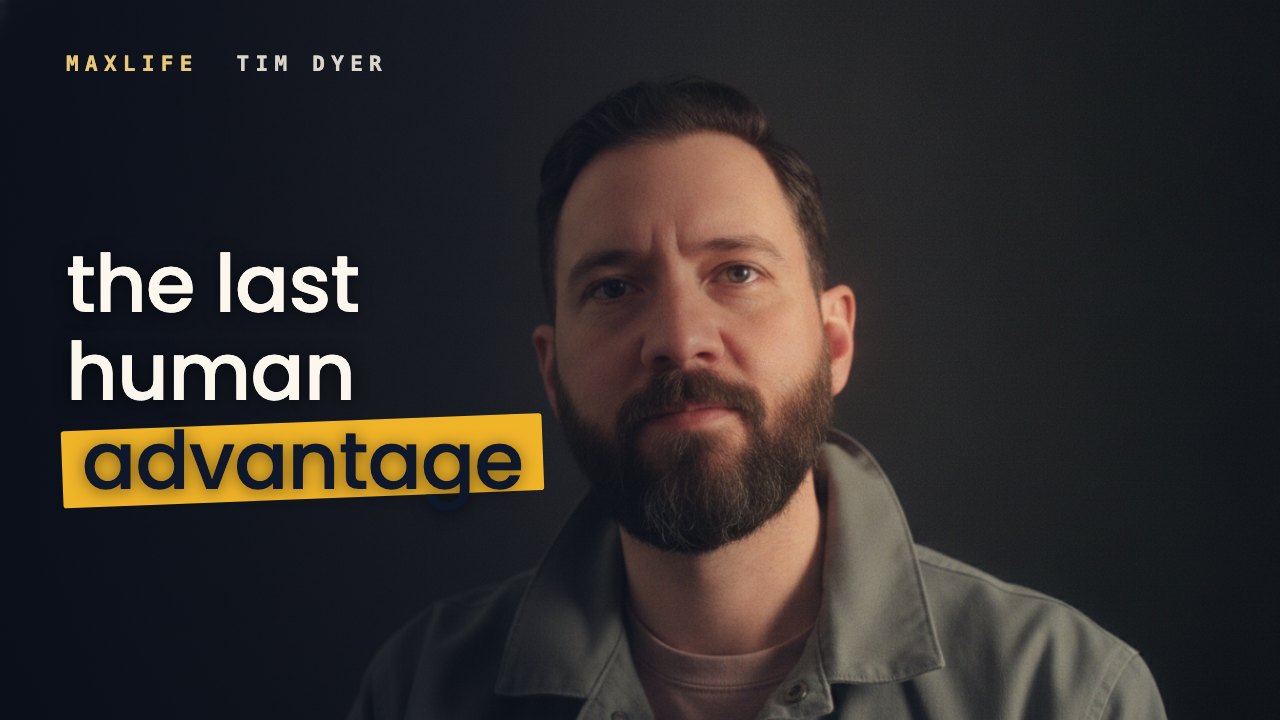
Tim Dyer on the MaxLife Podcast

Tim Dyer

Co-founder, Managing Partner & Chief Creative Officer, Manifesto

Tim Dyer has shaped purpose-driven campaigns for Nike, Starbucks, Amazon, Bacardi, Cisco, and Intel, helping brands find and own their origin story at critical inflection points. He co-founded Manifesto, recognized as the number seven fastest-growing independent agency in America. Outside the agency, Tim hosts Wisdom and Whiskey, a gathering built on the belief that the best conversations happen when people are honest about their B-plot.

Questions, answered

Questions & answers

What is storytelling for entrepreneurs and why does it matter?
Storytelling for entrepreneurs is the practice of building a coherent, honest narrative around who you are, where you came from, and why your work exists. Tim Dyer argues it matters now more than ever because AI can generate polished content at scale, making authentic, lived-experience-driven stories the primary differentiator. Audiences can feel the difference between a crafted story and a true one.
How is AI changing brand storytelling?
AI is democratizing the craft layer of storytelling, making it easier to produce content, copy, and even video at low cost. Tim's concern is that this floods the market with synthetic reflections of humanity while eroding the sense of a distinct, cohesive identity. The brands that will stand out are the ones willing to go deeper into their actual origin and B-plot, the parts AI can't fabricate.
What is the difference between an A-plot and a B-plot in brand strategy?
The A-plot is the surface goal: land the client, hit the revenue number, launch the product. The B-plot is the internal transformation happening underneath, the identity question, the failure being processed, the character arc. Tim says audiences connect with B-plots because they're universal, and they reject stories where characters, or brands, don't visibly change.
How do you find your brand origin story?
Tim's approach starts with the humble, often uncomfortable beginning: the napkin, the debt, the moment before anyone believed in the idea. He uses a Venn diagram of origin, white space, and core truth to surface what's actually distinctive. The key is not skipping the dark chapters, because those are what make the current story credible.
Can AI replace human storytellers?
Tim believes AI will get very good at the language and structure of storytelling, but the lived experience of suffering, failing, and transforming is something it hasn't done. The patina of real human experience, the imperfection, the inside joke from a brutal late-night work session, is still a signal audiences can detect and trust. That's the last human advantage.
What do entrepreneurs get wrong about their own story?
Most entrepreneurs want to show only the A-plot: the win, the growth, the achievement. Tim says the B-plot, the dark night of the soul, the seasons of debt or doubt or failure, is what actually builds trust and connection. Avoiding it doesn't make it disappear; it just makes the story feel hollow to the people you're trying to reach.
Share kit

Help spread this episode

Ready-to-post copy for guests and fans. Grab a caption, pick a clip above, and link this page.

Copy any of these word-for-word, or make them your own. They tag the show so it shows up when you post.

Social caption — long
What happens when machines can tell better stories than we can? That's the question Tim Dyer, co-founder of Manifesto and the strategist behind campaigns for Nike, Starbucks, Amazon, and Intel, sat down to answer with Ben Laws on the MaxLife Podcast. In this conversation, Tim breaks down why AI is a real threat to brand storytelling, what the A-plot vs. B-plot framework means for entrepreneurs, and why the dark nights of the soul in your story aren't liabilities, they're the whole point. "If you don't acknowledge a dark night, you're not going to understand the mountaintop." If your work depends on connection, story, or meaning, this one's worth your time. Listen here: https://maxlifecoach.com/episodes/the-last-human-advantage @MaxLifeBenLaws
Social caption — short / quote
"If you can shift your narratives, you can shift your story, you can also change your life." Tim Dyer on the last human advantage in an age of AI. Full episode: https://maxlifecoach.com/episodes/the-last-human-advantage @MaxLifeBenLaws
Email — share with your audience
Subject: Episode worth your time, The Last Human Advantage

Hey,

Thought of you when I listened to this one. Tim Dyer, co-founder of Manifesto, joined Ben Laws on the MaxLife Podcast to talk about what AI is actually doing to storytelling, and what it can't touch. He's worked with Nike, Starbucks, Amazon, and Intel, and the conversation goes way deeper than brand strategy. It gets into the A-plot vs. B-plot of your own life, why the dark nights matter, and what the "last human advantage" actually is.

Worth a listen: https://maxlifecoach.com/episodes/the-last-human-advantage

Tim's line that stuck with me: "If you don't acknowledge a dark night, you're not going to understand the mountaintop."
Copied