MaxLife Podcast · Episode

The Reputation Economy: Why Your Story Is Your Greatest Business Asset with Stacy Havener

Stacy Havener raised over $8 billion for boutique investment funds without an Ivy League degree, a finance background, or a single spreadsheet pitch. The weapon she used was story, and she's here to show you how to use yours.

With Stacy Havener1h 0mStorytelling · Personal Brand · Impostor Syndrome
The short version

Stacy Havener built a career raising $8 billion for boutique fund managers by doing something the finance world didn't expect: leading with story instead of statistics. She argues we're living in a reputation economy, not just an attention economy, and that your personal brand enters rooms you're not even in. The key to a story that moves people is going into the danger zone, the painful, messy backstory that most professionals edit out entirely. Companies don't have souls, she says, but the founders behind them do. If you want your business to grow, the most valuable asset you own is the story only you can tell.

Key moments
What you'll take away

9 ideas from this conversation

01

We're in a reputation economy

Stacy draws a hard line between chasing likes and building lasting trust. Your reputation enters rooms you're not even in.

02

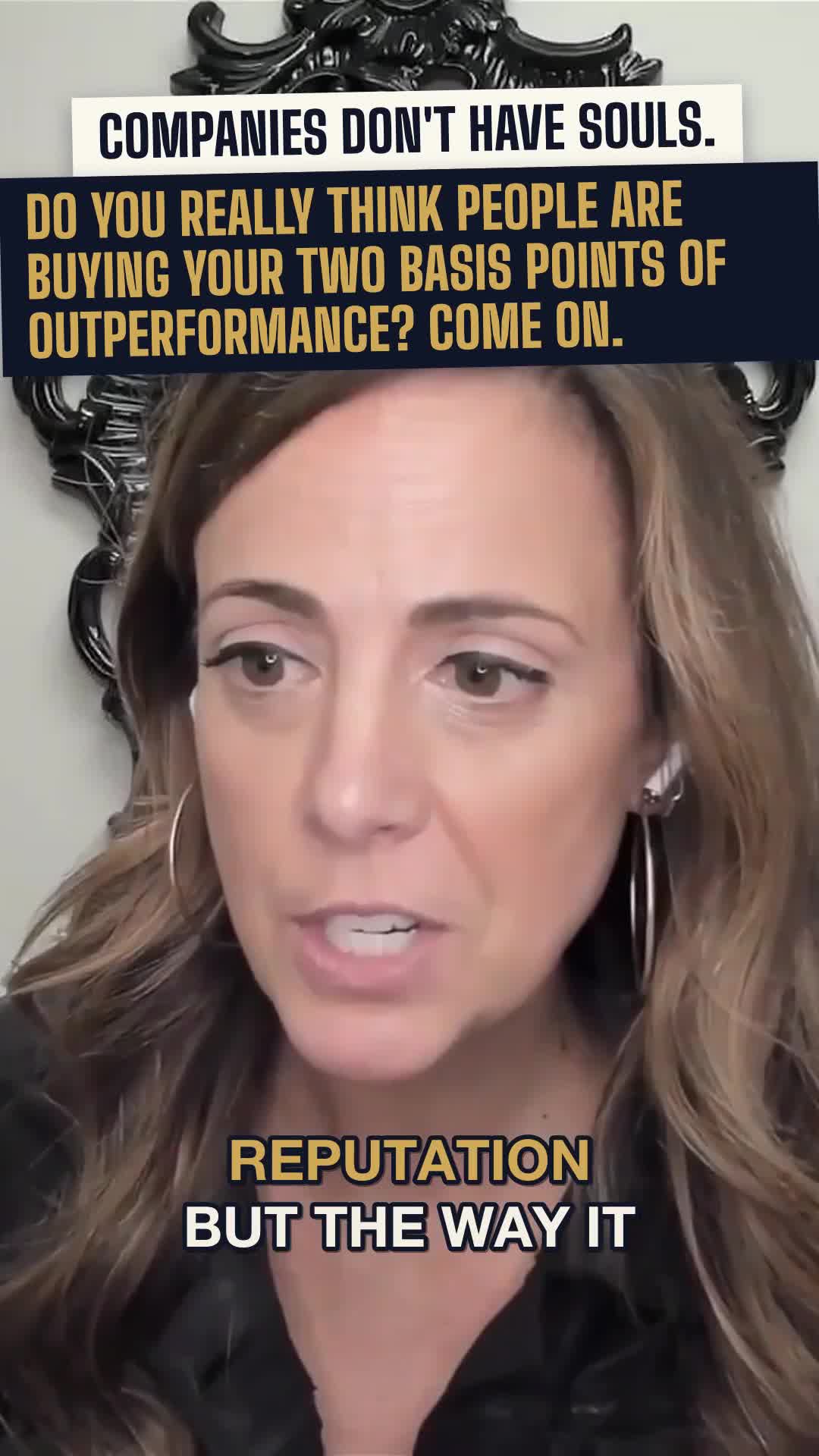
Companies don't have souls

The founder is the face. If you think your personal brand doesn't matter, Stacy says flat out, you're wrong.

03

Go into the danger zone

The messy, painful backstory is exactly what makes people feel seen. Edit it out and your story falls flat.

04

Procrastinating isn't processing

You can't share a story that's still raw. Give yourself time to process, then share it from a place of stability, not open wounds.

05

Every growth milestone starts with a sale

A raise, a new client, a book deal, a board seat: it's all a sale of you. Your story is the path to all of it.

06

Pull the thread from pain to purpose

Find the stakes in your past, then show how that experience makes you exactly the right guide for the people you serve.

07

End your backstory with an invitation

Most founders trail off after the backstory. The last move is to show the prospect where you're going together.

08

Not everyone likes you anyway

'Not everyone's going to like you even if you don't own your story. So you might as well show up real.' Stacy's words, full stop.

09

Worth is an inside job

No credential, dollar amount, or external proof point fills the gap. The work is internal, and it's ongoing.

Full show notes

#22: The Reputation Economy: Why Your Story Is Your Greatest Business Asset with Stacy Havener

Why your personal brand matters more than your company brand

Stacy Havener has a phrase she keeps coming back to: companies don't have souls. The people behind them do. In a world saturated with polished websites, feature lists, and two-basis-point performance claims, she argues that the real differentiator is always the founder's story. "People do business with people," she says. "You can easily deduce that if that's true, then who you are as a person matters a hell of a lot more than we're giving it any credit."

This is the core tension in the personal brand vs. company brand debate, and Stacy lands firmly on the side of the person. Your personal brand enters rooms before you do. It works in countries you've never visited. It's the reason someone walked up to her at an airport gate and said, "Are you Stacy Havener?" after finding her on LinkedIn. That kind of reach doesn't come from a logo.

How storytelling raised $8 billion for boutique funds

Stacy didn't set out to work in finance. She wanted to be a literature professor. Her high school soccer coach, who happened to run a billion-dollar small-cap equity boutique, offered her a job to help launch a new fund. She told him she didn't know anything about investing. He told her that was fine. She never left the industry.

What she brought to Wall Street wasn't a CFA or an Ivy League pedigree. It was the ability to tell a story that made people feel something before they did something. She raised $500 million in two years for that first fund, then $3 billion in three years for a $17 million fund. It took her about a decade to fully unpack what she was actually doing. At the heart of it was storytelling.

Impostor syndrome and the search for an external stamp

For years, Stacy's worst nightmare was someone asking where she went to school. "I literally wanted to die," she says. She spent the better part of a decade looking for some external third-party credential to prove she belonged: a graduate degree from a fancy school, a CFA, something. "I just felt like I needed some sort of external stamp to say she belongs here."

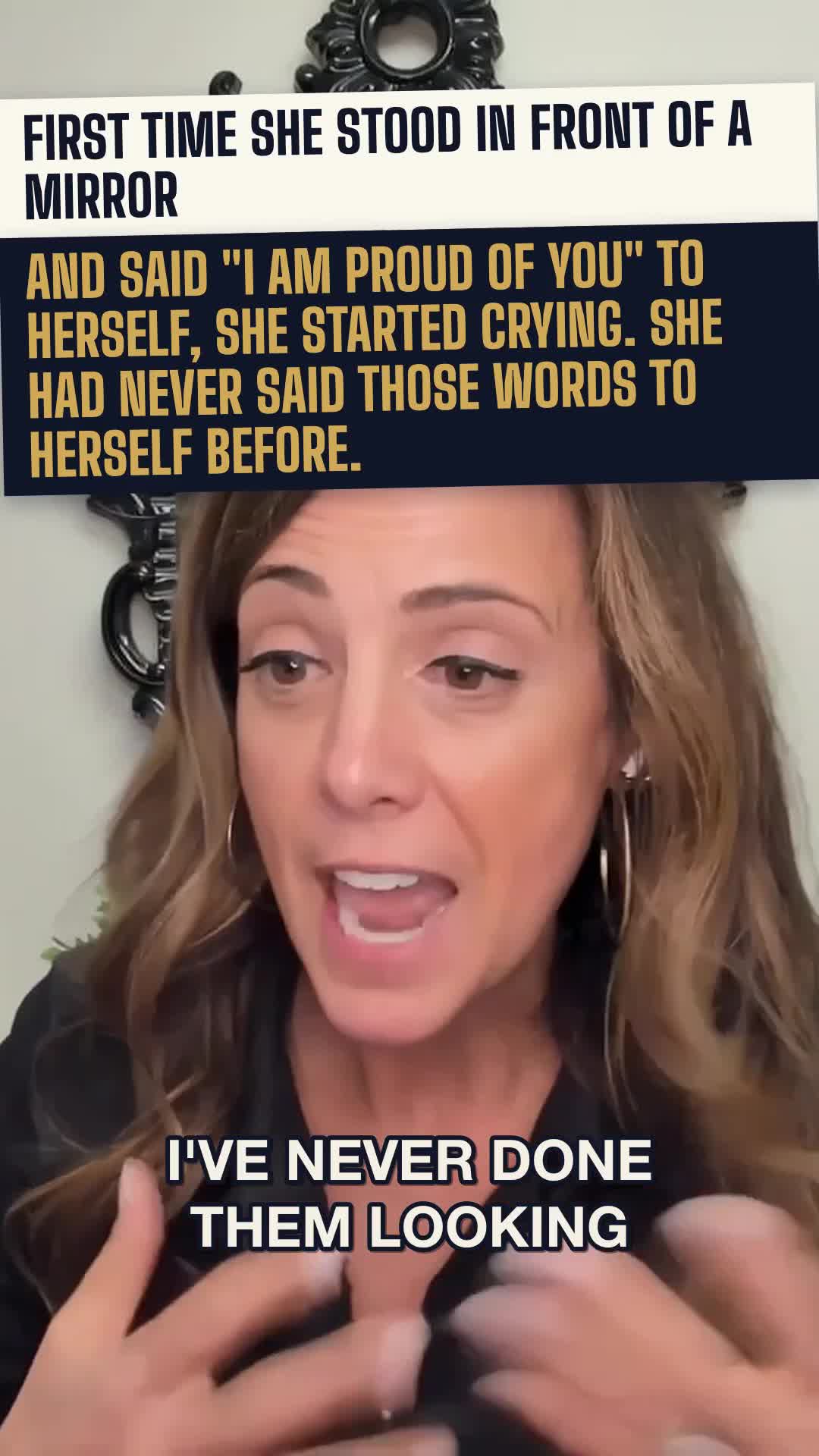
That pattern didn't break until she turned 40 and had her daughter. Something shifted. "If I can do that, I can do anything." The impostor syndrome didn't disappear, but it changed shape. Now, as her business evolves toward a broader audience and a publisher has asked her to consider becoming a global thought leader, the syndrome has come roaring back, this time from the inside. Her response: standing in front of a mirror for the first time in her life and saying, "I am proud of you."

The danger zone: why your backstory is where the gold lives

Most professionals show up with a bullet-pointed résumé and call it a story. Stacy calls that a missed opportunity. "We've left out the thing that makes other people care, the thing that makes us memorable, which are the hard bits, the messy middle, the shared emotional experiences."

She calls this the danger zone, and going there is non-negotiable if you want your story to land. In her client story sessions, which are usually just two people in a room, grown adults cry. They've never told these parts of their story in a professional context. They assumed no one would care. What actually happens is the opposite: people see themselves in your story precisely because you went somewhere real.

The framework she teaches has three moves. First, find the stakes in your past, usually somewhere in childhood or early adulthood where there was real pain. Second, pull that thread forward to today and connect it to your why. Third, end with an invitation: show the person in front of you how your backstory has prepared you to be exactly the guide they need.

Your story is money: applying the framework beyond fundraising

Not everyone is raising capital for a fund. But Stacy argues the framework applies to any growth milestone. "If you believe that in some way, shape, or form, most growth is associated with a sale of some kind, you're either selling something to yourself or to someone else. It's all a sale of you."

A raise, a new client, a speaking gig, a board seat, a book deal: all of it starts with the story you tell yourself and the story you tell other people. The story you tell yourself and the one you tell the world are different, but they're related. And most people spend almost no intentional time on either one.

"You are your own most valuable asset," Stacy says. "And it's probably the thing we spend the least amount of time on." The widget, the features, the website: none of it lands without a why. And the why lives in your story.

Quotable

Lines worth sitting with

Companies don't have souls. The people in the company are the ones with the soul. And if you think that you don't need a personal brand or your personal brand doesn't matter, I would challenge you and say you're wrong.
Stacy Havener
I think the one we're in right now in my mind is a reputation economy. Not an attention economy. An attention economy would say, give me all the likes. But the healthier, more lasting version of that is this is an economy built on reputation.
Stacy Havener
If I share my backstory and you go, that sucks, what I hear and feel is I suck. So it's incredibly vulnerable to share it because what if no one likes it?
Stacy Havener
Not everyone's going to like you even if you don't own your story. So you might as well show up real.
Stacy Havener
Free · No. 22 of the series

I know my résumé
Reflection Worksheet

The episode is 1h 0m. This worksheet is fifteen minutes. The fifteen minutes is the part that changes anything: five questions from this exact conversation, pointed at your business and your life. Answer them on paper while the ideas are still fresh, and they become yours for good.

  • The Part You Skip
  • Walk Into The Danger Zone
  • Pull The Thread To Today
  • Why It Makes You The Guide
  • Say The True Thing Once
You get this worksheet plus the full 75-worksheet binder, free.
5 prompts, 1 pagePrintable, binder-readyFree, no spam
Open the full worksheet →
Clips · grab & share

Short highlights from the episode

Short clips from this episode are on the way. Watch the full episode while we cut them.
The guest

Meet Stacy Havener

Stacy Havener on the MaxLife Podcast

Stacy Havener

Founder, Havener Capital Partners

Stacy Havener is a fundraising strategist and storytelling coach who built Havener Capital Partners to help boutique investment managers compete against Wall Street giants. A self-described blue-collar kid with a literature degree from a state school, she raised over $8 billion for new and undiscovered funds, leading to $30 billion-plus in follow-on AUM. She's now working on a book and expanding her frameworks to founders across industries.

Questions, answered

Questions & answers

What is the difference between a personal brand and a company brand?
A company brand can build recognition, but it can't carry a soul on its own. Stacy Havener argues that the personal brand of the founder is what gives a company its heart, its why, and its staying power. Your personal brand works in rooms and countries you're not even in, doing relationship-building before you ever show up.
How do you build credibility as a founder without a prestigious background?
Stacy raised $8 billion without an Ivy League degree, a finance background, or a CFA. Her credibility came from her story, her clarity about her why, and her ability to make other people feel seen. Credentials can open a door; a compelling story is what keeps people in the room.
How do you use storytelling to raise money or win clients?
Stacy's framework has three moves: find the real stakes in your backstory, pull that thread forward to explain why you do what you do today, and end with an invitation that shows the prospect how your journey has prepared you to guide theirs. Before people do something, they need to feel something.
How do you deal with impostor syndrome as an entrepreneur?
Stacy describes impostor syndrome as something that ebbs and flows throughout a career, not something you defeat once and move on from. Her honest answer is that it comes back every time you push into new territory. The work is recognizing the pattern, finding your people, and building internal practices like affirmations that reinforce your own worth rather than waiting for external proof points.
Why do most founders struggle to tell their own story?
Because sharing your backstory feels like personal exposure. If it doesn't land, it feels like personal rejection. Most professionals strip out the messy, painful parts and present a polished résumé instead of a real story. The irony is that the parts they cut are exactly the parts that make other people care.
What is the reputation economy and why does it matter for entrepreneurs?
Stacy defines the reputation economy as a shift away from chasing likes and views toward building lasting trust. In an attention economy, reach is the metric. In a reputation economy, what matters is whether people trust you enough to do business with you, refer you, and come back. For founders, that trust is built through consistent, authentic storytelling over time.
Share kit

Help spread this episode

Ready-to-post copy for guests and fans. Grab a caption, pick a clip above, and link this page.

Copy any of these word-for-word, or make them your own. They tag the show so it shows up when you post.

Social caption — long
What if the reason you're not closing more clients, raising more capital, or getting the opportunities you want has nothing to do with your credentials and everything to do with your story?

Stacy Havener raised over $8 billion for boutique investment funds without an Ivy League degree or a finance background. Her edge was storytelling. In this episode of Max Life with Ben Laws, she breaks down exactly how she did it and how any founder can apply the same framework.

She talks about the reputation economy vs. the attention economy, why companies don't have souls but founders do, and why the painful parts of your backstory are the most valuable parts of your pitch.

"People do business with people. Who you are as a person matters a hell of a lot more than we're giving it any credit."

Full episode, show notes, and a free reflection worksheet at https://maxlifecoach.com/episodes/the-reputation-economy

@MaxLifeBenLaws
Social caption — short / quote
Stacy Havener raised $8B using story, not spreadsheets. Her framework for turning your personal narrative into your greatest business asset is now on Max Life with Ben Laws. Listen + free worksheet: https://maxlifecoach.com/episodes/the-reputation-economy @MaxLifeBenLaws
Email — share with your audience
Subject: Your story is your most valuable asset, new MaxLife episode

Hey,

Thought you'd want to hear this one.

Stacy Havener built a career raising over $8 billion for boutique investment funds, and she did it without a finance degree, an Ivy League pedigree, or a single spreadsheet pitch. She did it with story.

In her conversation with Ben Laws on the MaxLife podcast, she walks through the exact framework she uses with founders: how to find the stakes in your backstory, why most professionals edit out the most important parts, and what it actually means to live in a reputation economy.

If you're building a business and you've ever felt like your credentials weren't enough, this episode is worth an hour of your time.

Listen here: https://maxlifecoach.com/episodes/the-reputation-economy

There's also a free reflection worksheet on the page if you want to start mapping your own story.
Copied