MaxLife Podcast · Episode

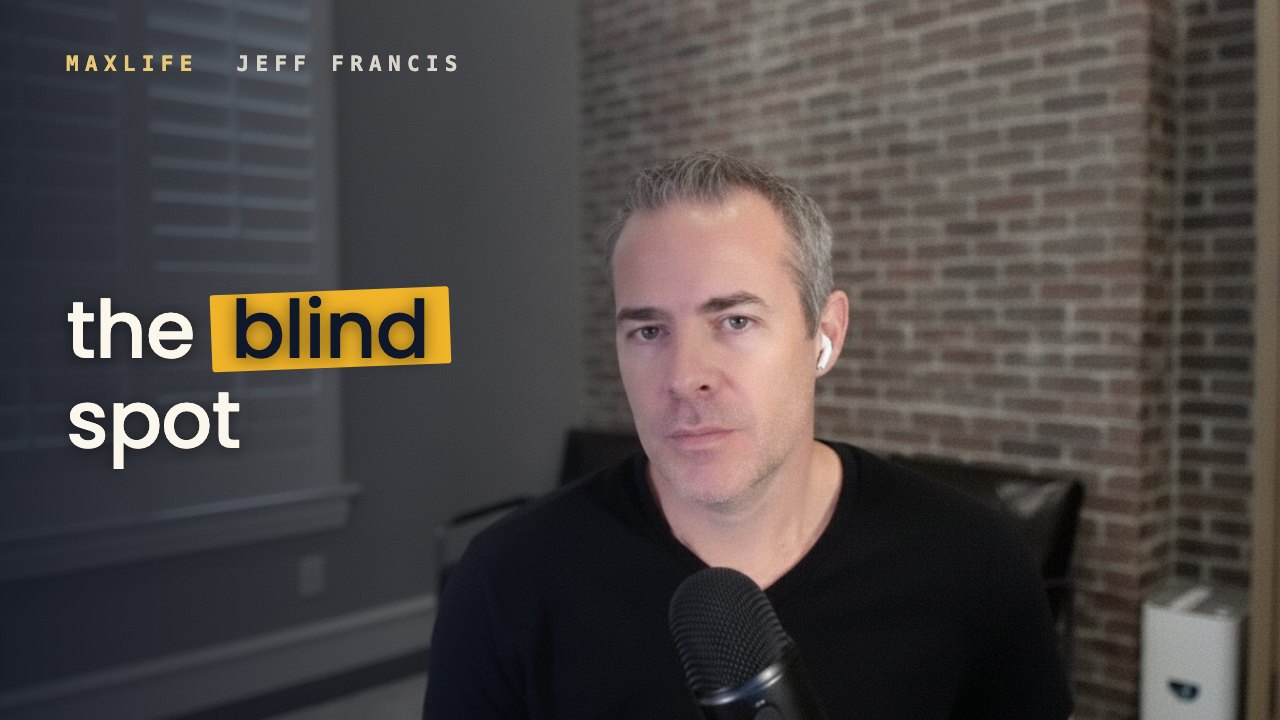
Why High Performers Crash: Jeff Francis on Emotional Blind Spots and the Leadership Fix

The same drive that builds a high performer can quietly hollow them out. Jeff Francis, founder of ENO8, breaks down the internal patterns that stall growth and the leadership shift that actually fixes them.

With Jeff Francis1h 33mLeadership · High Performance · Entrepreneurship
The short version

High performers crash not because they lack skill but because the emotional patterns that fuel their rise start working against them. Jeff Francis, multi-exit founder of ENO8, explains that the real culprits are a bias toward control, difficulty delegating, and a tendency to shut down under failure rather than surge through it. The fix starts with awareness: name the pattern, reframe the setback, and shift focus from the result to the action in front of you. Leadership that treats every person as an individual human being, not a role to fill, is what turns a founder's vision into a culture people actually run through walls for. Stay less focused on the result and more focused on the action you need to take right now, and trust that consistent action over time takes care of the rest.

Key moments
What you'll take away

9 ideas from this conversation

01

Awareness is always the starting point

You can't act against a pattern that's holding you back until you're willing to name it. Jeff traces every leadership fix back to that first honest acknowledgment.

02

Reframe fast, then act

When a setback hits, the move is to name the feeling, reframe it quickly, and redirect toward the next action. Sitting in the emotion without a reframe is where momentum dies.

03

Focus on action, not the result

"Stay less focused on the result and more focused on what's the action that I need to be taking right now." Consistent action over time takes care of the results.

04

Manage people like individuals

Every person on your team wants to be communicated with and managed differently. Understanding that distinction is what actually brings out the best in people.

05

The inverted org chart unlocks energy

When a founder flips the chart and decides they work for their team rather than the other way around, empowerment expands instead of contracts.

06

Delegation is a skill, not a personality trait

Letting go of the vine has been one of Jeff's hardest ongoing challenges. It's a learnable skill, not a fixed trait, and avoiding it caps the whole organization.

07

Document partnerships before value exists

Once something becomes valuable, people remember conversations through the lens of their own best interests. Nail down the agreement in writing before you create anything worth fighting over.

08

Resilience is the multiplier

Bias to action gets you moving. Resilience is what makes you harder to stop the more you get hit. Together, those two traits are nearly impossible to beat.

09

AI rewards discernment, not just intelligence

IQ and EQ brought us this far, but the next edge is discernment: knowing when the output sounds right but isn't, and being the human who can tell the difference.

Full show notes

Why High Performers Crash: Jeff Francis on Emotional Blind Spots and the Leadership Fix

Why high performers crash before they see it coming

Jeff Francis has founded multiple companies, navigated early exits, and built ENO8 into his most successful venture yet. But the most honest part of this conversation isn't about the wins. It's about the patterns he had to catch in himself first. "I have a tendency to react to failure with shutting down," he says. "Discovering that that's sort of in the hard wiring, I have to make sure the mental game is there so I can respond to setbacks by surging forward." That gap between reaction and response is where most high performers quietly lose ground.

The crash rarely looks dramatic. It looks like a founder who can't delegate, a leader whose vision is crystal clear in their own head but never lands with the team, or a high performer who keeps grinding harder on the wrong things because no one ever named the pattern. Jeff's framework is simple and repeatable: name it, reframe it, redirect to action.

How to manage high performers without losing them

One of the most underrated skills in any founder's toolkit is knowing how to manage high performers as individuals, not as roles. Jeff is direct about this: "All humans are different. We all like to be managed different ways, communicated with different ways. Understanding how to best do that for each individual person really helps bring out the best out of them."

The mistake most leaders make is assuming that a high performer's output tells you everything you need to know about what they need. It doesn't. What keeps a high performer engaged isn't just challenge or compensation. It's the sense that the person leading them actually sees them. Jeff describes building a team where "they know I will do anything for them. And when they know that, they'll do anything for me too." That's not a management technique. It's a relationship built on consistent, small demonstrations of trust.

For leaders trying to figure out how to manage difficult high performers, Jeff's answer is the same: get curious about what winning looks like to that specific person, and find the overlap between their vision and yours. "If you help them tackle their hill," he says, "it is literally like a secret sauce."

The emotional blind spots that stall growth

Almost everything in the entrepreneurial world revolves around emotion. Jeff says it plainly: "It's about managing emotion, anger, the sadness, the frustration, and the confidence or lack thereof." The blind spots aren't weaknesses in strategy. They're unexamined emotional defaults that show up under pressure.

For Jeff, the Kolbe A assessment was a turning point. He expected to score high on quick start. He scored nine on fact finder. "It sort of exposed a lot of blind spots for me," he says. "I have a tendency to get really caught into details, really caught perhaps into the wrong things that aren't the right priorities." Knowing that didn't eliminate the pattern. It gave him something to watch for. Awareness is always the starting point.

The same principle applies to how founders relate to their teams. Fear of investing in people who might leave, fear of a partner outgrowing the arrangement, fear that an employee's resignation means something about your leadership, these are emotional blind spots that, left unnamed, quietly shape every decision you make.

The leadership fix that actually changes culture

Jeff's definition of leadership isn't about authority. It's about being the example you expect from others, staying out of the ivory tower, and communicating the vision clearly enough and often enough that there are no gaps. "A lot of times it's really clear in my head," he admits, "but that doesn't mean I've made it really clear to other people, or I haven't made it clear enough times on repeat."

The deeper fix is structural. Ben Laws describes it as inverting the org chart: the founder works for the team, not the other way around. When that shift happens, empowerment expands. Energy compounds. And the culture starts producing something clients can feel but can't quite name. Jeff calls it umami. "You can't really name what it is, but it's like, ooh, there's something there that I just want to eat again and again."

That quality doesn't come from a policy or a perks package. It comes from a leader who treats every person on the team as a full human being with their own vision, their own definition of winning, and their own hill to climb.

AI, discernment intelligence, and what high performers need next

Jeff has a front-row seat to the AI disruption as a technology founder. His take is grounded: don't fight it, don't outsource your thinking to it, and don't mistake fluency for wisdom. "AI can give you a great starting point, but it's not going to give you the silver bullet answer to things. You still have to be the human."

Ben introduces the idea of discernment intelligence as the next edge beyond IQ and EQ. Jeff connects it immediately to the noise-versus-signal problem his own marketing team wrestles with. The question isn't whether the content sounds good. It's whether it actually adds value to a real person reading it. That judgment call is still a human job. The leaders who thrive in this next wave won't be the ones who use AI the most. They'll be the ones who know when to trust it and when to push back.
Quotable

Lines worth sitting with

Stay less focused on the result and more focused on what's the action that I need to be taking right now. And then just have faith that if I take enough actions consistently enough for long enough, the results will take care of themselves.
Jeff Francis
I have a tendency to react to failure with shutting down. Discovering that that's sort of in the hard wiring, I have to make sure that the mental game is there so that I can respond to setbacks by surging forward.
Jeff Francis
All humans are different. We all like to be managed different ways, communicated with different ways. Understanding how to best do that for each individual person really helps bring out the best out of them.
Jeff Francis
They know I will do anything for them. And when they know that I'll do anything for them, they'll do anything for me too. And that's a really good place to be.
Jeff Francis
Free · No. 35 of the series

I keep pushing harder but something still feels stuck
Reflection Worksheet

The episode is 1h 33m. This worksheet is fifteen minutes. The fifteen minutes is the part that changes anything: five questions from this exact conversation, pointed at your business and your life. Answer them on paper while the ideas are still fresh, and they become yours for good.

  • Your Hardwired Reaction
  • Where You Take It Personally
  • Name It And Reframe It
  • Action, Not Result
  • Repeat It On Purpose
You get this worksheet plus the full 75-worksheet binder, free.
5 prompts, 1 pagePrintable, binder-readyFree, no spam
Open the full worksheet →
Clips · grab & share

Short highlights from the episode

Short clips from this episode are on the way. Watch the full episode while we cut them.
The guest

Meet Jeff Francis

Jeff Francis on the MaxLife Podcast

Jeff Francis

Founder and CEO, ENO8

Jeff Francis is a multi-time founder and technology entrepreneur who built ENO8, a software development and innovation company that helps businesses design and build digital products. He has navigated multiple company launches, early exits, and hard-learned lessons about the gap between founder confidence and founder readiness. His work sits at the intersection of technology, leadership, and the human dynamics that quietly determine whether a company scales or stalls.

Questions, answered

Questions & answers

How do you manage high performers without burning them out?
Jeff's answer is to treat each high performer as an individual, not a role. Find out what winning looks like to them specifically, and look for the overlap between their personal vision and the company's direction. The leaders who keep high performers longest are the ones who invest in who that person is becoming, not just what they're producing.
How do you manage difficult high performers who resist direction?
Resistance in a high performer is usually a signal that something isn't aligned, not that the person is broken. Jeff recommends getting curious first: what do they actually need, and how do they want to be communicated with? Authenticity and clarity from the leader tend to dissolve resistance faster than authority does.
What causes high performers to plateau or crash?
The patterns that drive high performance, like a bias toward control, high standards, and intense focus, can become the same patterns that stall growth. Jeff points to emotional blind spots, difficulty delegating, and a shutdown response to failure as the most common culprits. The crash is usually quiet and internal before it shows up in results.
What is the difference between managing high performers and low performers?
Jeff doesn't frame it as a binary. His view is that every person needs to be managed as an individual, and the leader's job is to understand what brings out the best in each one. A high performer who feels unseen or mismanaged will underperform. The fundamentals of clarity, trust, and genuine investment in the person apply across the board.
How do you build a culture where high performers want to stay?
Jeff describes it as helping people see their own vision inside the company's vision. When someone knows you'll invest in their growth even if that growth eventually takes them somewhere else, they're more likely to stay and more likely to give everything while they're there. Culture becomes sticky when people feel like they're winning as humans, not just as employees.
What leadership skills do founders most often lack?
Jeff points to delegation, clear and repeated communication of vision, and the ability to manage people as individuals rather than functions. He also flags the emotional side: founders who can't reframe setbacks quickly tend to transmit that shutdown energy to their teams, which compounds the problem. Awareness of your own defaults is the first and most important leadership skill.
Share kit

Help spread this episode

Ready-to-post copy for guests and fans. Grab a caption, pick a clip above, and link this page.

Copy any of these word-for-word, or make them your own. They tag the show so it shows up when you post.

Social caption — long
What if the thing driving your success is also the thing quietly stalling it? Jeff Francis, founder of ENO8 and multi-exit entrepreneur, sat down with Ben Laws on the MaxLife podcast to talk about the emotional blind spots that crash high performers, why control is the enemy of culture, and the leadership shift that actually changes things. He's honest about shutting down under failure, the cost of not delegating, and what it really takes to build a team that runs through walls for you. If you're scaling a business or leading a team and something still feels stuck, this one's worth your hour and a half. Full episode, show notes, and a free reflection worksheet at https://maxlifecoach.com/episodes/why-high-performers-crash. @MaxLifeBenLaws
Social caption — short / quote
High performers don't crash from lack of effort. They crash from blind spots they never named. Jeff Francis on the MaxLife podcast with @MaxLifeBenLaws. Full episode: https://maxlifecoach.com/episodes/why-high-performers-crash
Email — share with your audience
Subject: You should hear this conversation

Hey,

I just listened to this episode of the MaxLife podcast and thought of you immediately.

Jeff Francis, founder of ENO8, talks with Ben Laws about the patterns that quietly stall high performers, why delegation is so hard for founders, and what it actually looks like to build a culture people don't want to leave. He's honest in a way you don't hear often, including about his own tendency to shut down under pressure and how he learned to catch it.

If you're leading a team or building something and something still feels stuck, I think this will land.

Full episode here: https://maxlifecoach.com/episodes/why-high-performers-crash

There's also a free reflection worksheet on the page if you want to go deeper.
Copied