MaxLife Podcast · Episode

Pressure Triggers Automatic Reactions. Here's How to Stop Them

You react before you have decided anything. That is not a character flaw, it is a signal your heart sent your brain before you got a vote.

With Brett Weinroth1:13:22Heart Coherence · Stress Response · Team Culture
The short version

Heart coherence is a physiological state where your thoughts, your nervous system and your emotions run in coordination rather than fighting each other. Brett Weinroth describes it as what athletes call being in the zone. It matters under pressure because your heart rhythm responds the same way to a difficult client email as it does to a car accident, which is why you react before you have consciously decided anything. The Paragon Pause is the 60-second reset: notice the internal weather changing, then breathe through the center of your chest to activate the parasympathetic brake instead of the sympathetic gas pedal.

Key moments
What you'll take away

9 ideas from this conversation

01

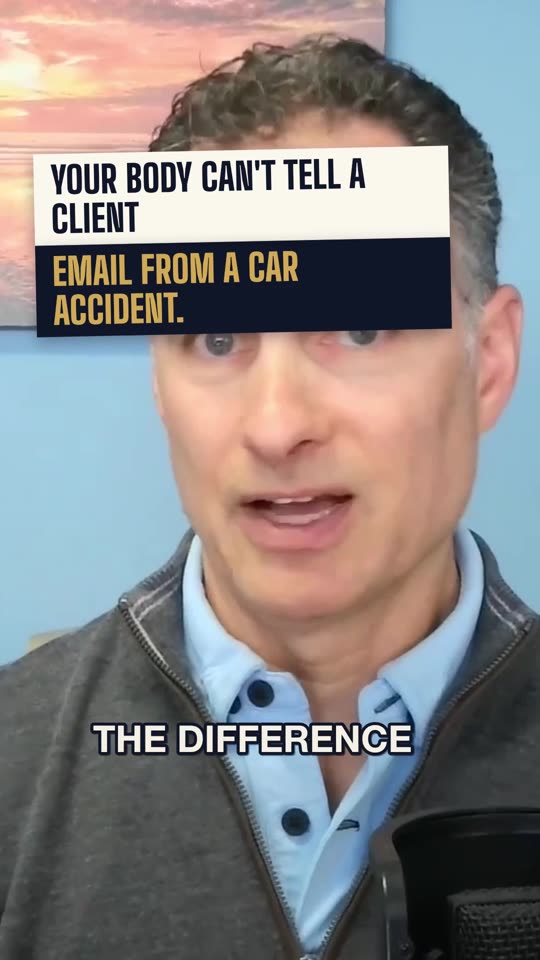
Your body cannot tell an email from a car crash

The heart rhythm pattern that goes to your brain is the same whether the stress is a difficult client email or an actual car accident. The brain does not get to distinguish. That is why the reaction arrives before the decision does.

02

Coherence is a skill, not a personality trait

Brett is direct about this. You are not born coherent. As long as your heart is beating and you can connect to your breath, you can learn it. The work is navigating your own wiring, habits and beliefs to get there.

03

The Paragon Pause takes 60 seconds

Pause. Recognize the internal weather is changing, that you are going from calm to stormy. Then connect to your breath while focusing attention in the center of your chest. Even ten, twenty, thirty seconds of that starts to smooth the rhythm.

04

You have a gas pedal and a brake

The sympathetic branch is the gas pedal: adrenaline, cortisol, going and going. The parasympathetic is the brake. Slowing your breathing and engaging the rhythms of the heart is how you tap the brakes on a system built for survival.

05

It is not about eliminating stress

Ben names this directly and Brett agrees. The framework is not about removing pressure or removing difficult people. It is about recognizing what is happening in you while the pressure is still there.

06

Time management is a byproduct of energy management

Brett reframes the usual question. Intelligent energy management comes first, and time management falls out of it. Chasing the calendar without the energy underneath it is solving the wrong problem.

07

Coherence is transferable

The heart generates a magnetic field measurably larger than the brain's, and it carries emotional information into the room. When you are calmer, that is transferred into your environment. You have more influence on the people around you than they know.

08

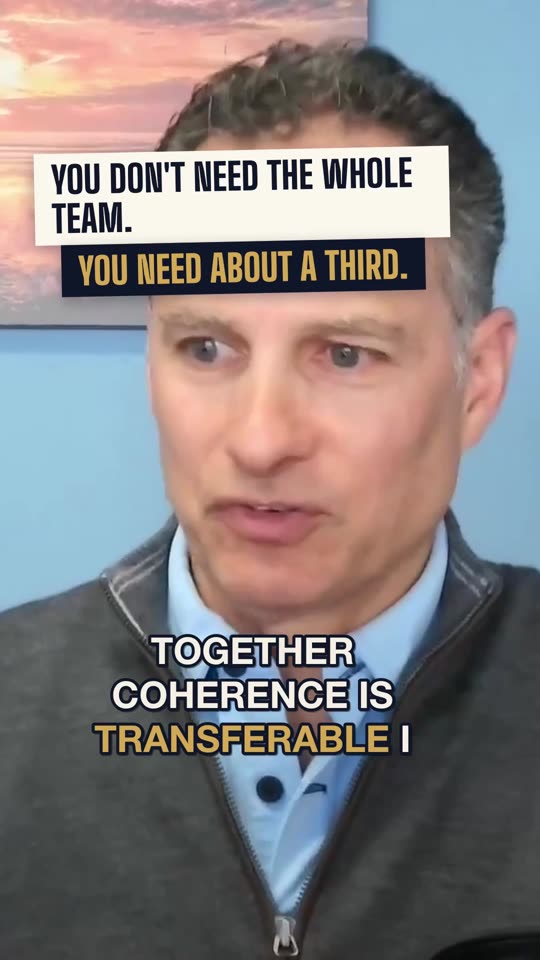
A third of the team is enough

The case studies at Cornell, Chicago Youth Centers and Conferences for Women did not need everyone to opt in. A small percentage shifting was enough to start changing how the whole team operated. Coherence compounds.

09

Culture is embodied, not written

As Brett puts it, trust is not a word you put on a value sheet or a website. When a team consistently shows up for each other, people feel safer, and safety is what makes them open up.

Full show notes

Pressure Triggers Automatic Reactions. Here's How to Stop Them

What heart coherence actually is

Ben opens by asking the plain question: what is heart coherence, and why is it turning up in Fortune 500 boardrooms? Brett's answer is not mystical. It is a physiological state where your thoughts, your nervous system and your emotions run in coordination rather than working against each other. Athletes describe it as being in the zone. Researchers call it flow.

The reason it matters for anyone running a business is what happens when that coordination breaks. Brett points to the work the HeartMath Institute started thirty and forty years ago on how the heart communicates with the brain, and how that relationship governs whether you can access intuition, creativity and good decisions when you are under pressure.

Why a client email hits like a car accident

This is the line that reframes the whole episode. "The heart rhythm pattern that will go to your brain is the same whether you're under stress from that text message or email that you get from the client, and being in a car accident."

Your brain does not get to distinguish between physical danger and a difficult message from someone you have tension with. The signal is the same. Which means the reaction is already in motion before you have decided anything, and no amount of telling yourself to stay calm intervenes upstream of that.

The Paragon Pause, step by step

The technique is deliberately small. Pause, and recognize the internal weather is changing, that you are going from calm to stormy. Then connect to your breath while intentionally focusing awareness in the center of your chest. Even ten, twenty or thirty seconds of easy breathing through the heart starts to smooth the rhythm, and the nervous system gets the message that you are not actually in danger.

Brett's own illustration is mundane on purpose: the person in front of you cannot work their phone, you have a meeting to get to, and it is genuinely not life and death. Physiologically, taking that moment is what moves you from really angry to maybe just mad.

Gas pedal and brake

The autonomic nervous system has two mechanisms. The sympathetic branch is the gas pedal, the one running on adrenaline and cortisol. The parasympathetic is the brake. Slowing the breath and engaging the rhythms of the heart is how you tap it. The system is prehistoric and built for survival, so the point is not to override it but to give it better information.

The team that changed in an afternoon

Brett describes a university team that arrived annoyed. Taken away from their day-to-day, long to-do lists, irritated about the drive. For elite performers, he notes, stepping away to reflect is foreign. It does not happen in most organizations.

By the afternoon that same group was leaning in, supporting each other, getting curious and asking questions. Nothing got solved that day. What changed was the possibility that they could operate this way as a norm, and the recognition that the culture of their team was their choice, whether or not leadership above them agreed.

Why you only need a third

The most useful finding for anyone leading a team. Coherence is transferable, and Brett says the science supports it: the heart projects a magnetic field roughly a hundred times greater than the brain's, and it carries emotional information into the environment around you.

In the case studies Paragon has run at Cornell, Chicago Youth Centers and Conferences for Women, success did not require everyone to commit. A small percentage of people showing up differently was enough for the team to start shifting. And as Brett puts it, trust is not a word you put on a value sheet or a website. It is embodied, or it is not there.

Quotable

Lines worth sitting with

The heart rhythm pattern that will go to your brain is the same whether you're under stress from that text message or email that you get from the client, and being in a car accident.
Brett Weinroth
The chaos isn't going away. You become the storm.
Brett Weinroth
It's not a word that we put on a value sheet or on a website. We're literally embodying it.
Brett Weinroth
The team will start to shift just by that one-third group that is making the shifts.
Brett Weinroth
Free · No. 81 of the series

Where do you react before you have decided?
Reflection Worksheet

The episode is 1:13:22. This worksheet is fifteen minutes. The fifteen minutes is the part that changes anything: five questions from this exact conversation, pointed at your business and your life. Answer them on paper while the ideas are still fresh, and they become yours for good.

  • Name the trigger you keep pretending is small
  • What does your internal weather changing feel like?
  • What did the last reaction cost?
  • Who is reading your state without being told?
  • Where will you take the sixty seconds?
You get this worksheet plus the full 75-worksheet binder, free.
5 prompts, 1 pagePrintable, binder-readyFree, no spam
Open the full worksheet →
Clips · grab & share

Short highlights from the episode

Short clips from this episode are on the way. Watch the full episode while we cut them.
The guest

Meet Brett Weinroth

Brett Weinroth on the MaxLife Podcast

Brett Weinroth

Co-founder, Paragon Performance

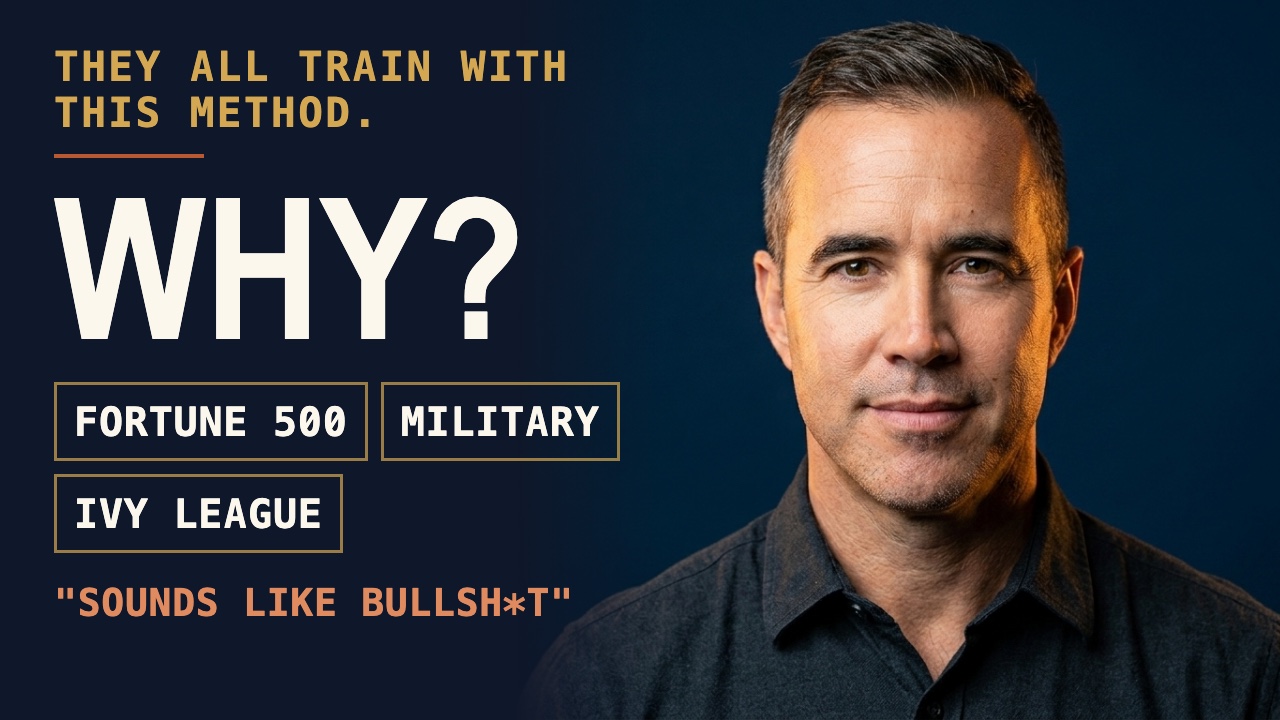
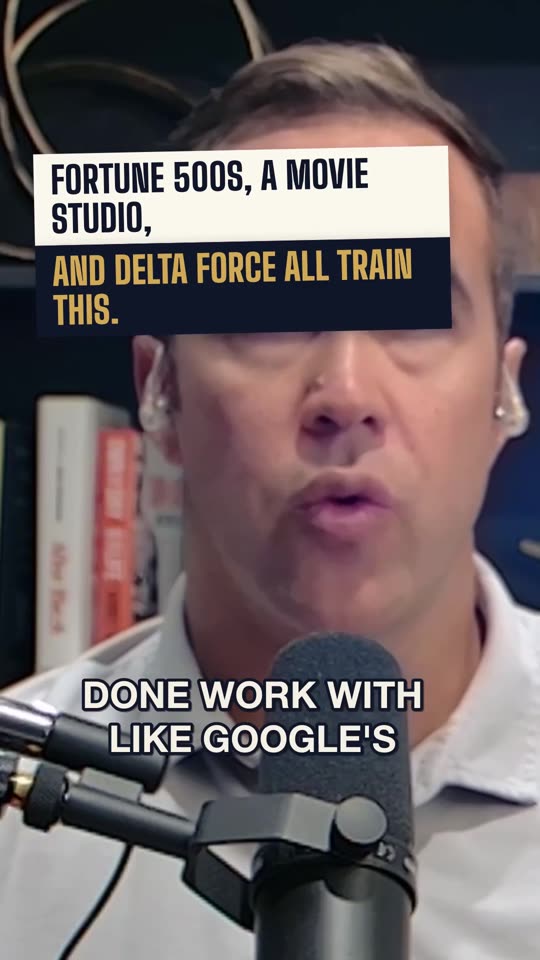
Brett Weinroth co-founded Paragon Performance with Jeff, training heart coherence with Fortune 500 companies, a movie studio, military units and Ivy League institutions. Their case studies include Cornell, Chicago Youth Centers and Conferences for Women. He is candid that the first reaction in most rooms is skepticism.

Questions, answered

Questions & answers

What is heart coherence?
Heart coherence is a physiological state where your thoughts, your nervous system and your emotions run in coordination rather than against each other. Brett Weinroth compares it to what athletes call being in the zone, and to the concept of flow. It is measurable, and it is trainable.
What is the Paragon Pause?
The Paragon Pause is Paragon Performance's 60-second reset. You pause, recognize that your internal weather is changing from calm to stormy, then connect to your breath while focusing attention in the center of your chest. Even ten to thirty seconds begins to smooth the heart's rhythm and engage the parasympathetic brake.
How long does it take to learn heart coherence?
Not years. That is the point Ben says blew him away. Brett's position is that anyone whose heart is beating and who can connect to their breath can access it. The difficulty is not the technique, it is navigating the habits and beliefs that keep you from using it.
Why do Fortune 500 companies train heart coherence?
Brett's team works with Fortune 500 companies, a movie studio, military units and Ivy League institutions. The common thread is elite performers who need to make good decisions while under real pressure. He is candid that the first reaction in most rooms is skepticism.
Does everyone on a team have to do it for it to work?
No, and this is the finding most leaders miss. In Paragon's case studies at Cornell, Chicago Youth Centers and Conferences for Women, roughly a third of a group shifting was enough to change how the whole team operated. Coherence is transferable and it compounds.
What is the difference between the sympathetic and parasympathetic nervous system?
Brett uses a car analogy. The sympathetic branch is the gas pedal, running on adrenaline and cortisol. The parasympathetic branch is the brake. Slowing your breathing and engaging the heart's rhythms is how you tap the brake on a system that was built for survival.
Share kit

Help spread this episode

Ready-to-post copy for guests and fans. Grab a caption, pick a clip above, and link this page.

Copy any of these word-for-word, or make them your own. They tag the show so it shows up when you post.

Social caption — long
New episode with Brett Weinroth of Paragon Performance.

Your heart sends the same signal to your brain whether you just got a difficult email from a client or you were just in a car accident. Your body cannot tell the difference. That is why you react before you have decided anything.

Brett trains heart coherence with Fortune 500 companies, a movie studio, military units and Ivy League institutions, and he is honest that most rooms start out thinking it sounds like nonsense.

The part I keep thinking about is the end. You do not need your whole team doing this. In their case studies, about a third of a group shifting was enough to change how the entire team operated.

Full episode and a free one-page worksheet: https://maxlifecoach.com/episodes/heart-coherence-under-pressure
Social caption — short / quote
Your body can't tell a client email from a car crash. Brett Weinroth on heart coherence, the 60-second Paragon Pause, and why a third of your team is enough to shift the whole room.
Email — share with your audience
Hi,

We just published a conversation I think you'll get something out of. Brett Weinroth trains heart coherence with Fortune 500 teams, military units and Ivy League institutions, and the core idea is uncomfortably simple: your heart sends your brain the same signal whether the stress is a client email or a car accident. You react before you decide.

He walks through the 60-second reset his team calls the Paragon Pause, and ends on the finding that surprised me most, that roughly a third of a team shifting is enough to change how the whole group operates.

Episode and a free one-page worksheet: https://maxlifecoach.com/episodes/heart-coherence-under-pressure
Copied